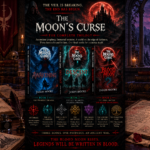


In high fantasy fiction, ancient archives usually serve as repositories for heroic prophecies, forgotten languages, or clues leading to magical artifacts. In The Moon’s Curse Trilogy, scholar Lira Thornfield understands that libraries are municipal accounting offices. When civilization falters and the Veil separating humanity from the predatory, moon-bound Nythrall begins to fracture, surviving the encroaching dark requires understanding covenant law in dark fantasy. Magic does not operate on willpower or divine favor; it operates like binding real estate leases and defaulted contractual debt.
Across the provinces bordering the Rimward Margin, every town, monastery, and watchpost exists because an ancient agreement was countersigned in blood, ink, and stone. While warden Evan Hartwell patrols perimeter ditches with iron and consecrated salt, Lira works inside cold scriptoriums, auditing forgotten covenants to calculate how much territory has already been forfeited to the night.
1. Magic as an Enforceable Leasehold
Standard fantasy magic systems often lean on elemental energies or esoteric mana pools. Characters chant words of power, unleash torrents of fire, and exhaust their stamina before resting. By contrast, contractual worldbuilding grounds magical protection in tangible legal agreements.
Centuries before the events of Awakening, imperial founders signed foundational treaties with entities beyond the Veil. In exchange for territorial borders, humanity agreed to maintain specific municipal obligations: ungreased iron brackets on boundary posts, periodic tallow offerings, unmined veins of silver along riverbeds, and strict curfews beneath the Blood Moon. These were not moral pledges; they were physical leaseholds.
When an imperial council delays maintenance funds or an outlying garrison deserts its watchtowers, the covenant defaults. The Nythrall do not breach boundaries out of malice. They cross the border because the lease expired and the land returned to its original owners. This transactional structure creates the palpable tension we examined in dark fantasy worldbuilding and crafting atmospheric dread, where the environment actively holds characters accountable to the letter of the law.
2. Lira Thornfield and the Diagnostic Scriptorium
Lira Thornfield carries no battleaxe or arcane staff. Her authority rests in her ability to read vellum ledgers, decipher faded clerical scripts, and measure the physical drift of parchment text. In an atmospheric world, paper is diagnostic:
- Fading Ink as Default Indicator: When an outlying watchpost fails to light its perimeter beacons, the ink in the central registry fades to watermarks overnight. The scriptorium does not wait for surviving messengers; the registry shows the forfeiture immediately.
- The Cartography of Default: As the Veil thins, regional boundary maps physically warp. Parchment stretches, distances between survey markers shrink by paces, and rivers drawn on calfskin turn brackish as the terrain contracts.
- Contractual Traps: Imperial clerks often amended old charters to annex farmland, burying small concessions in margin notes. Decades later, those forgotten exceptions grant the Nythrall lawful entry through cellar drains and unbarred millraces.
This scholarly procedural realism reflects the same institutional friction analyzed in our exploration of Father Kalen Draemir and the cathedral bell in dark fantasy. Just as Father Kalen reads liturgical silence to diagnose perimeter collapse, Lira reads parchment margins to predict where the next breach will occur.
3. Why Contractual Magic Deepens Dark Fantasy
Grounded dark fantasy gains tremendous narrative weight when power has measurable boundaries. When readers understand the rules governing supernatural horror, tension shifts from spectacle to suspense:
- No Arbitrary Saves: A protagonist cannot invent a spell to escape an ambush. If the covenant deed states that the doorway loses its warding at the third hour of twilight, survival depends on physical barricades and hard choices before the clock strikes.
- Moral Ambiguity in Administration: The villains are not always towering monsters. Often, the catastrophe began with a budget committee forty years earlier that voted to stop supplying oil to border garrisons, quietly condemning thousands of future residents.
- A Unified Trilogy Arc: Because the series was conceived and drafted as a complete entity, every legal consequence established in book one echoes directly through Descent and into Blood Moon without narrative backtracking or retcons.
Step Beyond the Veil
The Moon’s Curse Trilogy (Awakening, Descent, and Blood Moon) offers a complete, immersive saga where ancient covenants, predatory shadow creatures, and atmospheric gothic dread collide. Explore the entire series in hardcover, paperback, and digital editions at londynpublishing.com or discover the trilogy in our books collection.