
You Found the Perfect Series. Now You Have to Wait Three Years.
Every dark fantasy reader knows this moment.
You're two hundred pages in. The world is vast and strange and ominous. The magic system has layers you're still uncovering. The protagonist carries a wound that feels earned. And then you hit the final page, turn it over, and see the words Book One of the [Something] Trilogy.
You check the release date for book two.
It was announced eighteen months ago. It has no publication date yet.
This is one of the quiet frustrations of reading dark fantasy in real time — the genre rewards patience but rarely offers it. When a series commits to deep mythology, complex character arcs, and a world with genuine internal logic, the payoff lives in the final book. And if that book doesn't exist yet, you're left holding a story without its ending.
But there's another way to read.
Complete series exist. Finished trilogies, where the ending has already been written, the lore has already been paid off, and the first book invites you in knowing the last book will deliver. For readers who want the full experience — atmosphere, dread, resolution — a complete dark fantasy series is the only way to get it.
Here's what to look for, and where to find it.
What Makes a Dark Fantasy Series Truly Complete
Not every series that technically has three books is actually complete in the way that matters to dark fantasy readers.
A complete dark fantasy series isn't just three volumes with the same characters. It's a world that earns its ending. It means the mythology introduced in book one pays off by book three. It means the characters who made choices in chapter two are still living with those choices in the final act. It means the central mystery — the thing that made you turn pages at midnight — gets an answer that feels inevitable rather than convenient.
The best complete dark fantasy series share a few qualities:
A closed mythology. The rules of the world are internally consistent, and the final book honors them. No retconned lore. No shortcuts.
Character arcs that complete. Dark fantasy tends to feature morally complex protagonists — soldiers with buried trauma, scholars with knowledge they wish they didn't have, rangers walking the line between two worlds. Those arcs need room to close. A complete series gives them that room.
An ending that was written before the beginning was published. This distinction matters more than it sounds. When an author finishes all three books before publishing the first, the foreshadowing in book one is real. The hints are intentional. The mythology is already whole.
No filler. Dark fantasy readers are not casual readers. They notice when a middle book exists only to bridge two better books. The best complete trilogies use book two to deepen what book one built, not to stall.
Comparable Series Worth Your Time
The dark fantasy shelf has always had its landmarks — series that shaped what readers expect from the genre.
Joe Abercrombie's First Law Trilogy remains the defining grimdark benchmark. Abercrombie writes characters who are not redeemable but are completely human, in a world that does not flinch from consequence. The trilogy is complete and the world is expanded through standalone novels if you want to stay in it.
V.E. Schwab's Shades of Magic series blends dark fantasy with a vividly constructed alternate-London multiverse. The trilogy is complete, and Schwab's prose rewards readers who pay attention to texture over plot.
Rebecca Kuang's Poppy War Trilogy is the darkest entry on most bookshelves — war fantasy drawn from historical atrocity, with mythology woven through the horror. Complete, devastating, and unforgettable.
Brian Staveley's Chronicle of the Unhewn Throne earns its place on any complete series list through sheer density of world-building. Political, brutal, and built on a mythology that takes all three books to fully understand.
Each of these series rewards readers who want to invest in a world. Each of them is finished.
The Moon's Curse Trilogy — A Complete Series Built From the End Backward
For readers who want something newer — and indie — The Moon's Curse Trilogy by Jason Moore (published through Londyn Publishing) is a complete dark fantasy series with all three volumes already on shelves.
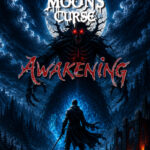
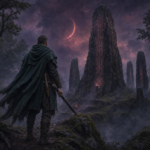
The trilogy begins with The Moon's Curse: Awakening, and the choice of where to start it matters. The world of the Veil — the ancient barrier separating humanity from the Nythrall, moon-bound shadow creatures older than memory — is already weakening when we meet Evan Hartwell. A soldier built for war but not for this kind of conflict. A man whose instincts were trained for enemies he could see.
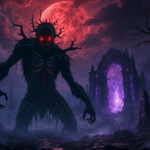
The Nythrall are not what most dark fantasy readers expect from shadow creatures. They are patient in a way that feels cosmological rather than predatory. They have been waiting across the Veil since the Veil Covenant was written — an agreement in a language that predates recorded history, binding creatures that were already ancient before the first human city was built. The translators who attempted to decode the full Covenant are notable for one thing: none of them finished.
Descent deepens the mythology. Lira Thornfield — scholar, red-haired, sharp-eyed, carrying knowledge she was never supposed to have — becomes the lens through which the Covenant's true terms begin to surface. She has mapped the Veil more thoroughly than anyone alive. That expertise is the problem. When the Veil is collapsing, the most informed person in the room is also the person who understands most clearly that understanding may not be enough.
Auren Draevan, the ranger who has walked the threshold between worlds long enough to stop flinching at what lives on the other side, anchors the middle book's most quietly devastating character work. And Father Kalen Draemir — a dark priest who believes, with genuine conviction, that what he is doing is necessary — is the kind of antagonist that lingers. Not because he is evil, but because his logic, once you understand it, is difficult to dismiss entirely.
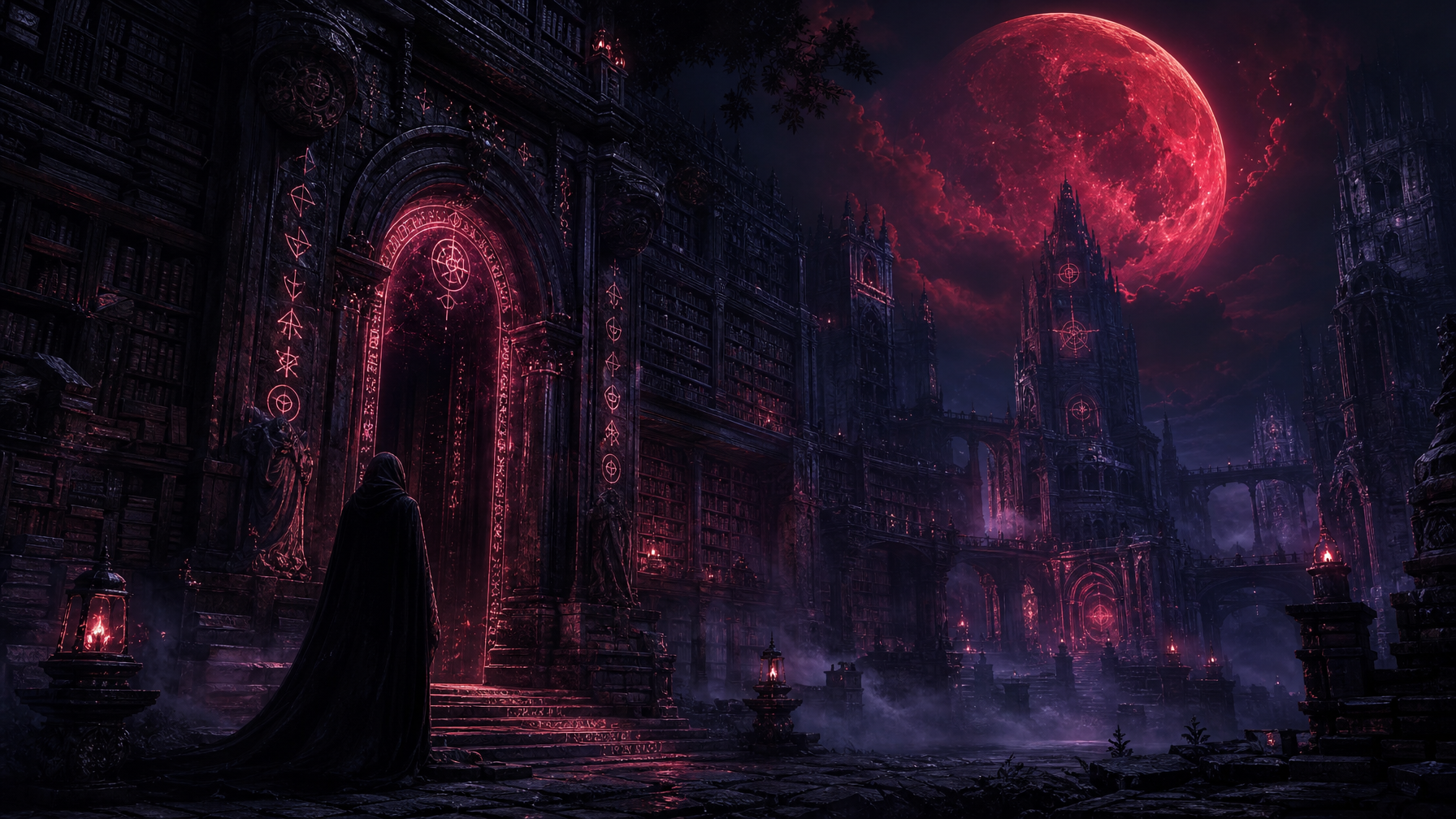
Blood Moon closes the trilogy. The Veil falls. The Blood Moon rises. The world the first book was protecting no longer exists in the form the characters knew it.
The ending was written before the first book was published. The foreshadowing in Awakening chapter one is real. If you go back after finishing Blood Moon, you will find it there — quiet, patient, always present. Like the Nythrall themselves.
Why 2026 Is the Right Year to Read a Complete Series
The way readers discover books has changed. BookTok and Bookstagram have accelerated series discovery — a trilogy that might have taken years to build word-of-mouth can find its readership overnight through a single emotionally honest review.
But the discovery mechanism creates a specific frustration for ongoing series. A reader discovers book one through a BookTok recommendation, falls completely into the world, finishes in four days, and then has nowhere to go. The algorithm surfaced the series at the wrong moment in its publication history.
Complete series solve this problem entirely. A finished trilogy is a closed system — the reader controls the pace, the emotional arc belongs to them, and the algorithm works in their favor because the entire series is searchable, reviewable, and bingeable at once.
For dark fantasy readers specifically, this matters more than in most genres. The payoff of a mythology-driven series lives in the final act. The Veil Covenant's terms. The Nythrall's patience. The Blood Moon's arrival. These things need a complete book three to mean anything. And in 2026, that book exists.
Where to Start
If you are new to The Moon's Curse Trilogy, the only place to begin is the beginning.
The Moon's Curse: Awakening introduces the world before the Veil breaks. It is the book that was written knowing how it ends — which means every page of it is doing more than it appears to be doing.
The full trilogy is available now at londynpublishing.com in paperback, hardcover, and eBook.
The ending has already been written. The only thing waiting is you.