
The Nythrall Hierarchy: Power, Rank, and the Shadow Court Beyond the Veil
They are not mindless predators. They never were.
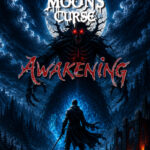
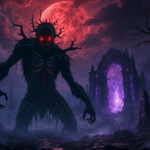
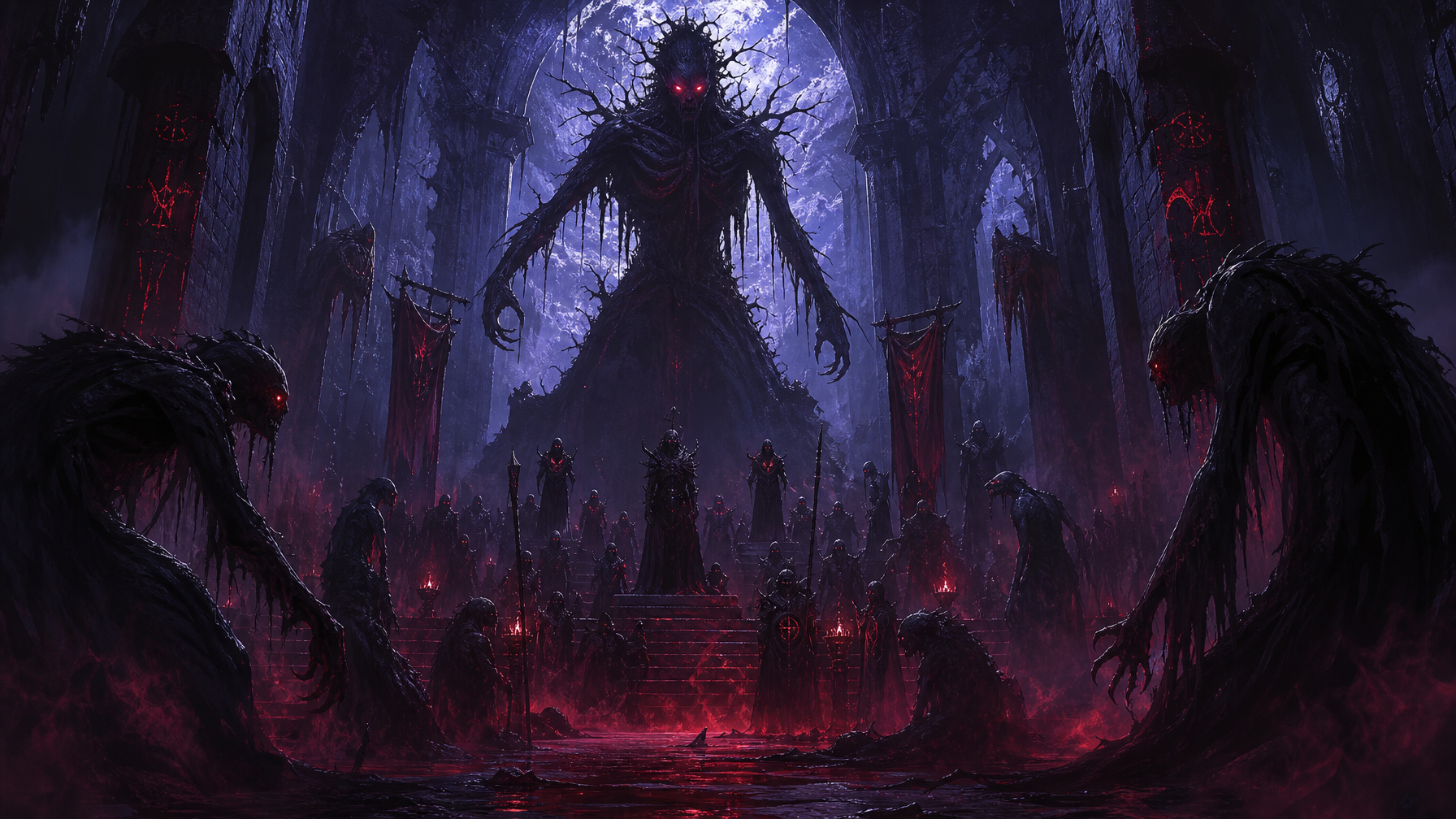
One of the most misread assumptions readers bring into The Moon's Curse: Awakening is the expectation of monsters as simple creatures — hungry, instinctual, defined only by what they hunt. The Nythrall shatter that expectation. Beneath the shadow and crimson-eyed dread, there is something far more unsettling: a civilization. Ancient, ordered, and bound by laws older than the Veil itself.
Understanding the Nythrall hierarchy isn't just lore for lore's sake. It changes everything about how you read the trilogy.
Not Creatures. Signatories.
The Veil Covenant — the agreement that separated humanity's world from the Nythrall — was not imposed on the Nythrall from the outside. They signed it. That single fact reframes every encounter in Awakening and every escalation through Descent and Blood Moon. These are not beasts being caged. They are parties to a contract, and like any civilization that has endured long enough, they have internal debates about what that contract means, who has the right to interpret it, and what happens when the other side fails to hold up their end.
The Nythrall are moon-bound — their power cycles with the Blood Moon in ways that are not metaphorical but deeply structural. And within that structure, hierarchy is everything.
The Shadow Court and the Question of Rank
Within Nythrall society, rank is not earned through combat alone, though strength matters. Status is measured by proximity to the Blood Moon cycle — specifically, by how much of one's power is retained between cycles and how little is lost in the dormant phases between peaks.
The highest-ranked Nythrall barely diminish at all when the Blood Moon is absent from the sky. The weakest experience something closer to hibernation — sluggish, diminished, constrained. This creates a steep internal gradient. At the top sit the old ones: entities whose names appear in the earliest lines of the Veil Covenant, who may have been present when the Sigil architects first drew the boundary between worlds. Below them, the intermediary ranks — Nythrall who hold territory, enforce the Covenant's terms from the shadow side, and govern the behavior of the lower tiers.
Then there are the recently-bound: Nythrall who crossed into the human world after the Veil began weakening and were caught in a kind of in-between state. Neither fully free nor fully constrained. These are often the ones readers encounter first in Awakening — and they are the most volatile, precisely because their place in the hierarchy is unsettled.
The Blood Moon as Power Re-Ordering
What the Blood Moon does to Nythrall society goes far beyond strengthening individuals. It reorders the court.
A mid-rank Nythrall who has cultivated power carefully, hoarding energy across dormant cycles, may surge dramatically during a Blood Moon peak. Alliances shift. Territory disputes — some dormant for centuries — reactivate. The hierarchy is never fully static, because the Blood Moon guarantees that the balance of power is always one cycle away from reshuffling.
This is why the rise of the Blood Moon in The Moon's Curse is not simply a catastrophic event for humans. It is also a moment of profound internal reckoning within the Nythrall themselves. The question that runs through all three books — from Lira Thornfield's scholarly attempts to map what's happening to Auren Draevan's guardianship of the Veil's geographic nodes — is not only "can humanity survive?" It is also: "which Nythrall will emerge dominant on the other side, and what will they want?"
Father Kalen Draemir, more than any human character, understands this. It is what makes him genuinely dangerous. He has studied the Covenant long enough to grasp that the Nythrall are not unified in their aims — and he believes that gap can be exploited.
He is correct. He is also catastrophically wrong about what to do with that knowledge.
Why It Matters for Readers
Dark fantasy as a genre often positions monsters as elemental force: symbol, threat, embodiment of fear. The Nythrall function that way on the surface. But the deeper you go into The Moon's Curse trilogy, the more you realize the horror isn't purely supernatural. It's political. It's civilizational. It's the horror of realizing you've been on one side of a very old negotiation — and you've stopped paying attention to what the other side has been doing.
The shadow court has been meeting Beyond the Veil for centuries.
The Blood Moon is their term. Not yours.
The Moon's Curse Trilogy — Awakening, Descent, and Blood Moon — is available now in paperback, hardcover, and eBook at londynpublishing.com.