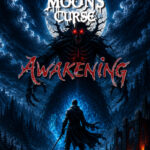

Why I Chose to Publish The Moon's Curse Trilogy Independently — And What That Decision Cost Me
There is a version of this story where I spent years drafting query letters, collecting rejections, and waiting for a traditional publisher to tell me my world was worth sharing.
That version does not exist.
I chose a different path before I finished the third book, and I want to be honest about what that decision actually looked like — not the polished narrative you see on the website, but the real calculus behind building Londyn Publishing from the ground up.
The World Came First
I did not set out to become an indie publisher. I set out to write the story I could not find anywhere else.
I wanted shadow creatures that were not simply repackaged vampires. I wanted a magic system rooted in obligation rather than power — one where the cost of protection was woven into the fabric of the Veil itself, binding both sides of the covenant to rules neither had fully written. I wanted a protagonist who earned nothing cheaply: Evan Hartwell's arc across all three books is not a hero's ascent. It is a reckoning.
When I started researching traditional publishing timelines — 18 months for a deal, another 18 to 24 months to publication, all while surrendering creative control over covers, titles, and marketing — the math did not work. Not for a story this tightly constructed. The Moon's Curse Trilogy was written as a complete unit. The ending of Awakening is only legible in full once you have finished Blood Moon. That is not a pitch for a slush pile. It is a universe.
What Creative Control Actually Means
Choosing to go indie is not simply choosing freedom. It is choosing responsibility.
Every decision that a traditional publisher absorbs — the cover art direction, the interior layout, the pricing strategy, the category positioning on Amazon and Barnes and Noble, the metadata, the launch timing — fell entirely on me. I built Londyn Publishing not because I wanted to run a company, but because the story required a container that matched its ambition.
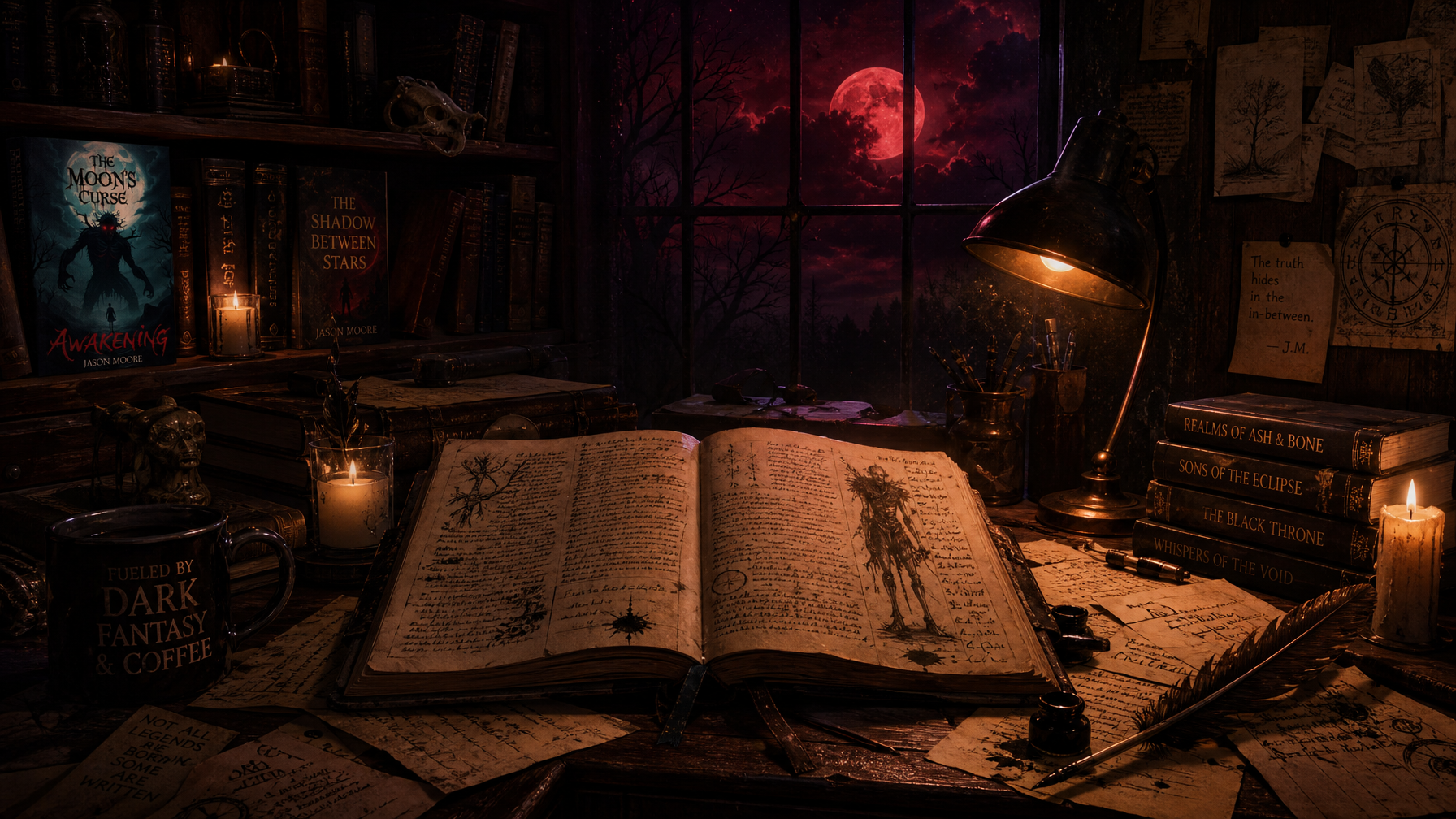
The brand identity you see now — the violet and crimson palette, the Cinzel typeface, the atmospheric photography — none of that was accidental. It was designed to communicate one thing before a reader ever opens the first page: this is not a casual read. This is a world with rules, history, and weight.
That level of intentionality takes time that a traditional deal would have consumed in committee meetings.
The Cost Nobody Talks About
Here is what independent publishing costs that no one writes blog posts about.
It costs momentum. There is no launch team, no sales force, no pre-existing catalog to ride. Every reader Londyn Publishing has reached came through direct effort — a post, a search result, a lore thread, a word of mouth recommendation from someone who cared enough to tell a friend about the Nythrall.
It costs credibility, initially. Indie publishing still carries a stigma in certain literary circles. I built Londyn Publishing as a proper imprint — with ISBNs, professional covers, and editorial standards — precisely to challenge that assumption. But the work of earning trust from readers who have been burned by unpolished self-published work is ongoing.
And it costs certainty. There is no advance, no guaranteed shelf placement, no editorial board validating the decision. Every choice is yours, which means every mistake is also yours.
What It Gives Back
What I have in return is something traditional publishing cannot offer: the story exists exactly as it was conceived.
The Veil Covenant is intact. The twelve sigils appear where they were always meant to appear. The Nythrall are moon-bound shadow creatures with their own theology, hierarchy, and terms — not romanticized monsters, not franchise-friendly predators. Lira Thornfield's arc was not softened for broader market appeal. Father Kalen Draemir remains one of the most morally coherent antagonists I have ever read in any book, including books I did not write, because no one asked me to make him easier to dislike.
That is what Beyond the Veil means as a publishing principle, not just a tagline. The Veil between the story I wanted to tell and the story readers actually receive is as thin as I could make it.
For Other Indie Authors
If you are weighing this decision, the honest answer is that neither path is objectively correct.
Traditional publishing offers infrastructure, distribution muscle, and a form of institutional legitimacy that still matters in certain markets. Indie publishing offers control, speed, and the ability to build a brand that belongs entirely to you.
What I would say is this: know your story first. Know whether it is the kind of story that can survive the committee process without losing its spine. If the answer is no — if the world you have built is too specific, too interconnected, too complete to hand over — then the independent path may be the only one that preserves what made you write it in the first place.
I knew. And I built the press.