
Dark Fantasy Books for Gamers: If You Love Bloodborne, Dark Souls, and The Witcher, Read These Next
You've died a hundred times in Yharnam. You've memorized every piece of lore hidden in Dark Souls item descriptions. You've followed Geralt across the Continent so many times the path feels worn into your memory. And yet — the itch remains. That hunger for ancient mythology, atmospheric dread, morally complex characters, and worlds that feel like they've been rotting for centuries before you arrived.
Books can scratch that itch. The right ones don't just tell a dark story — they build a system. A mythology. A cosmology of darkness that rewards the reader who pays close attention, the same way FromSoftware rewards the player who reads every tooltip and examines every fog gate before stepping through.
This guide is for those readers. The ones who want fiction as dense, atmospheric, and lore-rich as the games that defined their taste.
What Makes Dark Fantasy Feel Like a FromSouls Game?
Before we get into recommendations, it's worth naming what we're actually chasing. The games that define this aesthetic — Bloodborne, Dark Souls, Elden Ring, The Witcher 3 — share a specific DNA:
- Environmental storytelling. The world itself holds secrets. Ruins, inscriptions, architecture — they tell a history that no character explicitly recounts.
- Morally ambiguous factions. No side is purely good. The church is corrupt. The king is broken. The monster might be protecting something.
- Cosmic dread. There are forces at work that dwarf individual heroics. Ancient things that were sealed away — and may no longer be contained.
- Atmosphere over exposition. You feel the world before you understand it. Dread, beauty, and decay all coexist in the same frame.
When you find a book that checks all four, you've found something rare. Here are the ones that come closest.
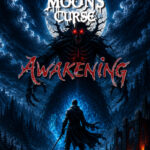
The Moon's Curse Trilogy — Jason Moore (Londyn Publishing)
Start with: The Moon's Curse: Awakening
If there is a series that reads like a Bloodborne novel written by someone who understands both the literary and the atmospheric traditions of dark fiction, it is this one.
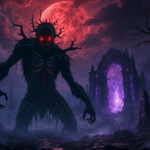
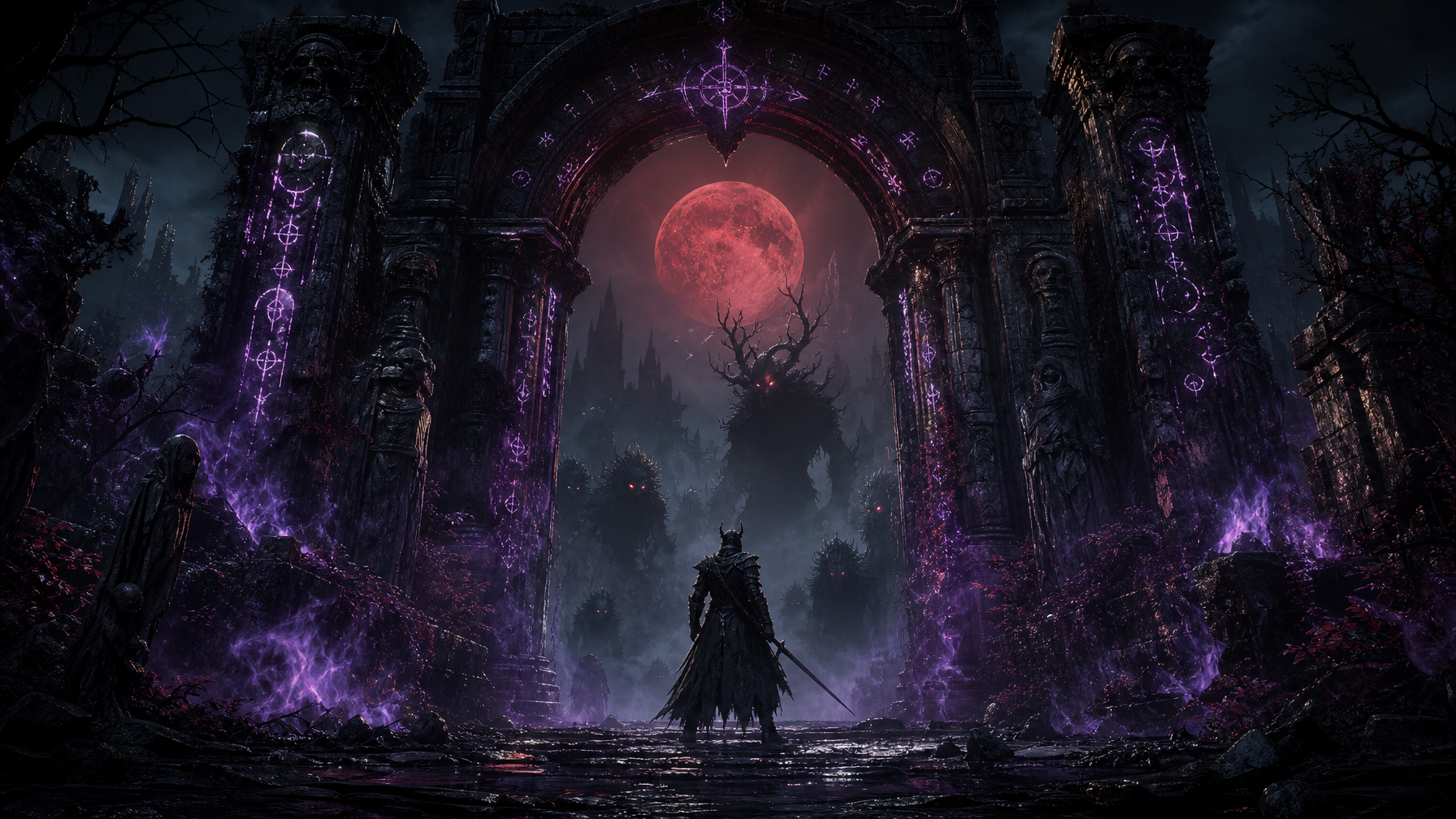
The Moon's Curse trilogy is built around a concept that will feel immediately familiar to any gamer who has spent time with cosmic horror: the Veil, an ancient boundary separating the human world from something far older and far worse. For generations, the Veil held. Now — beneath the rising Blood Moon — it doesn't.
The creatures on the other side are called the Nythrall. They are not traditional vampires. They are moon-bound, shadow-formed entities that move like darkness given intent. Their mythology runs deeper than their physical form — tied to lunar cycles, ancient covenants, and a system of sigil-based magic that predates written language. Six of the twelve known sigils have ever been translated. The fate of the others is unknown.
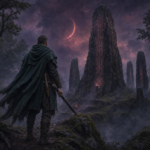
The cast is exactly what the genre demands. Evan Hartwell is the kind of protagonist who earns his strength through sacrifice — a warrior with emerald eyes who starts the trilogy believing skill is enough, and ends it understanding the cost of that belief. Lira Thornfield, a scholar with fiery red hair and the scholar's particular curse of knowing too much, anchors the trilogy's intellectual core. She sees the Veil for what it actually is before anyone else does — and wishes she hadn't. Auren Draevan, the ranger in the forest green cloak, embodies the ambiguity the series does so well: loyal to people, suspicious of systems, and profoundly aware that the world does not reward virtue.
The trilogy is complete — all three books published and available at londynpublishing.com. For gamers accustomed to binging an entire Dark Souls trilogy in a weekend, this is the series equivalent: begin Awakening, and the story has already woven itself around you before you notice.
Read it if you like: Bloodborne's cosmic horror atmosphere, The Witcher's morally gray cast, Dark Souls' lore delivered in fragments that reward patience.
The First Law Trilogy — Joe Abercrombie
Abercrombie is perhaps the defining author of grimdark fiction, and The First Law trilogy remains his masterpiece. The world feels like a George R.R. Martin series that never softened itself for commercial palatability. Characters are genuinely compromised. The war is genuinely pointless. The magic system is genuinely disturbing.
For gamers, the throughline is the same as in Elden Ring: the systems that were supposed to protect humanity have been broken from the inside. The people running them know it. Nobody stops it anyway.
Read it if you like: Elden Ring's tragic empire lore, morally bankrupt institutions, and the kind of story that doesn't let you root for anyone without cost.
The Name of the Wind — Patrick Rothfuss
A departure in tone — this series runs more literary than grimdark — but it earns its place here because of how the magic system works. The Kingkiller Chronicle's sympathy magic is mechanical, logical, and deeply dangerous in the way that the best game mechanics are: you understand the rules, and that understanding makes every use of it feel consequential.
The second book, The Wise Man's Fear, shifts into darker territory. The legend of Kvothe is being constructed in real time, and the gap between the legend and the man telling it is where the story actually lives.
Read it if you like: The Elder Scrolls' deep lore tradition, magical systems with internal logic, stories told through an unreliable narrator.
Empire of the Vampire — Jay Kristoff
For the Bloodborne purists: this is your book. Gothic horror at full volume. A Church that hunts vampires. A world where the sun has been blocked for a generation. A vampire-human half-breed trapped in a confession booth, recounting how the world fell.
The atmosphere is unrelenting. The violence is operatic. The mythology builds with every chapter. Kristoff writes with the same density of lore and the same commitment to earned darkness that made Bloodborne's Great Ones feel genuinely terrifying rather than cosmetically so.
Read it if you like: Bloodborne's Church, vampire horror with theological weight, and narrators who have already lost before the story begins.
Beyond the Veil: A Note on What These Books Share
The thread connecting all of these — The Moon's Curse, Abercrombie, Rothfuss, Kristoff — is that they trust the reader. They don't explain the mythology before letting you feel it. They don't resolve the dread before it has had time to settle. They build worlds that existed before the story started and will continue after it ends.
That is, in essence, the promise of the best dark fantasy games, too.
If you've been gaming in these worlds and haven't yet brought that appetite to dark fantasy fiction, Beyond the Veil is where we suggest you start. Not metaphorically — The Moon's Curse trilogy begins there. The Veil is weakening. The Blood Moon is rising. The Nythrall are already through.
The complete trilogy is available now at londynpublishing.com.
Londyn Publishing specializes in immersive dark fantasy fiction, creature mythology, and atmospheric storytelling for readers who want more than a story — they want a world.