
When I sat down to write Father Kalen Draemir, I made a decision I've never regretted: he would never see himself as the villain.
That single choice shaped everything about The Moon's Curse Trilogy.
The Problem With Pure Evil
Dark fantasy is full of villains who want to destroy the world simply because destruction is their nature. They're powerful, they're menacing, and they're ultimately hollow. A reader can fear them, but they can't truly reckon with them — because there's nothing in them that reflects the reader back.
Draemir is built differently.
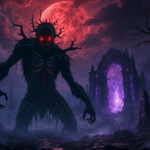
He is a priest. A scholar. A man who has spent decades studying the Veil, translating the oldest known sigil texts, and watching humanity stumble blindly toward its own unraveling. He has seen what Evan Hartwell and the others cannot yet see. He believes — with complete and earnest conviction — that his path is the only one that leads to survival.
That makes him far more dangerous than any creature that hunts in the dark.
Writing a Character Who Is Certain
The hardest part of writing Draemir wasn't his cruelty. It was his clarity.
Most antagonists are written with a kind of moral blur — they're selfish, they're broken, they're driven by wounds the narrative quietly asks us to sympathize with. Draemir has none of that convenient ambiguity. He is not reacting out of pain. He is not corrupted by grief. He has reasoned his way to darkness, and every step of that reasoning holds together with terrifying internal logic.
As a writer, that required me to fully inhabit his worldview — to argue his case as persuasively as he would argue it himself. I had to understand the ancient texts the way he understands them. I had to see the Veil Covenant the way he sees it: not as a sacred protection, but as a flawed agreement made by frightened men who didn't fully understand what they were containing.
If I couldn't make Draemir's argument compelling, the trilogy would collapse into good versus evil. And I wasn't writing that story.
The Sigils as His Weapon and His Proof
One of the most deliberate world-building decisions I made was giving Draemir genuine knowledge.
He didn't just stumble into dark ritual. He earned his understanding of the sigil system over a lifetime of scholarship. In the trilogy, the sigils predate written language — twelve known configurations, only six of which have been fully translated, each encoding a fragment of the original Covenant between humanity and the forces Beyond the Veil. Draemir knows all six. He has theories about the remaining six that would terrify anyone who understood their implications.
That expertise is what separates him from a fanatic. He isn't acting on faith. He's acting on knowledge — and that is the most unsettling thing about him.
When Evan Hartwell first encounters Draemir's methods, the temptation isn't to dismiss him. It's to wonder, briefly, whether he might be right.
That moment of doubt — in the reader, in Evan — is the entire point.
The Cathedral as Character
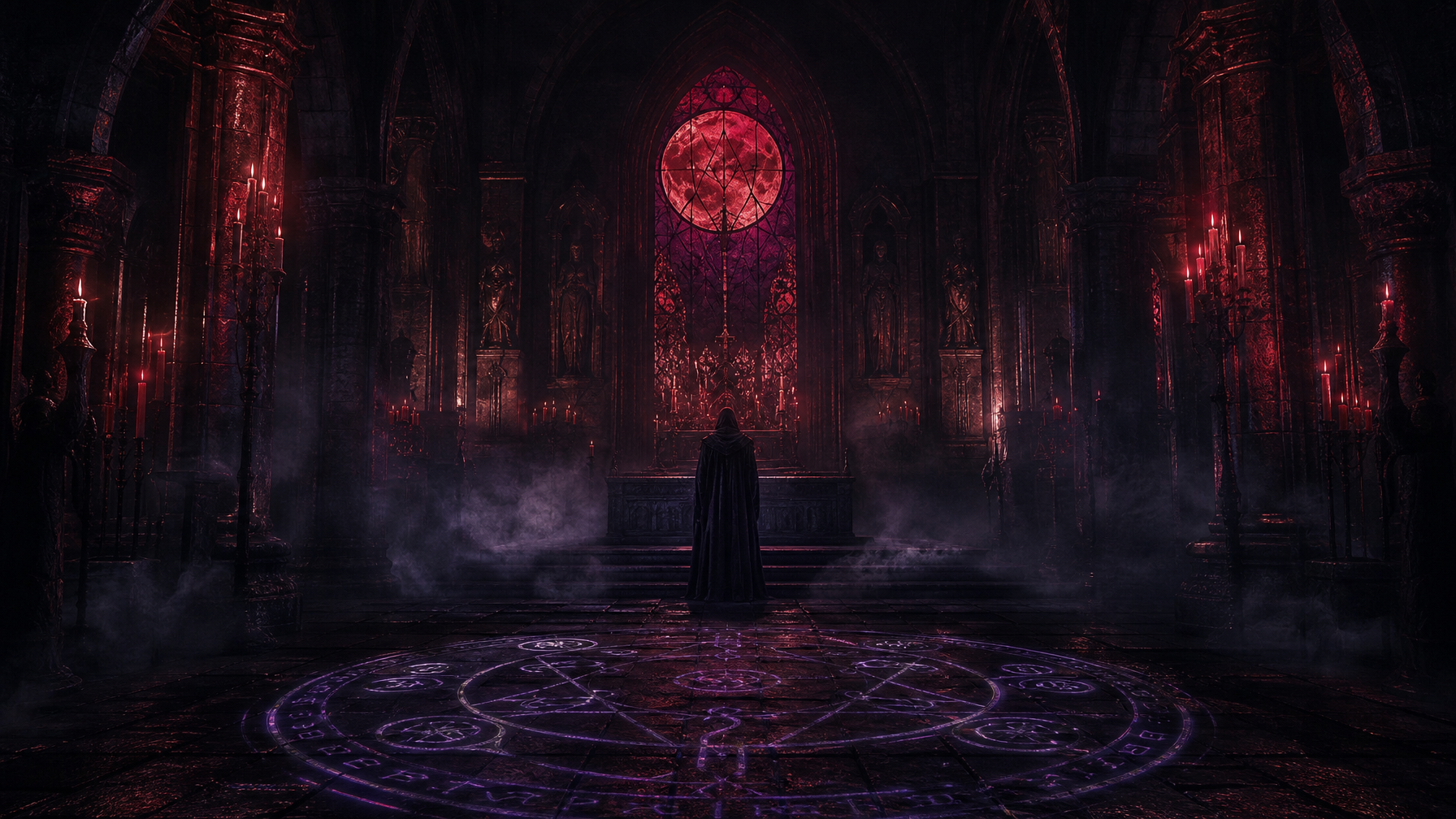
Writers often talk about setting as mood. With Draemir, I treated the cathedral as an extension of his psychology.
The black stone corridors, the crimson candlelight, the sigils carved into the floor at the altar — these weren't aesthetic choices made after the character was written. They were designed alongside him. The cathedral reflects how Draemir thinks: structured, ancient, beautiful in a way that unnerves, and entirely devoted to a purpose that the uninitiated cannot fully comprehend.
I wanted readers to feel, every time they entered his scenes, that they were stepping into a space governed by its own logic. A logic that predates the world Evan knows.
Beyond the Veil, there are forces that do not negotiate. Draemir understands this. His cathedral is his answer to that understanding.
What This Means for Indie Authors Writing Antagonists
If you're writing dark fantasy — or any genre with a villain who carries real narrative weight — the most important question you can ask is: What does this character believe about themselves?
Not what they've done. Not how they justify their cruelty after the fact. What is the story they tell themselves every morning when they wake up and choose, again, to continue?
For Draemir, that story is simple: the Veil is failing, the Blood Moon is coming, and the only person willing to do what must be done is him.
Whether he's right or wrong is something The Moon's Curse Trilogy leaves for readers to wrestle with long after the final page.
That's the kind of villain worth writing.
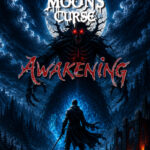
The Moon's Curse Trilogy — Awakening, Descent, and Blood Moon — is available now at londynpublishing.com. All three books are complete and available in paperback, hardcover, and eBook.