
Writing Characters Who Carry Darkness: The Craft of Morally Complex Heroes in Dark Fantasy
There is a particular kind of reader who puts down a book and says, "I don't know if I liked him, but I couldn't stop reading."
That is the response every dark fantasy author is quietly chasing.
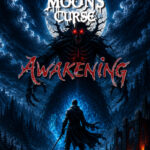
When I set out to write The Moon's Curse Trilogy, I made a decision early: none of my central characters would be uncomplicated. Not the protagonist. Not the scholar. Not the ranger. Certainly not the priest. The world I was building — one where the Veil separates humanity from something ancient and terrible — demanded that the people navigating it be fractured in ways the story could pressure. Heroes who are simply good don't survive in worlds like this. They survive, or they don't, because of what's broken in them.
Here is what I learned writing Evan Hartwell, Lira Thornfield, Auren Draevan, and Father Kalen Draemir across three books.
The Wound Has to Be Load-Bearing
Every morally complex character I've written carries a wound — but the wound has to do actual work in the story. It cannot simply exist as backstory flavor. It has to be the thing that makes them capable of the choices they make.
Evan Hartwell's wound is that he is a soldier who learned to trust his instincts over everything else. That instinct has kept him alive. It has also made him difficult to love, quick to act, and slow to believe anything that doesn't confirm what he already suspects. In Awakening, that serves him. By Blood Moon, it becomes the thing he must either conquer or surrender to — because the Veil doesn't care about instinct. The Veil cares about truth.
The wound was never just character texture. It was structural. Every major choice Evan makes in the trilogy runs through that same break.
Moral Complexity Is Not Moral Neutrality
There is a misconception in dark fantasy that morally complex means morally uncommitted — that a flawed character exists in a fog of ambiguity where nothing is right or wrong. That's not craft. That's avoidance.
Lira Thornfield knows that what she is doing is right. She has mapped the Veil. She has translated six of the twelve sigils. She understands more about the Covenant than anyone living. And she is also willing to withhold that knowledge from people she claims to trust, because she believes she is protecting them. She is both correct and wrong simultaneously — not because the story can't decide, but because the story trusts the reader to hold the tension.
When I wrote Lira, I never asked whether she was a good person. I asked whether she was a consistent one. Consistency is what creates believability. Consistency is what earns investment. A character can do something difficult or even cruel, and readers will stay — if the choice flows from who that person has always been.
The Villain Has to Believe He Is the Protagonist
I've written before about Father Kalen Draemir's design as an antagonist, but the craft principle that underpins him applies to every character in the series: each of them is the main character of their own story.
Draemir doesn't see himself as a villain. He sees himself as a man of extraordinary conviction who understood the theology of the Veil when no one else would. In his framework, Evan is the obstacle. Lira's translations are dangerous because they remove his authority. The Blood Moon isn't a catastrophe — it's a fulfillment of a promise he has spent his life honoring.
When you write a character this way, you stop writing antagonism and start writing a collision. Two people who both believe they are right, moving toward the same event from opposite sides of a covenant neither fully understands.
That collision is the story.
Auren Draevan and the Character Who Serves the Ensemble
Not every morally complex character gets a crisis of identity. Some carry their weight differently.
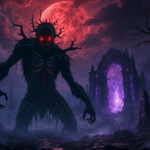
Auren Draevan is the character who already knows things the others haven't learned yet. He has been at the threshold longer than anyone. His complexity isn't a wound looking for resolution — it's a set of loyalties that will eventually require him to choose an order of priority. Writing Auren meant writing restraint. Every scene where he almost says the thing, and doesn't. Every moment where his loyalty to Evan and Lira presses against what he knows about the Nythrall — moon-bound creatures that have been patient in ways humans cannot measure.
In a trilogy built on revelation, Auren is the character who demonstrates that knowing doesn't mean telling. That is its own form of moral weight.
What I Want Readers to Take From This
I didn't set out to write unlikeable characters. I set out to write true ones.
The difference matters. Unlikeable is a surface quality — a set of behaviors that create friction. True is deeper. A true character behaves the way they behave because of everything the story has established about who they are, what they need, and what they're afraid of.
Evan Hartwell is not always easy to be beside. Lira is not always honest. Auren carries knowledge like a debt he hasn't decided how to pay. Father Kalen Draemir believes, completely and without apology, that what he is doing is sacred.
These are not comfortable people. But they are real ones. And in a world where the Veil is thinning and the Blood Moon is not a myth but a mechanism — real is what the story requires.
The complete Moon's Curse Trilogy — Awakening, Descent, and Blood Moon — is available now at londynpublishing.com. All three books. All three characters. One ending that was written before you started.