
Writing from the Inside Out: How Emotional Truth Fuels Dark Fantasy Storytelling
There is a question I get asked more than almost any other when readers discover that The Moon's Curse Trilogy came entirely from one mind, one desk, and one stubborn refusal to write something safe:
Why is it so dark?
The honest answer is not the one most people expect. It has nothing to do with wanting to shock readers, nothing to do with following genre trends, and everything to do with what emotional truth actually demands of the writer willing to pursue it.
The Genre Is a Container, Not a Costume
Dark fantasy gets misunderstood constantly. Readers who have not yet found the right entry point assume it is darkness for its own sake — violence as spectacle, horror as a substitute for depth. What those readers have not yet encountered is a story that uses the supernatural as a precision instrument.
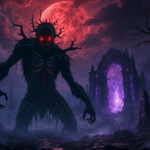
When I built the world of The Moon's Curse, the Veil was never just a plot device. The membrane separating humanity from the Nythrall — from the shadow-bound, moon-governed creatures that exist in the negative space of the world — was always an externalization of something far more interior. What separates us from the things we fear most in ourselves? What happens when that boundary weakens?
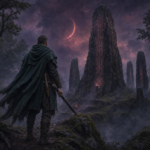
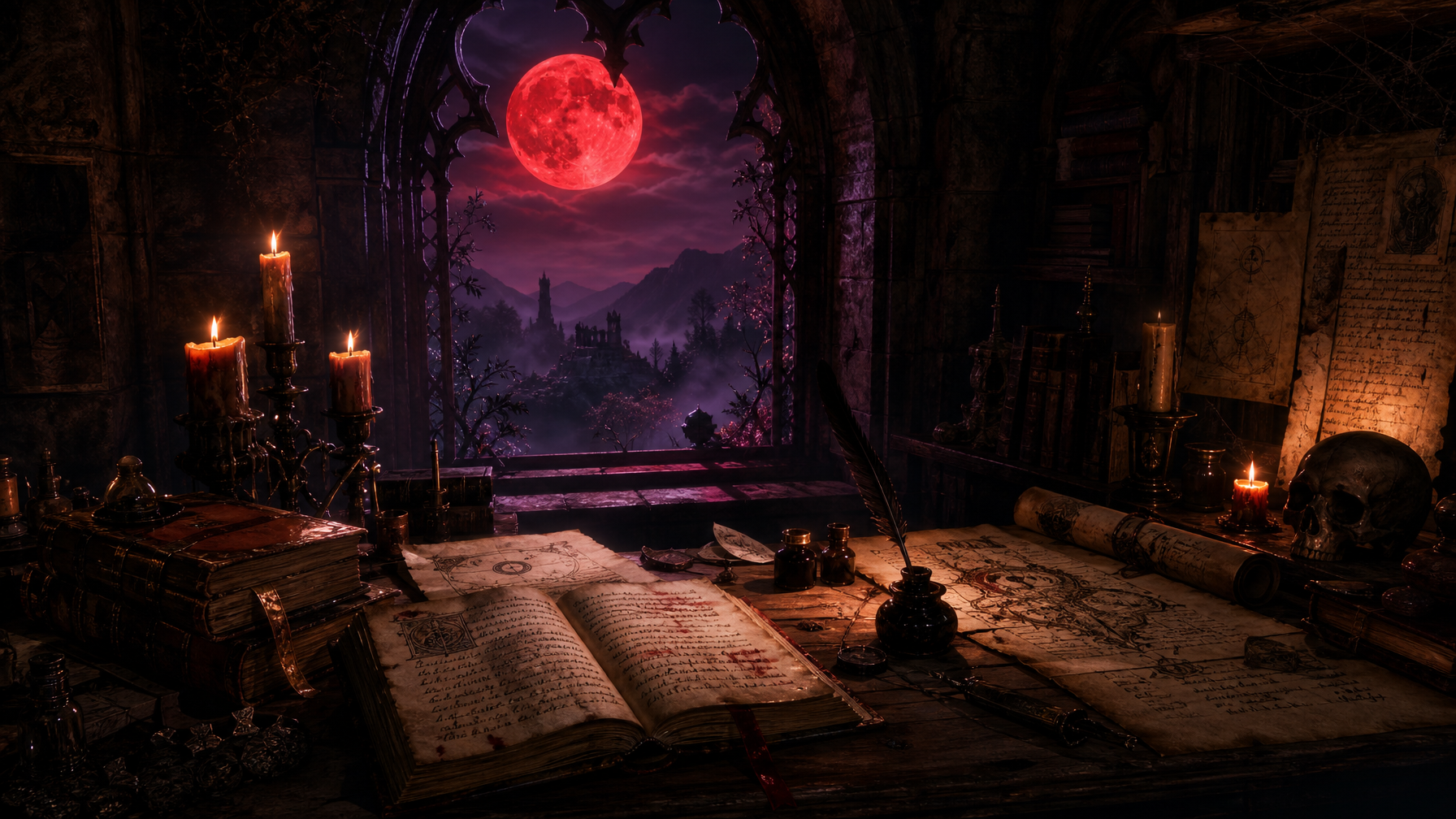
Evan Hartwell does not fight monsters because the story needed conflict. He fights because every warrior who has ever carried something unresolvable inside them has had to decide, at some point, whether they are willing to let it destroy them or whether they will drag it into the light and look at it directly. The Blood Moon does not rise because the cosmology required a climax. It rises because reckoning always does.
The genre is a container. What you fill it with is the entire question.
What I Learned from Writing Three Books Back to Back
I made a deliberate choice early in the process: I would write all three books before I published anything. That decision shaped everything about how The Moon's Curse reads, but it also taught me something I could not have learned any other way.
When you write a complete trilogy before any of it is public, you cannot rely on reader feedback to course-correct. You cannot watch how the audience responds to a character in Book 1 and then adjust who they become in Book 3. Every emotional thread has to be genuinely load-bearing from the start, because you are the only one reading it.
That pressure is clarifying. It strips out everything you are doing for effect and forces you to examine what you are doing for truth.
Lira Thornfield's arc across all three books, for instance, was not something I reverse-engineered from a plot structure. Her movement from scholar-certainty into something far more ambivalent and costly grew out of a very simple question I kept returning to: what does it cost a person who has organized their entire identity around knowledge to encounter something fundamentally unknowable? Lira does not lose her intelligence in the series. She loses her faith that intelligence is sufficient. That distinction — subtle as it sounds — is the difference between a character who changes and a character who merely experiences things.
The Problem with Writing What You Think Readers Want
Indie publishing gives you a freedom that traditional publishing sometimes discourages: the freedom to be wrong in interesting ways. You do not have acquisition editors asking whether the protagonist is likable enough, whether the creature mythology is too dense, whether the ending is accessible to readers who do not want to sit with ambiguity.
That freedom is enormous. It is also terrifying.
The version of The Moon's Curse that would have been easier to write would have softened Father Kalen Draemir into a recognizable villain — a man who does evil because he is evil, because that is simple, because readers can file him and move on. Instead, Father Kalen is a man who has studied the Veil Covenant longer than almost anyone alive, who genuinely believes in the moral architecture of what he is doing, and who is wrong not in his diagnosis but in what he believes should follow from it. He is the most dangerous kind of antagonist: a person of conviction whose conviction leads him somewhere monstrous.
Writing that character honestly meant I had to understand him fully before I could let him onto the page. I had to believe, at least provisionally, that he was right — and then follow the implications of that belief to where they actually led.
That is what emotional truth requires. Not sympathy. Not endorsement. But full comprehension.
Auren Draevan and the Weight of Witness
One of the quieter behind-the-scenes decisions in the trilogy was Auren Draevan's function in the story. On the surface, he is a ranger — practical, observational, committed to the physical reality of the world Beyond the Veil. But structurally, Auren carries the narrative's conscience.
He is the character who sees clearly and still chooses to stay. In a story about corruption, collapse, and the thinning membrane between the human and the monstrous, someone has to model what it looks like to keep your eyes open and not look away. Auren does not have Evan Hartwell's warrior's fire or Lira's scholarly frame. He has something harder to sustain: presence without armor.
That came from somewhere real. Writing that character was, in some respects, writing about the kind of witness I wanted the reader to be — someone who could follow the darkness all the way to the end of it and not flinch.
What Indie Publishing Actually Taught Me About Craft
If I had to reduce three books and several years of independent publishing to a single lesson, it would be this:
The work does not become more honest when it becomes more polished. It becomes more honest when you stop protecting yourself from what it is actually about.
Every draft of The Moon's Curse that felt flat or performative was a draft where I had unconsciously backed away from something I was not ready to write. Every draft that felt genuinely alive was a draft where I had walked directly toward the thing I found most difficult to articulate and refused to stop until I understood it well enough to put it on the page.
Dark fantasy is, at its core, a genre built for that kind of writing. The supernatural gives you permission to approach real fears at an angle — through shadow, through allegory, through the beautiful strangeness of a world that operates by different rules. But it only works if the fears are real.
The Nythrall are real. The Blood Moon is real. The Veil is real.
They are just wearing different shapes than the ones you see in daylight.
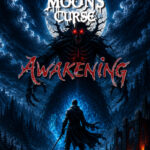
The Moon's Curse Trilogy — Awakening, Descent, and Blood Moon — is available now in paperback, hardcover, and eBook at londynpublishing.com. All three books are complete and waiting.