
If you've spent any time in dark fantasy communities lately, you've noticed the pattern: readers are tired of the vampire. Not tired of the blood, the immortality, the seduction of the monstrous, but tired of the same monster wearing a different coat every season. The genre needed something that felt ancient rather than recycled, and that gap is exactly where the Nythrall were born.
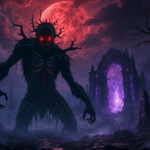
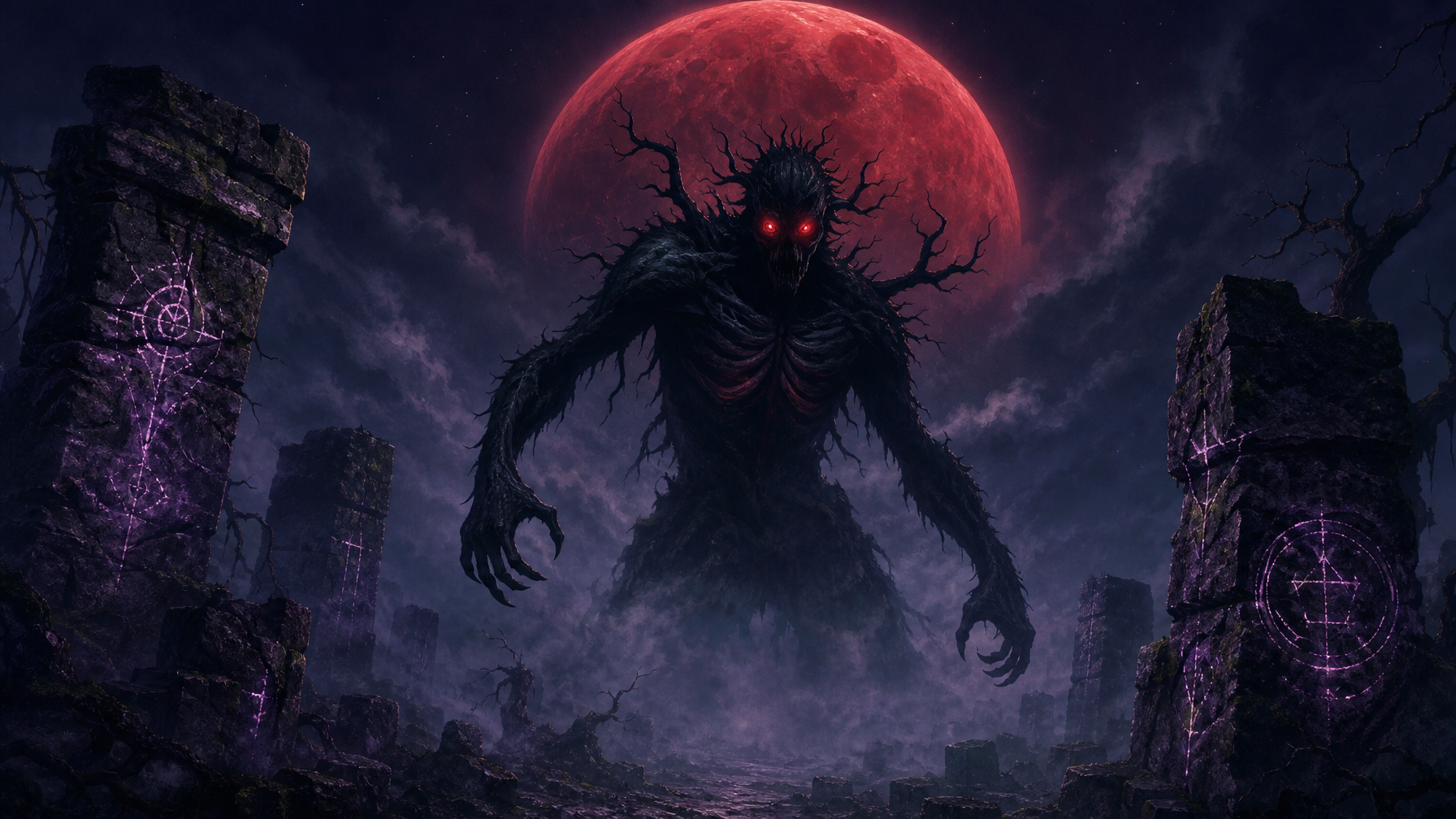
The Nythrall are the central mythological creatures of The Moon's Curse trilogy, and they were deliberately built to sit outside the vampire tradition entirely. They aren't undead. They aren't cursed humans. They are moon-bound, an entirely different category of supernatural existence, and that distinction changes everything about how they behave, how they're fought, and how they're understood by the people who study them.
What "Moon-Bound" Actually Means
Most monster mythologies in fantasy fiction borrow from a familiar toolkit: garlic, sunlight, stakes, holy water. The Nythrall answer to none of it. Their power rises and falls with the lunar cycle, reaching its most dangerous peak during the Blood Moon, a rare celestial event when the barrier separating the Nythrall from the human world, known as the Veil, grows thin enough to fail.
This is worldbuilding with a mechanism, not just a name. The moon isn't set dressing in this series, it's a countdown clock. Every character who understands the Nythrall, from the scholar Lira Thornfield to the conflicted priest Father Kalen Draemir, is really tracking the same question: how much time is left before the Veil gives out.
Shadow, Not Undeath
Where vampire fiction is preoccupied with the tension between life and death, the Nythrall mythology is built around the tension between shadow and substance. These are creatures of dimming, of erosion, entities that exist partially outside the physical world and only fully manifest when conditions allow it. That's a very different horror than "will this bite turn me into one of them." The horror of the Nythrall is closer to cosmic dread: the sense that something has always been on the other side of a very thin wall, and the wall is failing.
This is part of why dark fantasy readers who love Bloodborne, Dark Souls, or the folkloric dread of The Witcher tend to gravitate toward this series. The Nythrall aren't a metaphor for temptation. They're a metaphor for what happens when ancient agreements between worlds start to break down.
The People Who Study the Threat
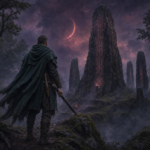
No mythology works without characters who take it seriously, and The Moon's Curse trilogy builds its cast around exactly that responsibility. Evan, the trilogy's protagonist, is a warrior forced to understand a threat he didn't ask to inherit. Lira Thornfield, fiery-haired and sharp-eyed, approaches the Nythrall as a scholar first, someone who believes the answer to survival is buried in records nobody has bothered to translate in centuries. Auren Draevan, a ranger in a forest-green cloak, represents the practical, boots-on-the-ground response: track them, understand their patterns, survive the encounter.
And then there's Father Kalen Draemir, whose devotion to the old Veil doctrines makes him one of the more unsettling figures in the series, not because he's wrong about the danger, but because his certainty about the solution is its own kind of threat.
Why This Matters for Readers Hunting for Something New
If you're searching for dark fantasy books that break from the vampire fiction mold without abandoning gothic atmosphere, occult lore, and monster mythology, the Nythrall were built for exactly that gap. They belong to the same shelf as grimdark fantasy and supernatural thrillers, but their mechanics, moon cycles, a failing Veil, an ancient and specific cosmology, give them a texture that feels less like tradition and more like discovery.
That's the ambition behind Londyn Publishing as a whole: not just another entry in epic fantasy, but a mythology built with enough internal logic that readers can dig into it for years. The Nythrall aren't the villain of a single scene. They're the reason an entire trilogy exists.
Beyond the Veil, the moon is always watching. The only question is how long you have before it remembers your name.
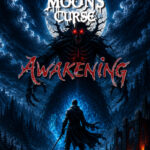
The Moon's Curse trilogy, Awakening, Descent, and Blood Moon, is available now in paperback, hardcover, and eBook at londynpublishing.com.