
For a genre built on the undead, dark fantasy has grown tired of the same fangs.
Vampires built the foundation of modern gothic horror, and for good reason. But readers searching for dark fantasy books in 2026 are increasingly drawn to something else: monster mythology that doesn't borrow its rules from Dracula, doesn't sparkle in sunlight, and doesn't answer to a genre template written a century ago. They want creatures that feel excavated rather than inherited, born from a world's own broken logic instead of a shared universal canon.
This shift matters. If you're building a reading list of the best dark fantasy series for someone who has already read every vampire novel worth reading, the real find is a book that invents its own monster from the ground up.
The Problem With Borrowed Monsters
Traditional vampire fiction operates on rules most readers already know: sunlight, garlic, stakes, invitations, blood as currency. Even the best entries in the genre are, in some sense, in conversation with rules laid down before any of us were born. That familiarity is comforting, but it caps the horror. You cannot be truly unsettled by a threat whose limits you learned in middle school.
Gothic fantasy novels built around original creature systems don't have that ceiling. When an author invents the physics of their monster, the reader has no shortcut to safety. They have to learn the rules in real time, alongside the characters, which is where genuine dread lives.
What Original Monster Mythology Looks Like Done Right
The strongest examples of this trend share a few traits. First, the creature's power source is tied to something cosmic and cyclical rather than arbitrary, a lunar phase, a seasonal threshold, an astronomical event that governs when the threat rises and when it recedes. Second, the monster's weaknesses emerge from the internal logic of the world rather than a checklist of folklore. Third, and most importantly, the creature is never purely evil. The best monster fantasy books treat their creatures as a consequence of something the world did wrong, not a random evil that showed up to be defeated.
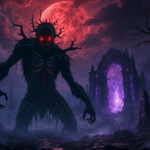
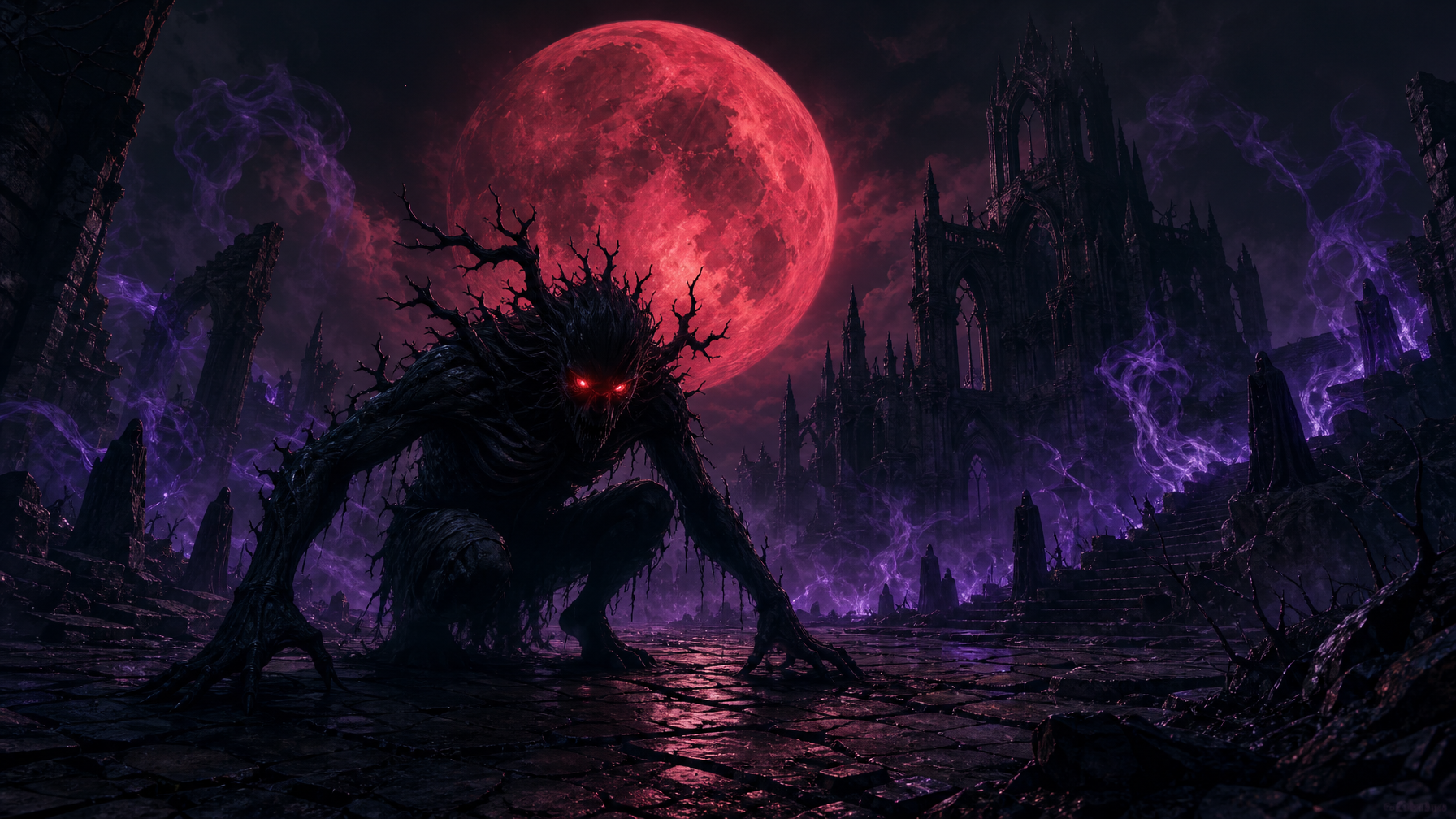
This is the model behind the Nythrall, the moon-bound entities at the center of The Moon's Curse trilogy. The Nythrall are not vampires wearing a different name. They are shadow-bound, tethered to the Blood Moon's cycle rather than any solar rule, and their hunger is not for blood but for what the Veil itself was built to contain. They rise because a barrier between worlds is failing, not because a curse was cast on one unlucky bloodline. Their mythology is inseparable from the trilogy's central conflict: a Veil that separates humanity from what waits beyond it, weakening with every Blood Moon that passes.
That distinction, monster as symptom rather than monster as villain, is what separates disposable creature-of-the-week fantasy from world-building that rewards a reader's full attention.
Why This Resonates With BookTok and Beyond
Readers active in the BookTok and Bookstagram fantasy communities have been vocal about wanting dark fantasy creatures with their own internal mythology. Comparisons to The Witcher's beastiary, Bloodborne's cosmic horror, and Dark Souls' fragmented lore come up constantly in these discussions, and the throughline is clear: audiences want to feel like they're piecing together a mythology rather than being handed one they already memorized.
This is also why lore-heavy fantasy universes retain readers longer than standalone horror novels. A monster with rules, a history, and a reason for existing gives readers something to theorize about between books. It creates the kind of fan discussion that keeps a series alive years after publication, the same instinct that drives deep dives into Nythrall origin theories, Veil mechanics, and the twelve sigils referenced throughout the trilogy.
Building a Reading List Around Original Mythology
If you're compiling fantasy book recommendations for a reader who wants something beyond vampire fiction, look for a few signals before you commit:
The monster's abilities should be explained by the world's own rules, not genre convention. The creature should have a documented history within the story, ideally one that predates the protagonist's involvement. And the threat should escalate on a schedule tied to the world itself, a moon cycle, a season, a countdown, rather than appearing whenever the plot needs tension.
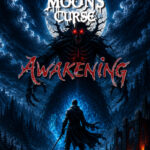
The Moon's Curse trilogy, spanning Awakening, Descent, and Blood Moon, was built around exactly this structure. Evan, Lira Thornfield, Auren Draevan, and Father Kalen Draemir each encounter the Nythrall from a different angle, a warrior forced to fight what he doesn't understand, a scholar trying to translate what the Veil Covenant actually says, a ranger who has spent years watching the border, and a priest who believes the encroaching dark is something closer to judgment than accident. That structural choice, four perspectives on one mythology, is part of what separates ancient prophecy fantasy that feels lived-in from fantasy that feels assembled from spare parts.
The Takeaway for Dark Fantasy Readers
The next wave of great supernatural thriller books and epic supernatural fiction won't be defined by better vampires. It will be defined by authors willing to build a monster from nothing, tie it to something cosmic and inevitable, and let its horror come from what it reveals about the world rather than what it does to a single victim.
For readers hunting for that experience, the question worth asking isn't "is this scary." It's "did this world earn its monster." The Moon's Curse trilogy was built to answer yes.
Beyond the Veil, the Nythrall are waiting. Explore The Moon's Curse trilogy, Awakening, Descent, and Blood Moon, at londynpublishing.com.