
The Ecology of the Veil: How Land Remembers Broken Pacts in The Moon’s Curse
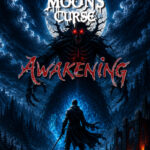
In traditional high fantasy, magic functions like an open sky. It exists everywhere, waits patiently for an incantation, and refills its wells once a battle ends. But within the dark fantasy world of The Moon’s Curse Trilogy, the Veil is not an infinite resource. It is a boundary held together by an ancient, fragile agreement—and the land itself keeps score when that contract frays.
When readers step into Awakening, Descent, and Blood Moon, the threat facing humanity is not merely an invading army. It is an ecological collapse of metaphysical law. Long before the sky turns crimson and monsters breach civilization, the frontier begins to rot in quiet, observable ways.
The Veil as a Living Contract
The central premise of The Moon’s Curse rests on a singular truth: the barrier separating our world from the terrifying entities known as the Nythrall was never an impenetrable stone fortress. It was a binding covenant ratified centuries ago.
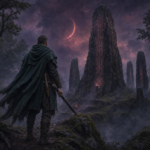
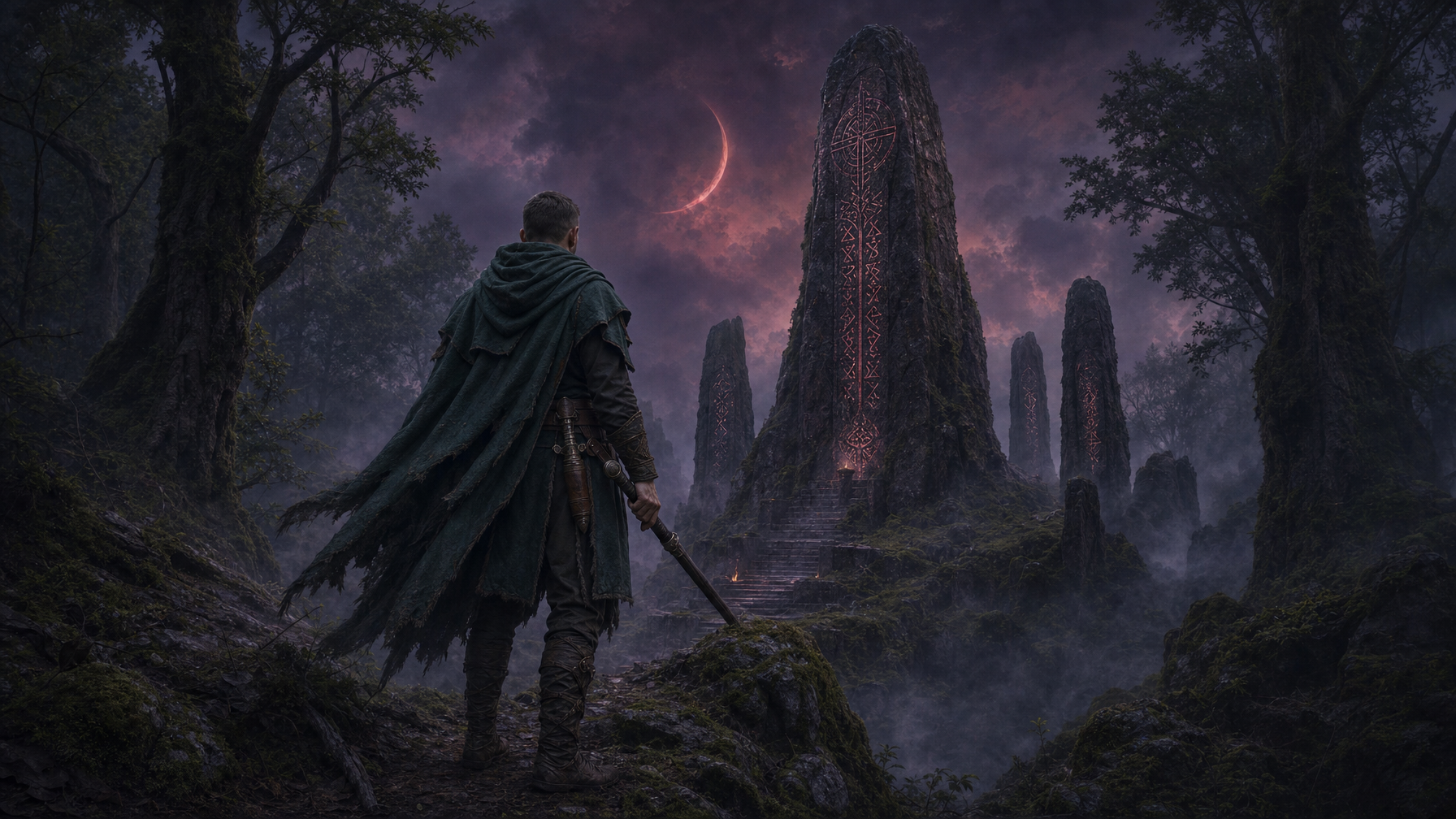
Ancient guardians established focal points across the continent—anchors known as the Covenant Stones. These monoliths did not generate an artificial force field; they bound the land itself to a perpetual promise. In exchange for peace and containment, human settlements agreed to respect boundaries, honor specific seasonal silences, and preserve the tethered equilibrium.
Over generations, however, institutions like the Church of Lux gradually forgot the practical mechanisms of that containment. Priests reclassified urgent structural maintenance procedures into decorative heritage rituals. The living boundary became an abstraction, treated as an eternal constant rather than a delicate balance requiring constant vigilance.
When a contract is neglected by one party, the physics governing it begin to fail.
Subtle Symptoms: The Geography of Thinning
Before any cataclysmic tear appears in the sky, the land displays physical symptoms of strain. Readers of The Moon’s Curse see this through the eyes of ranger Auren Draevan, whose survival along the Rimward Margin depends entirely on reading environmental anomalies that imperial cartographers dismiss as survey errors.
1. Sound Distortion and Unnatural Silence
Around active nodes where the Veil is healthy, the wild forest carries normal acoustic weight: wind rustling through pine needles, running water over slate, and the scuttle of nocturnal animals. But where a Covenant Stone fractures or its runes fade, sound behaves unnaturally. Echoes vanish into thin air. Voices fail to carry across narrow clearings. A heavy, suffocating hush descends over the ridges—a warning sign that the atmospheric fabric has worn through.
2. Rot Without Warmth
In areas subjected to Veil degradation, organic matter does not decay normally. Leaves turn ash-grey rather than brown. Bark peels away from oak and cedar in brittle, bone-white ribbons. The smell is not loam or damp moss, but cold copper and burnt salt. The soil loses its warmth, refusing to freeze completely while killing any seed planted within it.
3. Displaced Shadows
Because the Nythrall are moon-bound shadow entities tied directly to lunar cycles, their approach bends natural illumination. Along the frontier, torches cast two shadows instead of one. Moonlight falls at an impossible angle through the canopy, illuminating stone pathways while leaving clear clearings submerged in pitch-black shadow.
Why the Nythrall Are Not Traditional Monsters
Most popular fiction reduces supernatural antagonists to predatory instincts: vampires hunting for blood, or beasts driven by feral hunger. The Nythrall operate under a far more terrifying framework: cold legal entitlement.
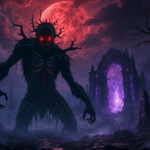
They are ancient, intelligent, and bound to the movements of the celestial sphere. When the Blood Moon ascends, their tether shortens and their authority expands. They do not cross the boundary out of unthinking bloodlust; they arrive to collect debts incurred by humanity’s broken oaths.
For protagonist Evan Hartwell, facing the Nythrall requires understanding this legal reality. Evan’s strength with a blade cannot mend a metaphysical clause. Every encounter tests whether human resolve can endure against creatures that treat human terror not as sustenance, but as a long-overdue settlement.
Meanwhile, archival scholar Lira Thornfield uncovers the terrifying truth behind closed doors: the original ledgers recording the pact were deliberately edited. Humanity did not stumble into this crisis by accident; centuries ago, early leaders sacrificed key settlements to buy borrowed time, burying the truth beneath polished marble cathedrals.
Reading Beyond the Page
World-building in dark fantasy works best when atmosphere informs character choices. In The Moon’s Curse Trilogy, survival along the edge of the known world is not about conquering monsters—it is about navigating the fallout of broken promises.
If you enjoy immersive, lore-rich dark fantasy where the environment acts as an active adversary and every shadow carries a history, explore The Moon’s Curse: Awakening, Descent, and Blood Moon. The trilogy is complete, on the shelf, and waiting for those ready to step Beyond the Veil.
The Moon’s Curse Trilogy by Jason Moore is available in paperback, hardcover, and eBook at Londyn Publishing.