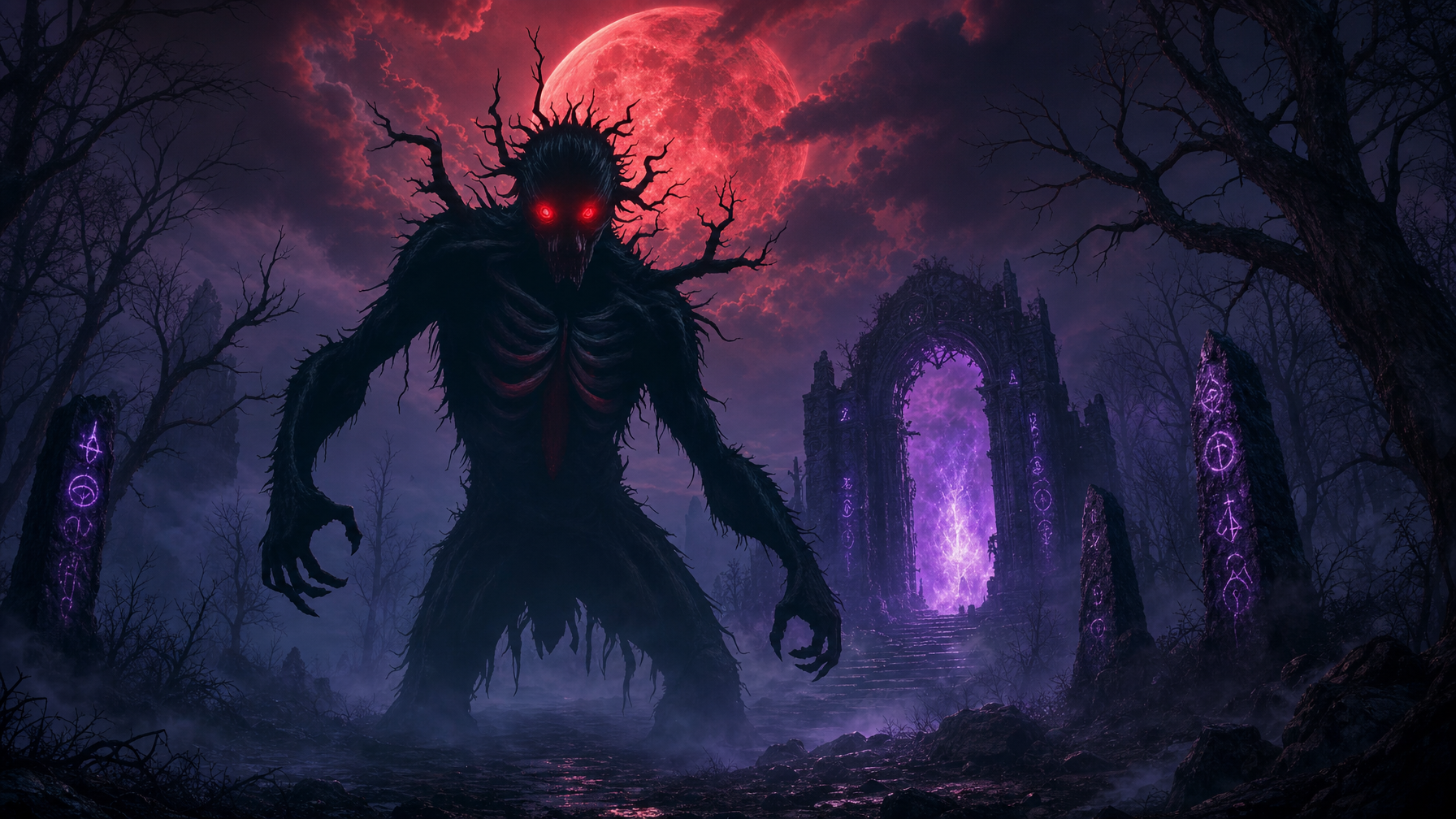

7 Essential Elements of Dark Fantasy World-Building That Create Lasting Atmosphere and Dread
Every memorable fantasy story depends on its environment, but in dark fantasy, the world does more than host the narrative. It leans into the story. It threatens, constrains, and breathes down the necks of the characters. When a dark fantasy setting is constructed with care, atmosphere becomes its own character—a pervasive force that dictates choices and shapes every conflict.
If you are a reader searching for your next immersive dark fantasy series or a writer crafting a universe beyond the ordinary, you have likely noticed that standard fantasy tropes often fail when transplanted into darker subgenres. High fantasy thrives on wonder and triumph; dark fantasy thrives on friction, institutional decay, and cosmic vulnerability.
When constructing the universe behind The Moon’s Curse Trilogy, several core principles guided how the world was built. Here are seven essential elements of dark fantasy world-building that transform a setting from a static backdrop into an unforgettable environment of dread and mystery.
1. Magic Systems Grounded in Debt and Consequence
In traditional epic fantasy, magic is often an empowering gift or a clean skill set that can be mastered through study. In dark fantasy, magic is almost always a transaction—and the bill always comes due.
When magic carries severe, irreversible costs, every spell cast creates tension rather than relief. The question shifts from "Can the protagonist perform this magic?" to "Can they afford what it will cost them?"
In The Moon’s Curse, veil magic is not a inexhaustible resource tap. It is a living, structural boundary governed by ancient treaties. When characters attempt to channel energy from beyond the Veil, they are disturbing a delicate equilibrium established during the ratification of the Covenant Stones. The magic does not merely drain physical energy; it thins the barrier protecting the human world, inviting the very entities they are trying to keep at bay.
When your magic system relies on debts, sacrifices, and permanent consequences, readers feel the weight of every decision.
2. Monsters Driven by Law and Logic, Not Mindless Thirst
One of the quickest ways to deflate dread in dark fantasy is to make monsters mindless killing machines. While rampaging beasts can create temporary action, true psychological horror stems from entities that operate under cold, unforgiving rules.
Consider the difference between a simple monster and a terrifying dark fantasy entity. A simple beast attacks because it is hungry. An ancient entity acts because a contract signed three centuries ago demanded payment beneath the Blood Moon.
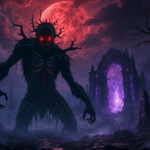
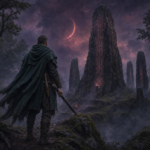
The Nythrall—the primary shadow entities in The Moon’s Curse Trilogy—were designed to subvert classical monster tropes. They are not traditional, romanticized vampires, nor are they erratic beasts. They are moon-bound entities tied to cosmic cycles and legalistic covenants. Their patience is formidable because they know the human side of the agreement is crumbling. When a protagonist like ranger Auren Draevan encounters the Nythrall along the Rimward Margin, the danger is not just claws and teeth—it is navigating an ancient, binding law that humanity has forgotten how to read.
3. Lived Habit Over Expository Lore Dump
World-building fails when the narrative stops to deliver a history lecture. Readers do not want a encyclopedic manual on ancient dynasties before they care about the characters living in their ruins.
The most effective dark fantasy world-building surfaces through lived habit. How do ordinary people adapt their daily lives to survive in a hostile world?
- Do border villages extinguish their hearth fires before dusk?
- Do travellers carry specific iron sigils or dried salt across threshold boundaries?
- How do institutions adapt when their foundational truths begin to rot?
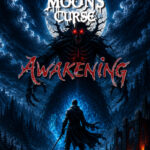
In Awakening (Book 1 of The Moon’s Curse), warrior Evan Hartwell does not spend chapters reflecting on the administrative history of the borderlands. Instead, we see how the people along the frontier live: doors barred with reinforced iron, unuttered names avoided after dark, and patrol routes altered based on the subtle shifts of the night sky. When world-building is expressed through habit and survival routine, the reader absorbs the lore naturally without ever feeling infodumped.
4. Institutional Decay and Competing Ideologies
A dark fantasy world rarely features a single, pure institution fighting against absolute evil. More often, the institutions responsible for protecting the realm have become rigid, corrupt, or blinded by their own dogma over centuries of security.
When the institutions designed to protect humanity become part of the threat, the protagonist is caught between two fires: the cosmic horror waiting outside the gates and the uncompromising zealotry within them.
In The Moon’s Curse Trilogy, Father Kalen Draemir represents the Church of Lux—an order that has reclassified ancient binding rituals into empty heritage observances. As scholar Lira Thornfield uncovers redacted archival ledgers, she realizes that the Church’s certainty is built on erased history. The conflict is not merely sword against shadow; it is a battle between those who cling to institutional preservation and those willing to face the terrifying truth of a fading Veil.
5. Geography That Echoes the Narrative Themes
In high fantasy, a mountain range is often just a physical obstacle on a map. In dark fantasy, geography should reflect the world's spiritual and physical decay.
Atmospheric dark fantasy relies heavily on environment as mood:
- Thinning Nodes: Places where the physical terrain feels brittle, where shadows stretch incorrectly, and where sound travels with unnatural clarity.
- The Rimward Margin: Frontier territories where civilization gives way to forgotten ruins, where maps cease to agree with the land, and where the air carries the metallic tang of old blood.
- Ruined Sanctuaries: Ancient sites built to hold back horrors, now overtaken by moss, cracked stone, and forgotten sigils.
When your geography is infused with history and danger, even a walk through a mist-laden forest carries narrative stakes.
6. The Omnipresence of Time and Cosmic Cycles
Dark fantasy excels when characters are fighting against an unyielding clock. Natural or supernatural phenomena—eclipses, seasonal shifts, celestial alignments—add an atmospheric pulse to the story.
The rise of the Blood Moon serves as the central ticking clock in The Moon’s Curse. It is not merely a visual set piece; it is the moment when the Covenant thins to its absolute limit, granting the moon-bound Nythrall their greatest strength. When every character knows that a specific date on the calendar brings guaranteed escalation, every quiet moment in the narrative is charged with anticipation.
7. Leaving Room for Unanswered Lore
The final, crucial element of dark fantasy world-building is knowing what not to explain.
When every mystery is neatly solved and every ancient origin is cataloged, the world shrinks. The most haunting fantasy universes leave dark corners on the map—unmapped regions, unindexed ledgers, and ancient entities whose true names were lost before recorded history.
By preserving a sense of the unknown, you invite the reader’s imagination to fill in the dark. The fear of what might lurk beyond the edge of visibility is always far more potent than anything laid plain on the page.
Step Beyond the Veil with Londyn Publishing
Building an atmospheric dark fantasy universe requires balancing rich lore with relentless story pacing. At Londyn Publishing, The Moon’s Curse Trilogy by Jason Moore was written as one complete, finished war—offering readers a deep, immersive world without cliffhangers or endless multi-year waits between installments.
If you crave dark fantasy filled with ancient covenants, complex characters like Evan Hartwell and Lira Thornfield, and original creature mythology that redefines the night, it is time to start your journey.
Explore The Moon's Curse Trilogy at Londyn Publishing — Available now in paperback, hardcover, and eBook.