
Traditional houses keep a copy desk that never lets Book 3 contradict a street name from Book 1. Indie authors usually have a laptop, a second pair of eyes if they are lucky, and a reader who will notice the contradiction at 1 a.m. and never forget it.
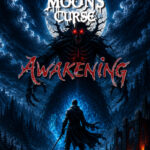
When I finished The Moon’s Curse Trilogy before launch, that problem got larger, not smaller. Awakening, Descent, and Blood Moon had to sit on the same shelf and still agree with one another. There was no year of reader mail to catch a missed clause. The continuity desk had to exist in the house before anyone else opened the first page.
What the desk actually holds
Mine is not a pretty wiki. It is a working file that answers four questions every time a chapter moves:
- What is this place called on the map, in the Church of Lux ledgers, and in a Rimward village mouth. Those three names are not always the same, and they should not collapse into one convenient label.
- What date does the Blood Moon fall on in this book, and has anyone already treated that date as rumor, doctrine, or field fact.
- Which covenant stone is standing, which is unlocated, and who in the scene is allowed to know the difference. Evan Hartwell can feel a thinning. Lira Thornfield can file a gap. Auren Draevan can walk a lean. Father Kalen Draemir can refuse the category. They do not share a glossary.
- Have the Nythrall already been named as moon-bound creditors in this viewpoint, or is the speaker still using Church animal language. Mixing those registers in the same mouth is a continuity error, even if the lore is “correct.”
If a sentence cannot survive those four checks, it does not go in the printed book. It goes back to the desk.
Why I check speech, not just facts
A continuity miss is rarely a wrong year. It is a character speaking with knowledge they have not earned yet.
Early drafts of Descent had Lira Thornfield explain a node as if she had already walked it with Auren Draevan. The fact was true in the world file. It was false in her mouth. Readers feel that kind of leak as cheap omniscience. They may not quote the page. They simply stop trusting the archive.
The desk’s job is to keep the universe honest at the level of who is talking. The Veil can be a living contract in the author’s notes and still be a sermon, a weather report, or a locked drawer depending on the speaker. Beyond the Veil extras can hold the unused pages. The novels should not.
A practical pass before you typeset
If you are an indie author sitting on a complete series, run one pass that has nothing to do with prose beauty:
- List every proper name that appears in more than one book. Read them aloud. If two spellings exist, pick one and hunt the other.
- Mark every moment a character learns a rule. Then search forward. If they lecture that rule before the mark, cut the lecture or move the learning.
- Check creature language. If your monsters are contractual, no viewpoint should slide into folklore teeth unless that viewpoint is lying on purpose.
That pass is dull. It is also the reason a finished trilogy feels built instead of assembled.
Why this belongs to indie work
I did not have a house continuity editor. I had the obligation that comes with promising readers the war is already over before they buy Book 1. Londyn Publishing’s promise is atmosphere, yes, but it is also that the shelves agree with each other.
The continuity desk is how that promise gets kept when there is no one else in the room. The candle burns down. The ledger stays closed until the names match. Then the books go out.
The complete trilogy is on the shelf now. Start with The Moon’s Curse: Awakening at londynpublishing.com.