
Building Lore Ecosystems That Outlast the Page: An Indie Author's Guide
When I sat down to build The Moon's Curse Trilogy, I made a conscious design choice: the world beyond the page had to function like a living archive, not just decorative scenery.
In indie dark fantasy, world-building often gets reduced to two extremes. You either get a massive 500-page encyclopedia of unpronounceable names that slows the narrative to a crawl, or you get an aesthetic coat of paint over a standard plot. But for modern fantasy readers, especially those who inhabit lore-rich gaming worlds like Elden Ring or atmospheric book communities, world-building is an interactive ecosystem. They aren't just reading a storyline; they are exploring a space.
Here is how I approached building the lore architecture for The Moon's Curse, and how indie authors can create world systems that engage readers long after they turn the final page.
1. Treat World Rules as Contracts, Not Background Decor
The most effective dark fantasy settings operate under clear, systemic pressure. If magic exists, it carries a ledger. If ancient entities lurk in the shadows, they obey a structure.
In The Moon's Curse, the Veil separating humanity from the Nythrall is not a nebulous wall of mist. It is a living contract established by ancient covenants. When the Veil thins under the Blood Moon, it doesn't thin at random. It thins along specific geographic nodes, leaving threshold communities to read the physical "lean" in the air.
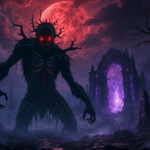
Likewise, the Nythrall are not traditional vampires driven solely by bloodlust. They are moon-bound shadow creatures tied to ancient oaths and due dates. When a creature system operates by rules, every encounter becomes a puzzle of leverage and cost rather than a simple action scene.
Takeaway for Authors: Define the systemic cost of your world early. When readers understand the rules, tension builds naturally because they can anticipate when a boundary is about to break.
2. Give Every Major Character a Distinct POV Instrument
Multi-POV sagas fail when every character views the world through the same lens. To make a lore-heavy universe feel expansive, each perspective should act as a specialized sensing organ for the world's mechanics.
In The Moon's Curse, I designed four distinct POV fingerprints:
- Evan Hartwell: Acts in the physical gap, driven by practical duty and survival where official explanations fail.
- Lira Thornfield: Views the world through archive literacy, deciphering forgotten texts, ancient covenant stone clauses, and historical gaps.
- Auren Draevan: Reads the field literacy of the wilderness, understanding ridge lean, Veil node shifts, and threshold weather.
- Father Kalen Draemir: Approaches the unfolding crisis through religious certainty and administrative classification, treating ancient bindings as sacred dogma.
When your POV characters interrogate different aspects of the same crisis, the reader gets a 360-degree view of the world without needing an omniscient narrator to explain it.
Takeaway for Authors: Run the swap test on your chapters. If you can swap a paragraph of internal monologue or world observation between two characters without it feeling wrong, the voice isn't distinct enough yet.
3. Build an Off-Page Architecture ("Beyond the Veil")
Your manuscript should only show the tip of the iceberg. However, the submerged 90% of your world building shouldn't just rot in a private document on your hard drive.
For Londyn Publishing, we created Beyond the Veil and companion lore dispatches. These digital codex entries allow readers to inspect artifact histories, creature compendiums, and regional maps at their own pace.
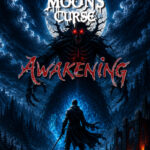
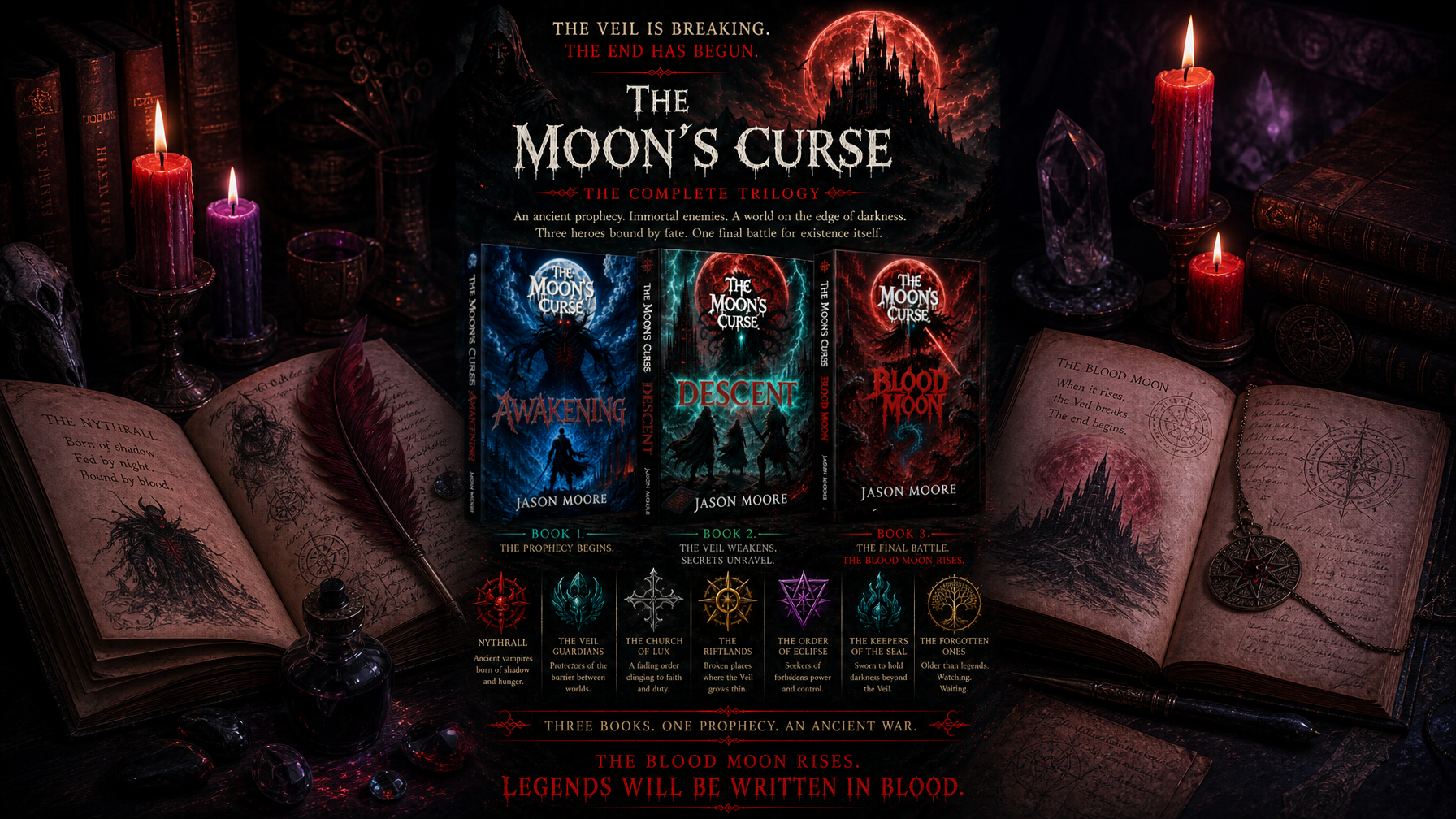
When readers finish Awakening, Descent, and Blood Moon, they don't have to leave the universe behind. Providing curated extras—from sigil lore to history notes—turns passive readers into active lore-decoders and community advocates.
Takeaway for Authors: Plan your companion assets during the writing process. Character profiles, maps, and artifact histories make ideal bonus content for newsletters, special editions, and website archives.
4. Deliver Binge-Ready Completion
The indie publishing landscape offers a unique advantage: agile release strategies. Fantasy readers spend significant time, emotion, and money jumping into new series. One of the biggest friction points for dark fantasy fans is the fear of an unfinished saga or multi-year delays between installments.
Writing and finalizing The Moon's Curse as a complete trilogy before launch allowed us to promise immediate resolution. When a reader finishes Book 1, Book 2 (Descent) and Book 3 (Blood Moon) are already waiting on the shelf. That sense of reliability builds long-term reader trust faster than almost any marketing campaign.
Final Thoughts for Indie Creators
Building an immersive fantasy brand isn't about copying traditional publishing templates or chasing short-lived social media trends. It's about respecting your audience's intelligence and desire for atmosphere.
Give them a world with genuine stakes, characters with distinct eyes, and a lore ecosystem that extends past the final chapter. When you build the architecture with care, the readers will come in and stay Beyond the Veil.