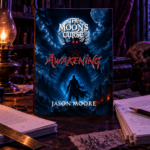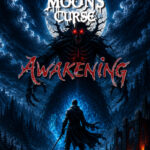
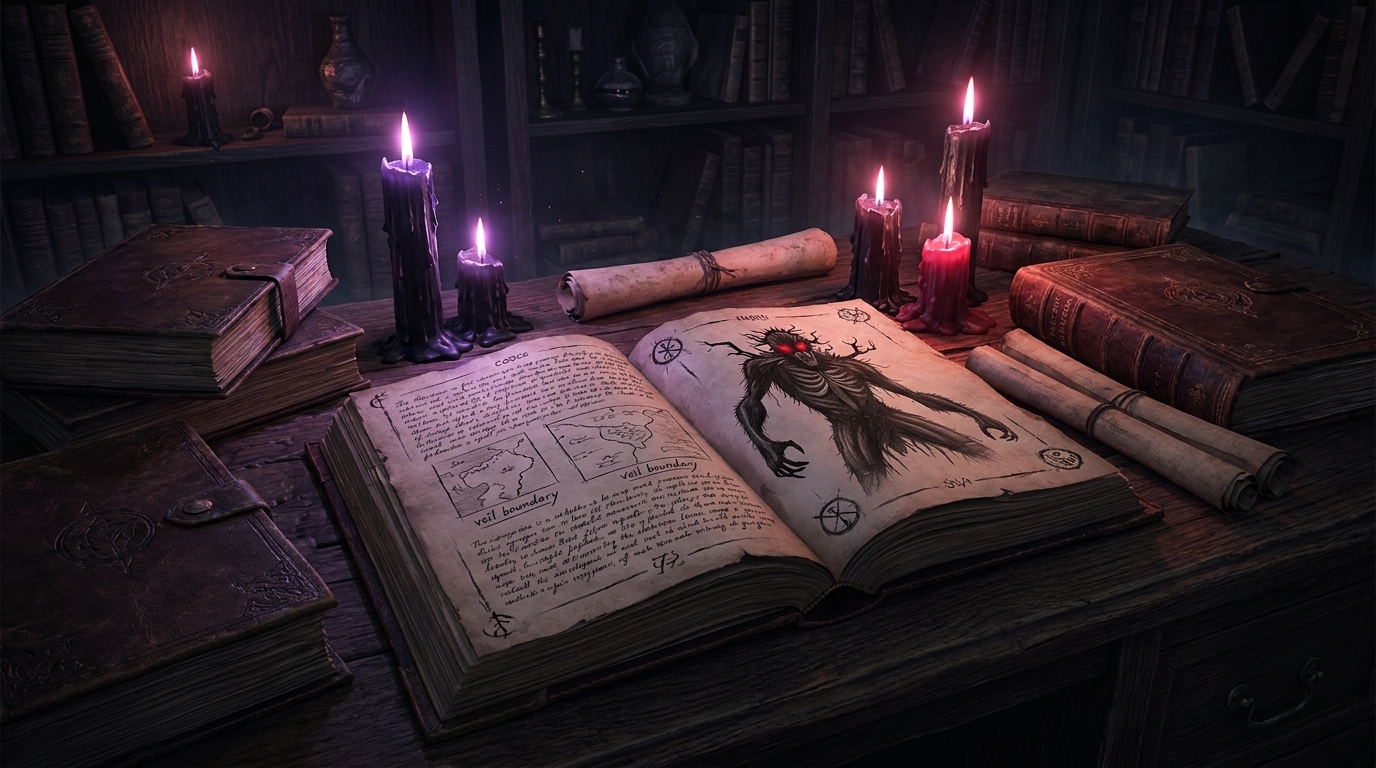

When readers finish The Moon's Curse trilogy, they meet a finished world. The Veil has rules. The Nythrall have terms. Father Kalen Draemir has a theology that never flinches. Evan Hartwell, Lira Thornfield, and Auren Draevan move through geography that already existed before any of them arrived.
What most readers never see is the document that made that consistency possible: a private lore bible that never ships with the books.
This is not a marketing asset. It is not a bonus PDF. It is the working spine of Londyn Publishing's dark fantasy universe, and most of it stays locked away on purpose.
Why the page is not the archive
Indie authors hear a lot of advice about "showing your work." Share process. Share maps. Share deleted scenes. That impulse is generous, and sometimes it helps readers feel closer to the story.
It can also hollow out the story.
Dark fantasy thrives on the sense that the world is larger than the camera. If every sigil, every node, every moon-bound obligation is explained in a public appendix, the mystery collapses into a FAQ. The Veil stops feeling like a living boundary and starts feeling like a wiki.
For The Moon's Curse, the private lore bible exists so the published books can remain selective. The trilogy tells you what you need in order to feel the cost of the Blood Moon. It does not dump three thousand years of civilizational amnesia into a glossary.
That restraint is a craft choice, not a withholding tactic.
What actually lives in the bible
The private file is uglier than a finished codex. It looks like a production document: contradiction logs, name tables, timeline collisions, notes on what the Nythrall may never say out loud, and a running list of "rules that sound cool but break Book 3."
A few categories that matter most:
Binding logic. The Veil Covenant is not atmosphere. It is contract architecture. The bible tracks what the Nythrall surrendered when they ratified it, what humanity forgot, and which obligations still fire when no one is watching. Without that ledger, "moon-bound" becomes a vibe word instead of a constraint.
Character epistemology. Lira Thornfield knows through archives. Auren Draevan knows through the field. Evan Hartwell knows through pressure and consequence. Father Kalen knows through certainty that never required proof. The bible keeps those knowledge systems from bleeding into each other. When a scene wants Lira to "just sense" something Auren would know from a trail, the document catches it.
Geography as obligation. Veil nodes are not scenic landmarks. They are threshold infrastructure. The bible holds the difference between a place characters visit and a place that still enforces terms. That distinction shaped how Descent handles silence, and how Blood Moon treats arrival as legal as much as physical.
What must never appear. Half the value of a lore bible is the kill list. Ideas that would dilute the Nythrall into traditional vampire folklore. Prophecy language that would make the ending feel pre-written in the wrong way. Backstory that would make Father Kalen explain himself. If it weakens the dread, it stays off the page.
Consistency without museum-piece rigidity
A private bible can become a prison. Writers freeze scenes because a note from year one contradicts a better idea in year three. The opposite failure is worse: every book invents a new metaphysics and hopes readers will not notice.
The working method for this trilogy was simple. The bible is authoritative on structure and flexible on texture.
Structure means the Covenant's duration logic, the cost of breach, the fact that the Nythrall remember what civilization forgot, and the personal price each of the four central figures pays when a world-event becomes intimate. Texture means the sensory detail of a chamber, the exact wording of a muttered prayer, the weather on a night that does not change the terms.
When a draft improved a scene but threatened structure, the scene lost. When a draft improved texture without touching structure, the bible stayed quiet. That discipline is how Awakening, Descent, and Blood Moon can feel continuous without reading like three installments of the same outline.
Why indie publishers need this more than they think
Traditional houses often absorb continuity through editorial teams, series bibles owned by the publisher, and long production cycles. Indie dark fantasy authors usually wear every hat. You are the mythographer, the continuity editor, the cover art director, and the person who has to remember whether the seventh stone's location was ever stated in dialogue.
Without a private document, you will invent the world twice. The second version will contradict the first in small ways readers feel before they can cite. Lore-forward audiences on BookTok and in fantasy forums are excellent at that kind of detection. They are not trying to "gotcha" you. They are treating your mythology the way you asked them to: as real.
A private lore bible is how an indie imprint protects reader trust. It is also how you protect your future self when you return to the universe months later and no longer remember which silence was intentional.
What stays secret, and why that is the point
Beyond the Veil, the most powerful material is not always the material you publish.
Some entries in the Londyn Publishing bible will never become blog posts, extras, or vault unlocks. Not because they are incomplete, but because their job is to hold pressure under the story. The moment you surface every hidden clause, the Nythrall stop feeling like signatories to an ancient deal and start feeling like characters with a public press kit.
Readers still get immersion. They get a complete trilogy with an ending that was written to land. They get creature mythology with internal logic, not costume horror. What they do not get is the scaffolding. Scaffolding is for builders.
If you are writing your own dark fantasy series, build the private document early. Make it ugly. Make it strict about contracts, costs, and who is allowed to know what. Then write the books as if that document does not exist on the shelf beside the reader.
The page should feel inevitable. The archive should remain yours.
The Moon's Curse trilogy. Awakening, Descent, and Blood Moon. Is complete and available now at londynpublishing.com. For more on the craft behind the series, explore the blog and the world waiting Beyond the Veil.