
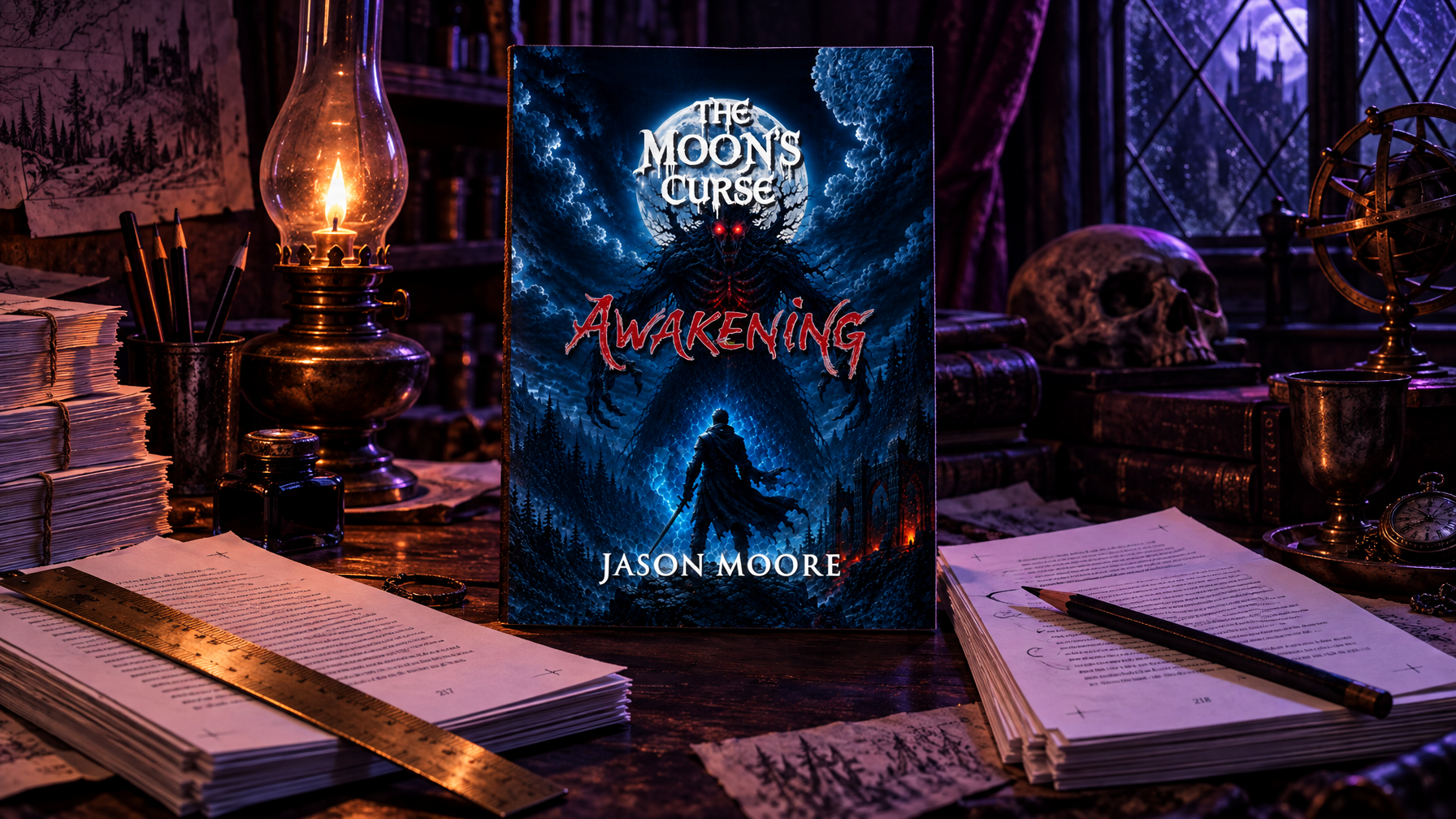

The last chapter of a finished trilogy is not the last job. The printer still has to agree.
When Awakening, Descent, and Blood Moon were already written, I still had to sit with a spec sheet: trim, spine, paper, folio. Londyn Publishing is a one-desk house. There is no production department waiting to tell me a gutter ate a clause. If a page number walks off the map, the reader meets it as a hole, not as a printer's joke.
What a spec sheet is actually for
A spec sheet is not branding. It is a contract with paper.
I write trim first. Then spine. Then whether the interior can carry the same weather as the cover without shouting. The Veil does not need a larger font because a chapter felt important. The Nythrall do not need extra leading because a scene felt heavy. If the type is doing public relations, I send it back the way I send a helping sentence back in the clerk pass.
Folio numbers are the quiet test. If Book 2's interior starts numbering like a sequel that wants to be a reboot, the catalog is already lying. Hardcover, paperback, and eBook can share one catalog without ranking each other. They still have to share one spine logic. A reader who opens Descent after Awakening should not feel a different house.
Where plot leaks into production
The leaks are small.
A chapter title that explains the thinning before Evan Hartwell has felt it. A running header that names a settlement Auren Draevan has not yet walked. A contents page that files Lira Thornfield's archive as complete when the catalog still has a gap. Father Kalen Draemir's hours do not belong in a pretty drop cap if the hour was skipped.
I caught one of those on paper, not on screen. Screens forgive. Unbound pages under a lamp do not. A folio sat in the gutter like a signature that had been moved. The scene was fine. The object was not. I treated it the way I treat a Covenant Stone that has been relocated: the ground still holds the old term. You do not recast the rings. You recast the hour.
Why this is an indie problem
Traditional houses can hide a bad spec behind a department. Indie authors often fall in love with a layout before the layout has been interrogated. Love will protect a generous margin that is actually empty space doing atmosphere it did not earn.
Finishing the trilogy before launch made the pass stricter. There would be no year of reader mail to tell me Book 3's paper stock made the moon-bound tether look cheaper than Book 1. Beyond the Veil extras can hold unused pages. The printed novels cannot. If a production choice is there to reassure me the mythology is consistent, it belongs in the desk file.
Typesetting comes after the clerk pass, not before. Typesetting a paragraph you have not interrogated is how a pretty layout hides a soft explanation. The spec sheet comes after both. It is the last clerk, and it does not like you.
What survives
What survives is smaller. Evan Hartwell still feels the thinning. Lira Thornfield still leaves the gap on the page. Auren Draevan still walks where the map goes quiet. Father Kalen Draemir still keeps his categories ugly. The paper agrees.
That is the craft I can teach without pretending I have a press room. Print the interior. Measure the spine. Read the folio like it owes you nothing. Then send the file.
The complete trilogy is on the shelf. Start with The Moon's Curse: Awakening at londynpublishing.com.