
For readers seeking dark fantasy with genuine stakes, conventional tropes often wear thin. In speculative fiction, few creatures have been rewritten as frequently as the vampire. Over decades of popular culture, the archetype shifted from an ancient, predatory dread into aristocratic melodrama, seductive romance, or stylized urban leather. Yet when readers search for substantive vampire fantasy books, they are rarely looking for domestic immortals drinking wine from crystal goblets. They want the raw terror of unyielding supernatural predation, ancient curses tied to cosmological forces, and monsters that cannot be reasoned with.
Reclaiming that atmosphere requires stripping away comfortable romantic conventions and restoring the primal dread of creatures bound to darkness. In high-stakes dark fantasy, monsters are terrifying not because they have fangs, but because their existence enforces an uncompromising consequence on the world around them.
1. The Dilution of the Vampire Mythos
Traditional folklore treated vampires not as tragic aristocrats, but as revenants, corpse-like, hungry, and fundamentally severed from mortal humanity. Early folklore across Eastern Europe depicted creatures of filth, soil, and relentless hunger that returned to siphon life from the living.
The nineteenth-century literary tradition, anchored by John Polidori's The Vampyre and Bram Stoker's Dracula, introduced aristocratic manners and hypnotic seduction. While groundbreaking, this pivot paved the way for modern fantasy to domesticate the monster. By turning the creature into an eternal romantic lead or an angsty, brooding antihero, the narrative stakes inevitably shift.
When a monster desires mortal companionship or human affection, it enters the human social contract. It becomes vulnerable to charm, negotiation, and pity. True horror vanishes the moment a supernatural predator wants to be loved.
For readers immersed in grim atmospheric fiction, the most compelling dark fantasy subverts this comfortable trap. The best modern narratives treat predation as a fundamental, inescapable law of nature rather than a seductive game.
2. Cosmic Law Over Blood Feuds: Moon-Bound Predators
What makes a monster truly terrifying in an expansive fantasy universe? It is the mechanics of its origin and the nature of its hunger.
When monsters operate merely on biological hunger, they function like wild animals. When they operate on political ambition, they function like rival mortals. But when their hunger is bound to cosmic mechanics, to celestial cycles, ancient covenants, and failing metaphysical boundaries, predation becomes an existential catastrophe.
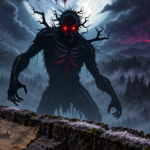
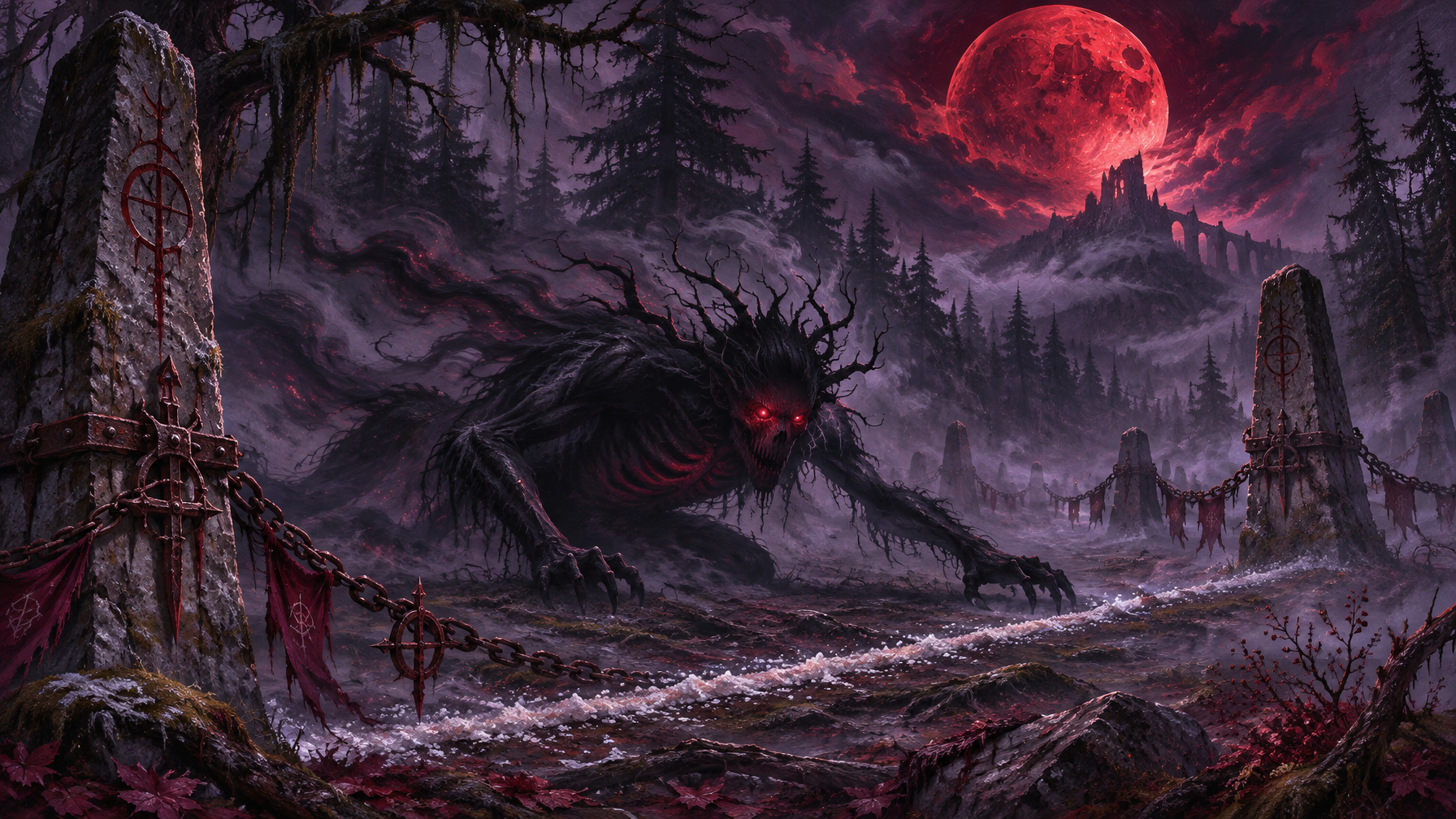
In The Moon's Curse Trilogy, this distinction shapes the central terror facing humanity. Beyond the Veil separating mortal settlements from the outer dark lurk The Nythrall. They are not traditional vampires. They do not drink blood for sustenance, nor do they inhabit opulent crypts. They are moon-bound shadow entities forged from ash, bone, and ancient metaphysical default.
Unlike gothic aristocrats who toy with victims, the Nythrall operate beneath the celestial pull of the Blood Moon. When the moon turns crimson, the Veil weakens, and the Nythrall emerge to collect the physical debt incurred by broken ancient covenants. Their anatomy reflects their horrifying purpose: bodies composed of shifting ash and shadow, chests pulsing with dull crimson luminescence, and an unnatural stillness that precedes total slaughter.
As explored in our analysis of why frontier doors stay unbarred in threshold settlements, frontier outposts along the Rimward Margin do not bar their gates against the Nythrall. Physical oak and iron brackets cannot withstand entities that bleed through stone. Instead, survival depends on meticulous ritual maintenance: boundary lines of unrefined mineral salt, covenant markers, and the grim vigilance of wardens who understand that you cannot negotiate with an entity whose sole mandate is harvest.
3. Four Hallmarks of Superior Vampire and Monster Fantasy
When evaluating modern dark fantasy books that feature vampiric and monstrous entities, discerning readers look for four narrative pillars that elevate the story above generic genre formulas:
Metaphysical Consequence Over Decorative Darkness
A dark aesthetic is not enough. True dark fantasy demands that magic and monsters carry measurable, devastating costs. When supernatural entities breach mortal boundaries, the consequences must alter the physical landscape, deplete regional resources, and demand impossible sacrifices. The threat feels real only when survival requires genuine friction.
Institutional Realism and Frontier Survival
Monsters are far more imposing when viewed through the eyes of those tasked with managing them daily. In worlds governed by deep lore, defense is not left to chosen heroes armed with magical blades. It rests on the weary shoulders of boundary wardens, scripture scholars, and frontier scouts like Evan Hartwell. When characters must calculate the depletion of salt stores, the fading of ink on boundary treaties, and the cold reality of neglected garrisons, the horror gains weight and realism.
The Inhumanity of the Predator
To preserve genuine dread, the monster must remain alien. Its motives cannot mirror human vanity or greed. Whether bound by lunar tides, blood oaths, or cosmic default, an imposing predator regards mortal life the way an auditor regards ink on a ledger, with clinical, unyielding detachment.
Complete Series Continuity
Too many promising dark fantasy series suffer from release gaps or abandoned plotlines. The most satisfying monster sagas are those written with unbroken continuity, where the mythology introduced in Book One escalates deliberately across the entire narrative arc without retcons or filler.
4. Why Dark Fantasy Demands Consequence, Not Romance
The enduring appeal of dark fantasy lies in its willingness to look directly into the abyss without flinching. Readers do not pick up gothic or grimdark fiction to escape into easy wish-fulfillment; they read it to watch resilient characters confront overwhelming darkness and fight for meaning in an unforgiving world.
When an author replaces seductive predators with inexorable horrors like the Nythrall, the emotional payoff changes completely. Victories are hard-won, survival is earned through vigilance and sacrifice, and every dawn feels like a miraculous reprieve from the dark.
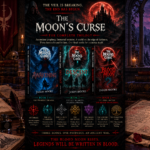
For those searching for an immersive reading experience that embraces ancient curses, moon-bound horrors, and forensic worldbuilding, exploring The Moon's Curse Trilogy delivers a complete, three-book saga where the Veil between worlds is actively breaking, and the shadows waiting on the other side never bargain.
To begin the journey into this atmospheric universe, explore Awakening, Descent, and Blood Moon at Londyn Publishing and step Beyond the Veil.