
There is a particular kind of dark fantasy novel that stays with you long after you close the final page. The world feels lived-in. The creatures feel like they belong to an ecology you only partially understand. The magic has weight. The history bleeds into the present in ways the characters themselves haven't fully mapped.
Then there is the other kind — competent enough, occasionally exciting, but ultimately hollow. The monsters are threats without mythology. The magic is a power source without rules. The world exists only as far as the plot requires it to go.
The difference between these two types of fiction is not always obvious from a back-cover blurb. But as a reader, you feel it immediately. This guide breaks down the specific elements that separate genuinely immersive dark fantasy from stories that only gesture at depth — and uses The Moon's Curse Trilogy as a working example throughout.
1. The Rules of the World Must Cost Something
The first question a reader should ask of any dark fantasy magic system or world-defining force: what does it cost, and who pays?
Surface-level fantasy often treats magic as a renewable resource — a kind of superpower that the protagonist learns to use more effectively as the story progresses. But the most immersive dark fantasy worlds build their magic around scarcity, consequence, and covenant. Magic in these worlds shapes culture. It determines who holds power. It creates the conditions for conflict that no individual character could resolve alone.
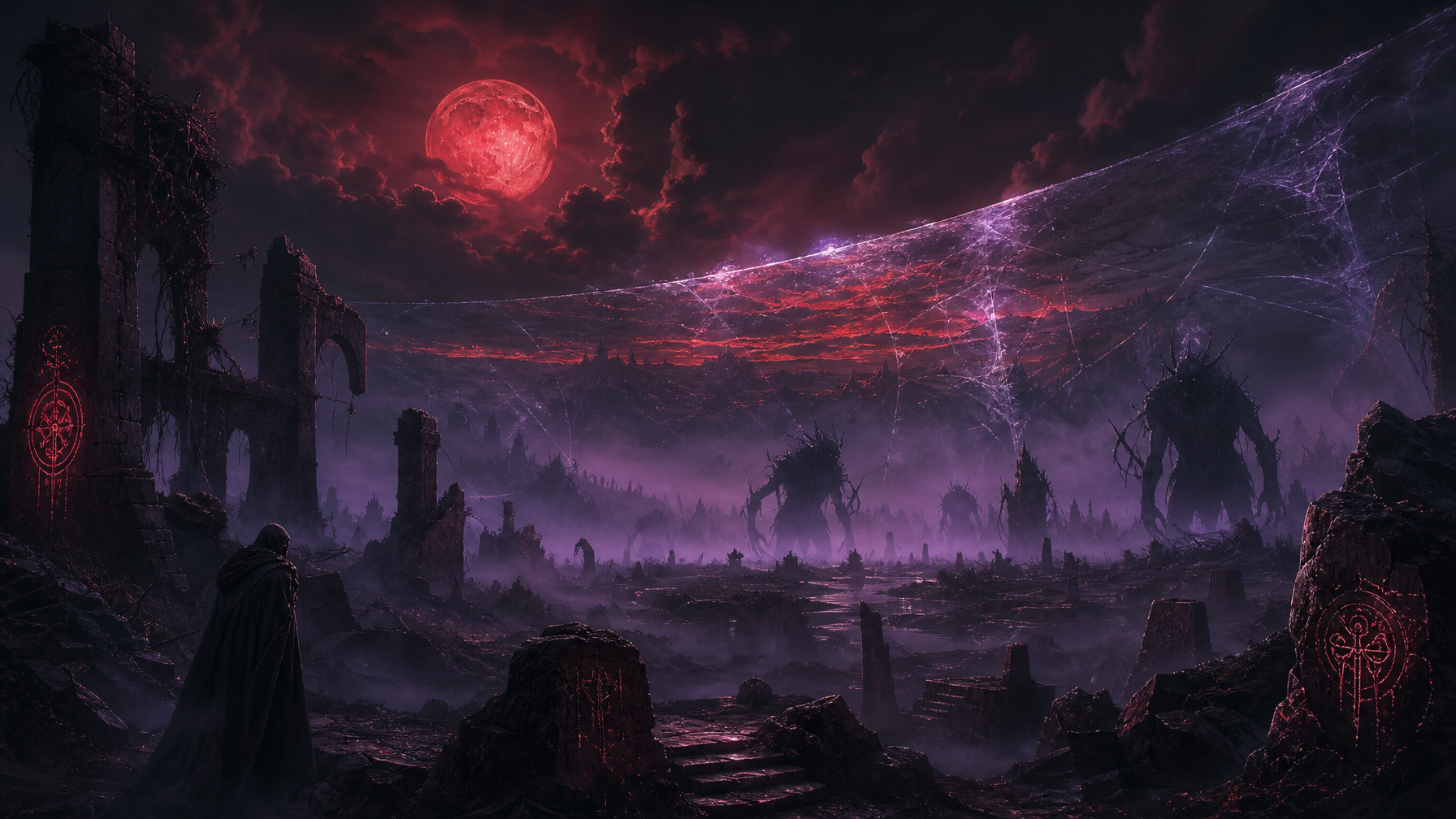
In The Moon's Curse Trilogy, the Veil is not a neutral barrier. It is a negotiated architecture — a covenant ratified across millennia between humanity and the Nythrall, the moon-bound shadow entities that exist just beyond the boundary of the visible world. The Veil holds because both sides agreed to let it hold. And because it was built on agreement rather than force, it can be broken by the same mechanism: the withdrawal of that agreement, or its slow erosion under the weight of time.
That single design choice — the Veil as covenant rather than wall — generates the entire moral landscape of the trilogy. The Blood Moon doesn't arrive as a random catastrophe. It arrives as a scheduled reckoning.
What to look for: A world-defining force (magic system, barrier, prophecy, curse) that has internal logic, historical origins, and consequences that affect characters at every social level — not just the protagonist.
2. Creatures Must Have Mythology, Not Just Menace
Dark fantasy is full of monsters. The genre is not short on threat. But there is a meaningful difference between a creature that functions as an obstacle and a creature that functions as a presence — something with its own history, purpose, and relationship to the world it inhabits.
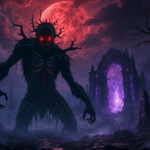
The Nythrall in The Moon's Curse Trilogy are moon-bound. Their behavior, their hierarchy, their relationship to the Veil and to human civilization — all of it is governed by the cycles of the moon and the terms of the Covenant. They are not predators operating on instinct. They are signatories to an ancient agreement. Their patience is not dormancy. It is compliance.
That distinction changes everything about how they function in the story. A reader encountering the Nythrall for the first time is not encountering a generic shadow monster. They are encountering something that has been waiting — carefully, deliberately — for conditions it has experienced before.
This is the kind of creature mythology that rewards rereading. The Nythrall in chapter one carry different weight when read again after finishing Blood Moon. Their stillness has a different meaning once you understand the architecture of their patience.
What to look for: Creatures with internal logic — a mythology that explains not just what they do but why they do it, and what they want beyond survival or destruction.
3. The World Must Exist Beyond the Protagonist's Line of Sight
A world that only exists where the protagonist is standing is not a world. It is a stage.
The most immersive dark fantasy novels give the reader a persistent sense that events are unfolding in rooms the story never enters. Other communities are making decisions. Other factions are moving. History is happening at a scale that dwarfs any single character's perspective.
In The Moon's Curse Trilogy, the threshold communities — human settlements at the Veil's edge — represent one of the most quietly affecting details in the world. These are communities that have organized their entire culture around proximity to something they cannot fully control or understand. They have developed rituals, suppressed knowledge, learned which questions not to ask aloud. Their relationship to the Veil is not one of heroic confrontation. It is one of careful, generational adaptation.
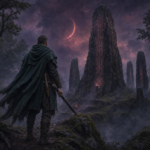
Evan Hartwell, the trilogy's protagonist, moves through this world as a soldier and eventually as something more — but he never becomes the world. The world has been happening long before he arrived and will continue to happen beyond what the trilogy shows. That persistence is felt throughout the narrative. It is one of the primary reasons the setting earns the reader's investment.
What to look for: Evidence of life beyond the protagonist — communities, histories, and conflicts that the story acknowledges without fully explaining. Restraint is often the mark of a confident world-builder.
4. Scholar Characters Reveal the World's Hidden Architecture
One of the most reliable signals of genuine world-building depth is how a story uses its scholar figures — characters whose primary function is not combat or prophecy, but knowledge.
In shallow fantasy, the scholar exists to deliver exposition. They explain things the protagonist needs to know at exactly the moment the plot requires it. In immersive dark fantasy, the scholar has a different kind of role: they reveal the gap between what is officially known and what is true.
Lira Thornfield in The Moon's Curse Trilogy is not a convenient information source. She is a scholar navigating a world where the official record has been shaped by the same forces she is trying to understand. Her instinct to archive, to preserve, to translate — these are responses to a world in which documentation has been actively suppressed. The Veil's erosion of institutional memory is not incidental background. It is something Lira has spent her career working against.
What makes Lira compelling as a character is precisely that her scholarly instincts are rational, not eccentric. In a world where history is being quietly unmade, the archivist is not a footnote. She is essential.
What to look for: Scholar or researcher characters who have a lived relationship with the world's hidden knowledge — not just as exposition devices, but as people whose intellectual work carries genuine risk.
5. The History Must Be Incomplete — and the Incompleteness Must Matter
A world with a complete, tidy history is a world that has stopped. Living fictional worlds feel historical in the way real history feels: full of gaps, contested interpretations, lost records, and events whose significance wasn't recognized until much later.
The Moon's Curse Trilogy leans into this quality throughout. The Covenant between humanity and the Nythrall is ancient enough that its original terms have become subject to interpretation. The sigils that mark certain locations and artifacts carry meanings that even the most diligent scholars cannot fully reconstruct. The Veil itself may be recording things — archiving the history of its own erosion — in a language that no one living has learned to read.
These gaps are not failures of world-building. They are the world-building. A reader who finishes Blood Moon and wants to know more is experiencing exactly the effect that immersive fiction is designed to produce. The story ends. The world does not.
What to look for: Intentional incompleteness — lore that the story gestures toward without fully explaining, histories with missing chapters, artifacts with untranslated markings. If every question is answered by the final page, the world probably wasn't built to last.
Finding Fiction That Does All Five
This is a harder filter than it sounds. Many dark fantasy novels do one or two of these elements well. Genuine world-building depth requires all five to be working simultaneously — internal rule systems, creature mythology, peripheral life, scholar figures with real stakes, and productive historical incompleteness.
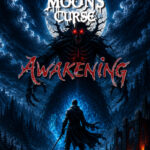
The Moon's Curse Trilogy — beginning with The Moon's Curse: Awakening and concluding with Blood Moon — is built around all five. The Veil Covenant provides the rule architecture. The Nythrall carry genuine mythology. Threshold communities populate the world beyond the protagonist. Lira Thornfield operates as a scholar whose knowledge has real consequences. And the ancient history of the Covenant remains, deliberately, only partially legible.
If you are searching for your next immersive dark fantasy read — the kind that rewards slow reading, close attention, and multiple revisits — the complete trilogy is available now at londynpublishing.com.
The Veil is still holding. But the record of why it was built is incomplete.
That gap is where the story lives.