
There is a particular kind of pressure that comes from writing three books before anyone reads the first one.
Most authors receive feedback between installments. Readers weigh in. Reviews surface patterns. The author adjusts, recalibrates, and responds. The story becomes a conversation between the writer and the world reading it.
That is not how The Moon's Curse Trilogy was written.
Before a single reader opened Awakening, all three books existed in full — Descent and Blood Moon already drafted, revised, and waiting. Which means every decision about atmosphere, pacing, lore consistency, and emotional payoff had to be made in isolation, with no external signal to confirm the work was landing.
That constraint shaped everything.
Tone Is Not a Feeling — It Is a System
The first challenge in writing a dark fantasy trilogy is not plot. It is atmosphere. Darkness in fiction is easy to produce and nearly impossible to sustain. A shadow on page one feels different from a shadow on page seven hundred if the writer has not built a deliberate tonal system that holds the two together.
Early in the drafting process for Awakening, I realized I needed to treat the atmosphere of The Moon's Curse less like a mood and more like a character with its own rules. The Veil — the barrier separating humanity from the Nythrall — needed to feel wrong in the same specific way across all three books. Not generically ominous, but distinctly this kind of wrong: old, contractual, fraying at the edges in ways characters half-noticed and half-chose to ignore.
That specificity became the anchor. Whenever a scene drifted toward generic darkness, the question that pulled it back was always: does this feel like the Veil's world, or does this feel like any dark fantasy world?
The distinction mattered more than any single plot point.
Lore Consistency Across 300,000 Words
Writing a mythology-rich trilogy in sequence without reader feedback means you become your own continuity editor — and that is a demanding role.
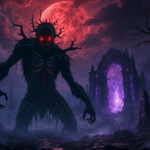
The Nythrall are moon-bound creatures. They are not traditional vampires, not generic monsters. Their relationship to the Blood Moon is covenantal: structured, ancient, governed by terms that both sides have spent centuries interpreting in their own favor. Every appearance of a Nythrall in the text needed to reflect that specific nature rather than reaching for familiar horror shorthand.
I kept a lore document — a working bible that grew across all three drafts. Not because I was unsure of the mythology, but because the mythology was dense enough that small details compounded. If a sigil mentioned in chapter four of Awakening was going to carry meaning in Blood Moon, the connective tissue had to be in the document, not just in my head.
What that process taught me is that lore consistency and emotional consistency are the same problem wearing different clothes. Readers feel a broken sigil reference the same way they feel a broken character motivation — as a loss of trust in the world. The lore bible was as much an emotional contract as it was a continuity reference.
Character Voice Across Three Books
Evan Hartwell in Awakening is not the same person who stands at the center of Blood Moon. That change had to be earned, and it had to feel continuous — not like a different character wearing the same name.
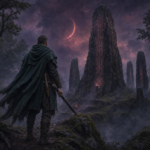
Writing all three books before launch meant I had to build Evan's full arc before I had any reader confirmation that the version of Evan in book one was connecting. The same was true for Lira Thornfield, whose scholarly distance from the Veil's horror slowly becomes something far more complicated, and for Auren Draevan, whose ranger pragmatism carries a weight the reader only fully understands in retrospect.
The tool I kept returning to was backward justification. When a character made a choice that mattered in book three, I would trace that choice backward through book two and then book one until I found its first seed. If I couldn't find it, I planted it. Not as foreshadowing — as character logic. The decision had to make sense from the character's internal history, not just from the plot's need for that outcome.
What Writing First Taught Me
Building The Moon's Curse Trilogy in full before it reached readers forced a kind of authorial self-reliance that I think shaped the work in ways that would have been difficult to replicate under a traditional serialized release model. There was no outside pressure to soften an arc or expand a fan-favorite character simply because readers were responding to them. The story had to justify itself entirely on its own terms.
That is not the easiest way to write a trilogy. But it is, I think, one of the more honest ones.
The Veil keeps its own counsel. It does not negotiate with the outside world's expectations.
Neither did the books.
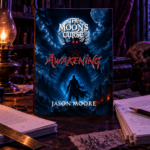
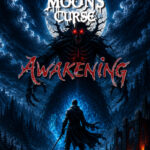
The Moon's Curse Trilogy — Awakening, Descent, and Blood Moon — is available now at londynpublishing.com. All three books are complete. No waiting, no cliffhangers left unresolved.