
There is a particular kind of reader who does not finish the last page and close the book.
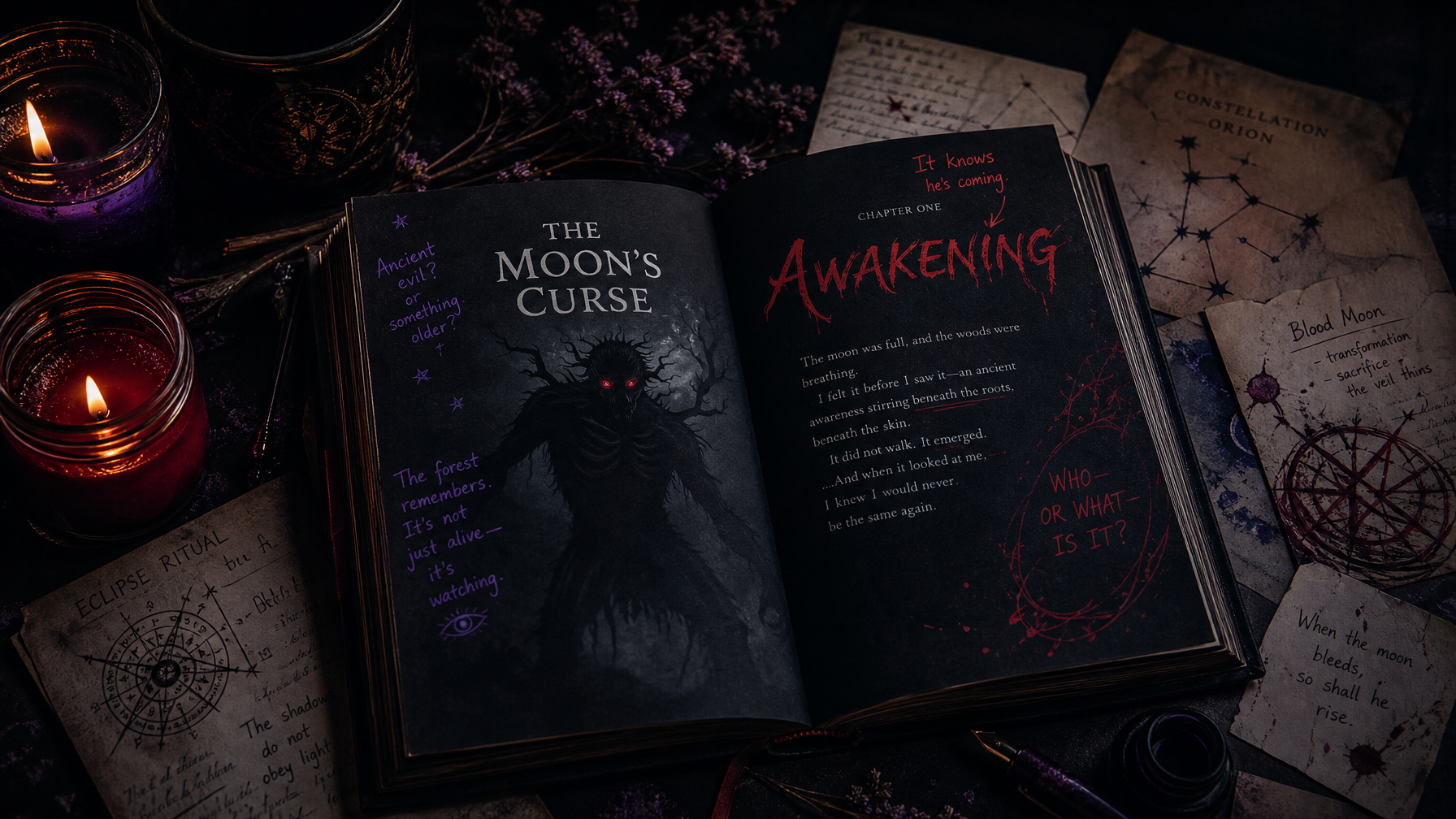
They finish the last page, flip back to chapter three, and begin annotating.
These are the readers who built BookTok's dark fantasy corner into what it is: a sprawling, obsessive, genuinely brilliant community of people who treat lore-rich fantasy worlds not as stories to consume but as puzzles to solve. They are cataloguing sigil systems. They are drawing maps of places the author only mentioned twice. They are building timelines, cross-referencing prophecies, and debating in comment threads whether a single throwaway line in book one was actually foreshadowing the entire trilogy's collapse.
They are, in the best possible sense, completely unreasonable — and they are exactly who dark fantasy is written for.
The Rise of the Lore-Decoder Reader
BookTok's relationship with dark fantasy has always been about more than aesthetic. Yes, the candlelit flat lays help. Yes, the black-and-violet color palettes, the atmospheric soundtrack choices, the "reading in thunderstorms" content — all of it matters to the visual ecosystem. But the readers who actually sustain a dark fantasy community between release cycles are the ones obsessed with the infrastructure of the world.
These are readers who want to know how the magic system fails, not just how it works. Who the ancient treaty was signed between, and what the signatories were promised. What the silence in the archive means. Whether the creature lurking at the edge of chapter nine is the same one referenced in an old record four books earlier.
This reader archetype has become one of the most powerful forces in indie and independent dark fantasy publishing. They don't just recommend books — they recruit readers. Their theory videos, lore breakdowns, and "things you missed the first time" content do the kind of world-expansion work that used to require a dedicated wiki.
Why Lore-Rich Worlds Breed Obsession
Not every fantasy novel generates this kind of community engagement. The books that do tend to share a particular quality: they contain more world than a single read can surface.
The reader who finishes a lore-dense dark fantasy and immediately suspects there is a second layer of meaning to everything they just encountered is not imagining things. The best world-builders leave deliberate gaps. They plant questions without answering them directly. They let ancient conflicts exist in the background of the main narrative, visible in the texture of the world — the way communities have adapted around a supernatural threat, the way language has shifted to accommodate creatures it cannot name, the way institutions have calcified around a centuries-old agreement nobody fully understands anymore.
When readers detect that architecture, they pull on it. And when the world holds — when the lore is internally consistent and the gaps are intentional rather than oversights — a community forms around the excavation.
The Fan Theory Economy
On BookTok, dark fantasy fan theories have become a content format unto themselves. A well-constructed lore video — "The Veil was already failing before the story begins: here's the evidence" — can reach hundreds of thousands of readers who have never heard of the series. The comment sections become recruiting grounds. Curious viewers pick up book one because they want to understand the debate.
This is word-of-mouth marketing at its most organic and its most sophisticated. It is readers doing the deep work of world-expansion because the world is worth expanding. No promotional budget produces that kind of investment. It grows from the quality of the source material and the intelligence of the reader community around it.
For indie dark fantasy publishers, this community is the long game. A single viral theory video from a dedicated reader can do more for a series' discoverability than months of traditional promotion. The key is building the kind of world that earns that attention — one dense enough to reward the lore-detective, generous enough to welcome the new reader who arrives knowing nothing, and rigorous enough that the theories it generates feel like real archaeology rather than fan fiction.
What The Moon's Curse Trilogy Was Built For
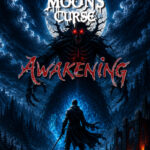
The Moon's Curse Trilogy — Awakening, Descent, and Blood Moon — was built with this reader in mind.
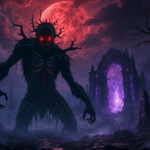
The Veil is not merely a plot device. It is an institution with architecture, with signatories, with a maintenance history that spans three thousand years. The Nythrall — the moon-bound shadow entities at the center of the conflict — are not monsters to be defeated. They are parties to an ancient agreement, with their own hierarchy, their own understanding of what the Covenant was meant to preserve. Every character moves through a world shaped by forces older than their comprehension, making decisions inside systems they only partially understand.
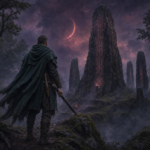
That is exactly the kind of world that generates lore-decoder readers. The kind of world where finishing the trilogy is not the end of engagement but the beginning of a deeper one — where the reader who has followed Evan Hartwell, Lira Thornfield, and Auren Draevan through to the final page turns back and sees the whole architecture from a new angle.
Beyond the Veil, the exclusive lore archive at londynpublishing.com, exists because the world is larger than three books can hold. For the reader who needs to know more — who cannot simply close the cover — it is where the excavation continues.
The lore-detective reader has always been out there. Dark fantasy, at its best, is written to find them.
Explore the trilogy and discover what lies Beyond the Veil at londynpublishing.com.