
The Nythrall get the mythology. The Covenant gets the architecture. The Blood Moon gets the reckoning.
But what about the people who wake up every morning knowing the Veil is thinner than it was yesterday?
The Moon's Curse Trilogy is built on a world in slow collapse. The Covenant that separates humanity from the Nythrall was never a permanent solution — it was a negotiated pause, a document signed in urgency by entities who measured time in centuries. And for the human communities living closest to the Veil's edges, that pause has always felt fragile. They know it. They've built their entire way of life around knowing it.
The Threshold Communities
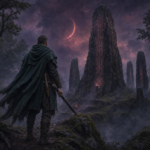
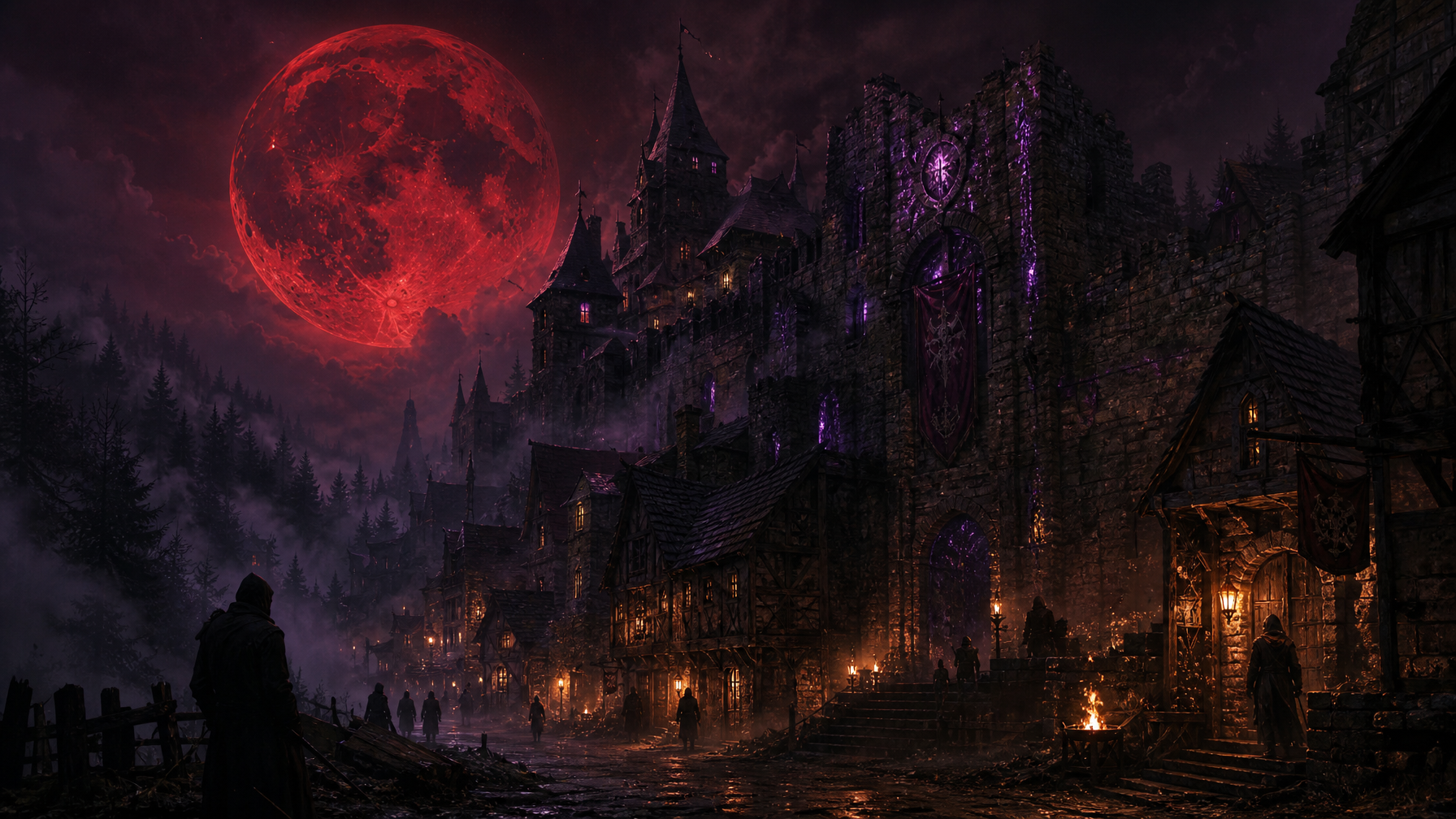
Throughout the trilogy, Evan Hartwell moves through settlements that exist in a particular kind of tension. These are not cities blissfully ignorant of what lurks Beyond the Veil. They are places shaped by proximity — towns where the fog comes in thicker on certain nights, where older residents count the weeks until Blood Moon cycles, where children are taught which roads to avoid before they're taught to read.
These threshold communities developed their own languages of survival. The rituals are not grand or ceremonial in the Nythrall sense — they are small and practical. A specific way of banking a fire before sleep. Words spoken when passing through a particular stretch of forest. The habit of never traveling alone after the moon begins to swell.
None of it is sanctioned by the Covenant. None of it appears in the official records the Veil's administrators keep. It is knowledge passed down through families, carried in the backs of memories the way a scar carries the shape of the wound that made it.
Evan Hartwell understands this inheritance because he carries it himself.
What the Blood Moon Means at Ground Level
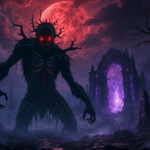
Academic discussions of the Blood Moon focus on its mechanics — the power shifts it triggers in the Nythrall hierarchy, the pressure it applies to the Veil's structural anchors, the windows it opens in the boundary between worlds. These are the concerns of scholars and covenant architects.
At ground level, the Blood Moon means something simpler and more visceral: the nights get dangerous in ways that cannot be fully explained, and the communities that survive are the ones that prepared.
In the world of The Moon's Curse, that preparation looks different depending on where you are. In some regions, it means reinforced shutters and doors sealed with particular materials. In others, it means gathering inside communal structures, pooling warmth and witness and the particular human comfort of not being alone. Some communities have developed their own sigil traditions — crude echoes of the formal systems that underpin the Covenant, drawn in chalk or ash on doorframes with varying degrees of actual efficacy.
What is universal is the watching. The way human beings in Blood Moon proximity learn to read the sky, the fog, the behavior of animals, the specific quality of silence that descends when something Beyond the Veil is near.
Evan Hartwell is extraordinary at reading that silence. He learned it before he learned almost anything else.
Lira Thornfield and the Scholar's Distance
One of the quiet tensions in the trilogy is the gap between Lira Thornfield's understanding of the Veil and the understanding carried by the people who live nearest to it.
Lira is brilliant. Her knowledge of the Covenant's architecture, the formal structures of Veil magic, and the historical record of Nythrall behavior is unmatched. But it is knowledge acquired through texts, through records, through the language of institutions. It is organized and precise and — crucially — it was gathered from a safe distance.
The threshold communities don't have the luxury of distance. What they know is imprecise, often contradictory, sometimes superstitious in ways that make scholars uncomfortable. But they are also right about things the formal record has missed. They notice patterns that take too long to become official knowledge. They survive encounters that, by institutional measures, they shouldn't have survived.
The trilogy positions these two kinds of knowing — Lira's scholarly precision and the lived inheritance of communities like the ones that shaped Evan Hartwell — not as opposites, but as incomplete halves of a larger picture. Neither one, alone, is enough.
The Weight Evan Carries
Understanding the human communities at the Veil's edge matters because it clarifies what Evan Hartwell is actually fighting for.
He is not abstractly opposed to darkness. He does not stand against the Nythrall purely as a philosophical stance. He is protecting something specific: the way his people have learned to survive, the rituals that carry his community's accumulated knowledge of fear and endurance, the ordinary human life that continues — quietly, stubbornly — even as the Blood Moon swells.
That specificity is what gives his arc its weight across all three books. The cost of the events in Awakening, Descent, and Blood Moon lands differently when you understand what was standing before them: not just a world, but a world full of people who had built something fragile and real in the shadow of an impossible threat.
A World That Earns Its Darkness
Grimdark fantasy is full of worlds that are dark because darkness is the aesthetic — suffering deployed for atmosphere, despair as a shortcut to depth.
The Moon's Curse Trilogy earns its darkness differently. The dread is grounded in something the reader can recognize: the experience of living with a threat that will not be resolved by wishing it away, of building a life anyway, of choosing connection and ritual and small careful acts of survival because the alternative is to stop living before anything has taken you.
The Veil is weakening. The Blood Moon is coming. The communities at the edges of the world have known this for longer than the formal record admits.
They kept their fires lit anyway.
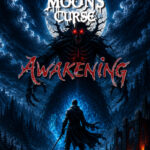
The Moon's Curse Trilogy — Awakening, Descent, and Blood Moon — is available now at londynpublishing.com.