

Every multi-POV dark fantasy series runs on more than plot. It runs on unequal information.
Readers feel it when a secret lands too early. They feel it harder when a character suddenly “remembers” something the manuscript never earned. That friction is not a vibe problem. It is an accounting problem.
At Londyn Publishing, the tool that protects The Moon’s Curse trilogy is not a mood board. It is a knowledge-debt ledger: a working record of what each major mind knows, when they learned it, what they refuse to say, and what the story still owes the reader before the Blood Moon closes the books.
This is the behind-the-scenes system I use so Evan Hartwell, Lira Thornfield, Auren Draevan, and Father Kalen Draemir never accidentally share a brain.
What Knowledge Debt Actually Is
In finance, debt is a claim on future payment. In multi-POV fantasy, knowledge debt is a claim on future revelation.
Every time a scene withholds a fact that the viewpoint character already holds, you open a debt. Every time a later scene pays that fact out in a way that matches prior behavior, you close it. Leave too many debts open and the trilogy feels manipulative. Close them clumsily and the trilogy feels convenient.
Dark fantasy thrives on dread that accumulates quietly. Dread collapses when the cast starts acting like they all read the same briefing. The Nythrall are patient, moon-bound, and contract-shaped. Their pressure only works if human knowledge stays uneven for a long time.
So the ledger tracks four columns for every major beat:
- Known, facts this character can act on without discovery scenes
- Suspected, patterns they feel but cannot yet prove
- Withheld, truths they have and choose not to speak
- Blind, facts the reader holds that this character still lacks
That fourth column matters as much as the first. Dramatic irony is a resource. Spend it on purpose.
Why Multi-POV Breaks Without a Ledger
Indie authors often outline plot beats and magical rules, then improvise interiority. That works for a single tight POV. It fails when four epistemologies share a stage.
Lira Thornfield learns like an archive: teal-eyed scrutiny, margins, missing pages, fury at gaps in the record.
Auren Draevan learns like land: forest-green field craft, the lean of a threshold, knowledge that never filed itself in a catalog.
Father Kalen Draemir moves like a man who finished the reading before anyone else opened the book. Certainty is his literacy.
Evan Hartwell learns under cost. Emerald-eyed, warrior-framed, he pays for understanding while the sky refuses to wait.
If those methods blur, the series loses its internal weather. A “smart” line in the wrong mouth is not clever. It is a continuity break dressed as voice.
The ledger forces a brutal question before every chapter draft: Who is allowed to know this sentence, and why would they still walk into the next room?
How the Ledger Looks in Practice
I do not keep a novel-length wiki for every candle and cloak. I keep a living sheet keyed to scenes.
For a threshold sequence, the row might read:
- Evan Hartwell, Suspects the silence is directional; does not yet know the seventh anchor’s political meaning; will not name the fear that looks like failure.
- Lira Thornfield, Knows the archival gap; withholds a partial reconstruction until she can test it against field evidence; blind to what the settlement families never wrote down.
- Auren Draevan, Knows the lean of the place in his body; withholds translation into priest-language; blind to the clause Kalen already treats as settled law.
- Father Kalen Draemir, Knows the theological end-state; withholds the pastoral version that would calm a congregation; not blind so much as selectively lit.
Then I write the scene against those constraints. Dialogue that violates a row gets cut, even if the line sings. Atmosphere that depends on a character “somehow sensing” a fact they are marked Blind for gets rebuilt from their actual method.
This is slower than free drafting. It is faster than a late trilogy rewrite when book three invents a confession book one already made impossible.
Payment Schedules, Not Twist Calendars
Readers of complete series do not only want surprises. They want receipts.
A knowledge-debt ledger turns foreshadowing into scheduled payment:
- Early books open small debts in the Withheld and Suspected columns.
- Middle books force collisions between methods (archive meets field; faith meets cost).
- Final books close debts in an order that matches character ethics, not author convenience.
Father Kalen’s certainty is dangerous because it reduces debt on his side of the sheet while increasing it everywhere else. Lira’s hunger for complete records can create new debt when she waits too long to speak a partial truth. Evan’s learning curve is expensive because each payment costs body, loyalty, or time under a failing Veil.
Beyond the Veil, the mythology only feels ancient if the humans remain inconsistently informed for as long as history would realistically keep them that way. Three thousand years of civilizational amnesia is not flavor text. It is a global knowledge-debt condition. Local ledgers sit inside that larger weather.
What Indies Can Steal From This Without Building a Bureaucracy
You do not need my full sheet. You need three habits.
Name the method of knowing for every major POV. Document, land, faith, cost, rumor, bloodline memory. If two characters learn the same way, one of them is probably decorative.
Write one “cannot say yet” line per chapter. Not a mysterious shrug. A concrete withheld fact with a motive. Ambition, shame, strategy, love, doctrine. Motive keeps silence honest.
Audit the Blind column after every major reveal. When the reader learns something, update who still does not know it. Then check the next three scenes for accidental leakage.
Those habits protect creature rules too. Moon-bound beings like the Nythrall tempt writers into omniscient monster monologue. Resist it. Let their pressure show up as incomplete human knowledge first. Horror that arrives fully labeled is costume. Horror that arrives as a gap in the ledger is architecture.
Why This Matters for a Finished Trilogy
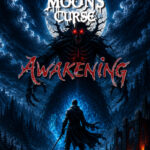
Awakening, Descent, and Blood Moon were built to be held as one object. A complete indie trilogy only earns that promise if internal information stays disciplined from first page to last.
Covers can be cinematic. Marketing can speak in violet light and crimson-rose dread. None of that survives a reread if chapter forty hands a character a fact they already spent two books proving they lack.
The knowledge-debt ledger is how Londyn Publishing keeps the story fair to careful readers: the ones who annotate, argue, and return. They are not asking for less mystery. They are asking for mystery that still balances when the final clause comes due.
If you write multi-POV dark fantasy, build the sheet before you polish the prose. Voice is what the character sounds like. Continuity is what they are allowed to know while they sound that way.
The Veil does not fail all at once. Neither should your cast’s ignorance.
Explore the complete Moon’s Curse trilogy and the wider archive at londynpublishing.com.