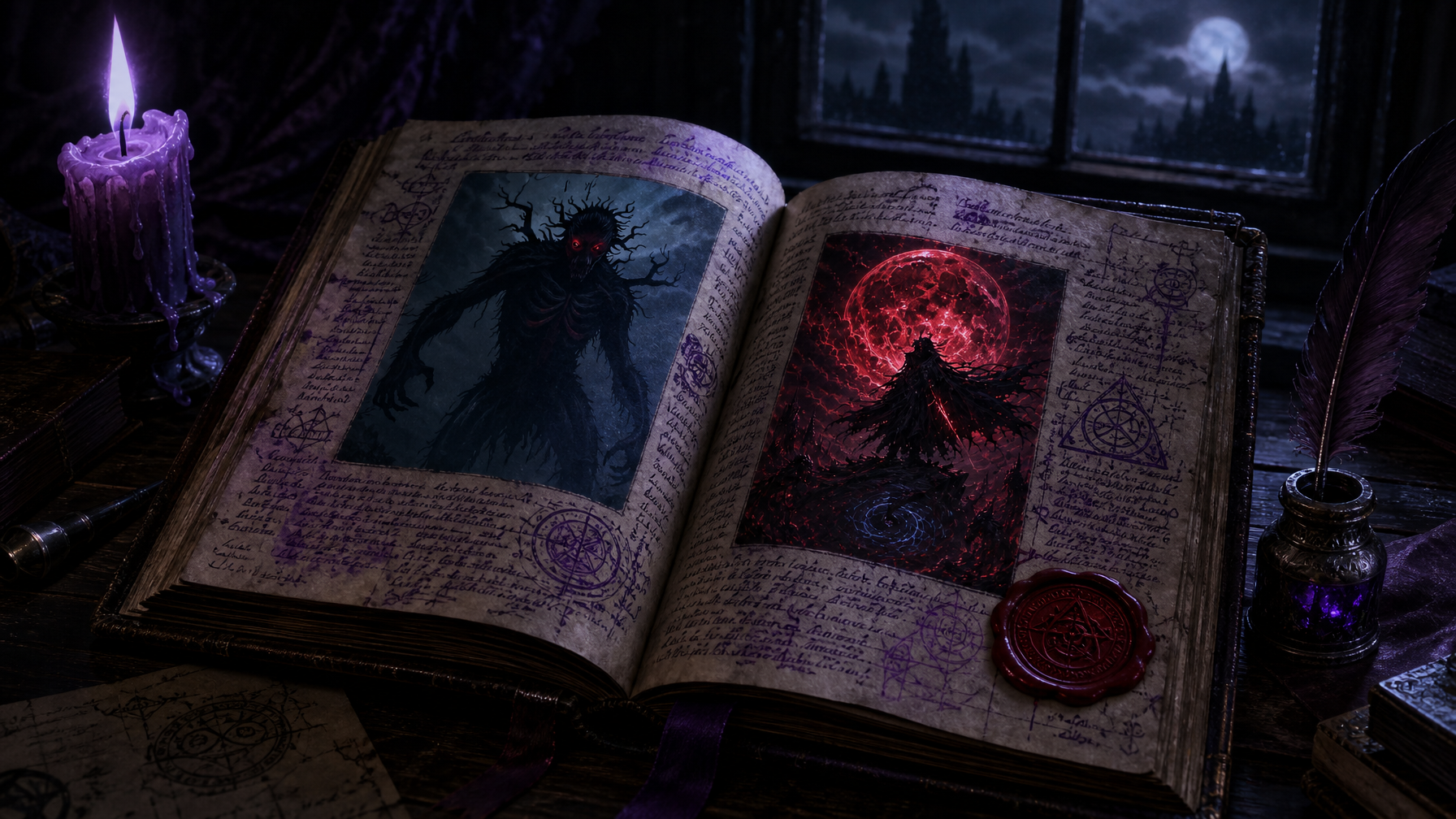

Dark fantasy BookTok has a quiet second life beneath the trailers and aesthetic shelves. It lives in the margin. Readers film spine stacks, then flip to dog-eared pages dense with underlines, sticky tabs, and half-legible theories about who knew what and when. The annotated copy is no longer a private habit. It is a public reading practice, a proof of attention, and one of the strongest community signals in fantasy book culture right now.
This is not about neat handwriting. It is about readers who treat a finished trilogy like a working document.
What Annotated Copies Signal on BookTok
On BookTok, an annotated dark fantasy paperback does three jobs at once.
First, it shows commitment. A clean first read says you finished. A second-pass margin full of dates, arrows, and "wait" notes says you stayed. Lore-heavy series reward that kind of return visit. When a world runs on contracts, bloodlines, and civilizational memory, the first read is atmosphere. The second is structure.
Second, it creates shareable evidence. A thirty-second clip of a page marked "this was the clause" or "she knew before he did" travels farther than a vague "I loved it." Viewers can see the labor. They can also steal the method. Annotation culture spreads because it is teachable: color code POVs, tab creature rules, box every mention of the binding magic system until the pattern refuses to stay hidden.
Third, it turns solitary dread into conversation. Dark fantasy thrives on dread that accumulates quietly. Annotations externalize that accumulation. A reader circles a throwaway line in book one, then films the moment book three pays it off. The community watches the receipt land. That loop, prediction, mark, confirmation, is pure BookTok fuel.
Why Dark Fantasy Fits the Margin Better Than Most Genres
Romance annotators track chemistry. Thriller annotators track twists. Dark fantasy annotators track systems.
They mark:
- Creature constraints that look like personality until they reveal law
- Place names that double as political memory
- Ritual language that later becomes plot machinery
- Character silences that read as personality, then re-read as knowledge gaps
- Prophecy lines that only become cruel once the full grammar is visible
That is why series built on moon-bound mythology, failing barriers, and ancient agreements photograph so well under desk lamps. The page becomes a map. Readers are not only reacting to vibes. They are reverse-engineering a world that pretends it forgot its own terms.
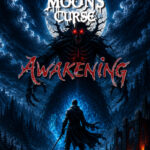
In The Moon's Curse trilogy, that habit maps cleanly onto the text. Lira Thornfield is the archive mind: teal-eyed, meticulous, furious at gaps in the record. Auren Draevan carries field knowledge that never made the catalog. Father Kalen Draemir moves like a man who finished the reading long before anyone else opened the book. Evan Hartwell pays the cost of learning under a sky that will not wait. Annotators recognize the cast because the cast is already modeling different ways of knowing. The margin becomes a fourth method: the reader's own.
The Nythrall reward this approach. They are not traditional vampires. They are moon-bound, contract-shaped, patient across three thousand years. Their horror is procedural as much as visceral. Procedure is what annotations are for.
How BookTok Turned Private Notes Into Public Craft
A few years ago, annotated copies lived in private shelves and book club bags. Now they are content formats:
- Flip-throughs of tab systems
- "Lines I marked on my second read" carousels
- Side-by-side first-read vs reread reactions
- Theory boards built from photographed margins
- Soft ASMR desk setups where the sound is pen on paper, not plot spoilers
The aesthetic is part of the brand of serious fantasy reading online: candlelight, black coffee, soft highlighter, a hardcover that looks lived-in. But the deeper trend is epistemic. Readers want to show they did the work. In a feed full of vibe-first recommendations, the annotated copy is a credibility badge. It says: I can defend why this ending hurt.
For indie dark fantasy especially, that badge matters. Algorithms favor completion signals and rewatch-style engagement. A trilogy that can be annotated, argued, and re-tabbed has a longer half-life than a single shock moment. Complete series have an advantage here. No waiting for book three to validate a theory. The whole covenant is already on the shelf.
A Practical Annotation Method for Lore-Heavy Series
If you want the BookTok margin habit without turning every page into a thesis, keep the system small.
Pass one: atmosphere only. Underline what unsettles you. No theories yet. Capture the feeling before the structure explains it.
Pass two: rules. Tab every hard constraint. What the moon-bound can and cannot do. What the barrier costs. What a ritual requires. What a character refuses to say.
Pass three: knowledge maps. Assign a mark to each major epistemology in the cast. Who learns from documents, who learns from land, who learns from faith or fluency, who learns from loss. When those methods collide on the page, box the scene.
Pass four: payments. On the final book, mark every earlier note that cashes out. That is the clip people share: the receipt.
This method works on any dense dark fantasy shelf. It also happens to suit a series written so the Blood Moon is a clause, not a surprise ending.
Beyond the Veil: What Annotated Reading Does for Authors
From the publisher side, annotation culture is a gift and a standard.
It is a gift because it proves readers are building a private lore bible of their own. That is fandom infrastructure. Fan theories, reread clubs, and "I caught it this time" videos extend the life of a finished trilogy without demanding endless sequels.
It is a standard because it raises the bar for craft. If readers are going to film your margins, your foreshadowing has to survive freeze-frame. Your creature rules have to stay consistent. Your world-building has to feel intentional under scrutiny, not decorative. That is the difference between aesthetic dark fantasy and architecture dark fantasy.
At Londyn Publishing, we write for both the first shiver and the second-pass pen. Awakening, Descent, and Blood Moon are complete for a reason. The story is meant to be held as a whole object, marked up, argued with, and returned to when the silence in a threshold settlement scene finally makes sense.
Start With a Trilogy Worth Marking
If your BookTok For You page is full of annotated hardcovers and you want a dark fantasy series that can take the ink, begin with the full arc of The Moon's Curse. Meet Evan Hartwell under a weakening sky. Follow Lira into the documents that were never meant to be incomplete. Walk with Auren where the cartographers misread the ridge. Sit with Father Kalen Draemir in the solitude of being right early. Watch the moon-bound Nythrall keep terms the world tried to forget.
The books are at londynpublishing.com/books/. Bring a pen.
For more on why monster rules drive loyal communities, read The Creature Lore Obsession: Why BookTok Can't Stop Talking About Monster Mythology. For the civilizational forgetting that makes second-pass reading so rewarding, see Between Blood Moons: How Civilization Rises, Forgets, and Falls Again.
The best dark fantasy does not fear the margin.
It leaves room for it.