

The first question on a lot of dark fantasy BookTok now is not “is it good?” It is quieter and sharper: is it finished?
Scroll any serious fantasy corner of the app and you will hear the same filter. Creators flash the spine stack, then say it out loud. Complete trilogy. No waiting. I only start series that already ended. The vibe still sells the click. The finished filter decides the commit.
That habit is not impatience. It is risk management dressed as taste.
What the Finished Filter Actually Protects
BookTok taught a generation of readers that atmosphere can go viral in fifteen seconds. A blood-red moon. A creature rule whispered like a secret. A morally gray priest in cathedral light. Dark fantasy thrives in that format because dread photographs well.
What does not photograph well is the mid-series cliff. The two-year gap. The lore promise that still needs a third book to cash out. Readers who fell hard for romantasy and epic cycles learned, sometimes the hard way, that a perfect Book One can strand them inside an unfinished contract.
So the culture adapted. Before the aesthetic haul, before the annotation flip-through, before the “if you liked X” stitch, a new gate appears:
- Is the series complete?
- Can I binge without a calendar?
- Will the mythology resolve, or only escalate?
For lore-heavy dark fantasy, that gate matters more than for most genres. Systems need endings. Creature law, broken covenants, civilizational amnesia, and moon-bound timelines are not vibes you can pause forever. They are structures. Structures want a last page.
Why Dark Fantasy BookTok Rewards Closure
Romance BookTok can live on chemistry clips. Thriller BookTok can live on twists. Dark fantasy BookTok increasingly lives on architecture.
Viewers want to know the world has rules that survive freeze-frame. They want creature constraints that stay consistent under a second pass. They want a Veil that fails for reasons, not for sequel pressure. When a creator says “finished trilogy,” they are not only promising convenience. They are promising that the lore was designed as a whole object.
That is why complete series travel differently in the feed:
- Binge proof. Weekend reads convert better than multi-year commitments.
- Theory safety. Fan theories can land against a real ending, not a rumor mill.
- Annotation culture. Margin notes pay off when book three already exists.
- Series hangover content. The grief after the last page is itself a content engine, and it only works if the last page is reachable.
The finished filter is community hygiene. It keeps the conversation about craft and dread, not about release schedules.
Beyond the Veil of the Infinite TBR
There is also a quieter emotional reason. Dark fantasy asks for trust. It asks readers to sit with dread, moral cost, and mythologies that do not explain themselves on page twenty. Starting that journey while knowing the author still owes two volumes changes the body of the read. You hold back. You refuse to love the world fully. You keep one hand on the exit.
A complete series lets readers go all the way under.
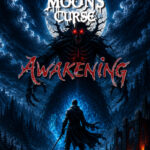
In The Moon’s Curse trilogy, that choice was deliberate. Awakening, Descent, and Blood Moon were written as one arc before the shelf went live. Evan Hartwell does not learn the cost of the failing Veil on a subscription timer. Lira Thornfield’s archive mind and Auren Draevan’s field knowledge collide inside a finished record. Father Kalen Draemir’s certainty has somewhere to break. The Nythrall, moon-bound rather than traditionally vampiric, are patient across centuries because the Covenant has a term. The Blood Moon is a due date, not a marketing beat.
Readers who live by the finished filter recognize that design immediately. The story was built to be held as a whole.
How Creators Use the Filter Without Spoiling the Dark
Strong BookTok recs for complete dark fantasy rarely lead with plot. They lead with terms of engagement:
- State completion first. “Finished trilogy” in the first line earns the rest of the watch.
- Sell the system, not the twist. Moon-bound law, failing barriers, ritual bureaucracy, knowledge debt.
- Name the hangover. What kind of silence the last page leaves.
- Offer a door, not a syllabus. One comparable vibe, one reason the world feels older than the plot, one CTA to begin at book one.
That format respects the audience. It assumes they are smart enough to want the full covenant before they kneel to it.
What Indie Dark Fantasy Gains From This Moment
For boutique presses, the finished filter is an advantage, not a constraint. Algorithms already favor completion signals and rewatch-style engagement. A trilogy that can be annotated, argued, and re-tabbed has a longer half-life than a single shock moment.
It also raises the craft standard. If readers will only start what you have already ended, the ending has to deserve the open. Foreshadowing must survive freeze-frame. Creature rules must stay honest. The world beyond the page, the extras, the lore posts, the reader theories, has to feel like expansion, not apology for missing volumes.
At Londyn Publishing, that is the brief. Write the dark fully. Close the arc. Let BookTok do what it does best: turn a finished dread into a shared one.
Start Where the Filter Points
If your TBR rule is simple, only finished dark fantasy, the door is already open.
The Moon’s Curse trilogy is complete in paperback, hardcover, and eBook. No unresolved final volume. No waiting for the moon to come due on a future release calendar.
Begin with Awakening at londynpublishing.com
The Veil is already thinning. The finished filter exists so you can walk through it without looking back for book three.