

Dark fantasy does not owe the reader a gentle handshake. It owes them a contract they can feel in the first three pages.
When I built The Moon’s Curse trilogy for Londyn Publishing, I treated the opening of each volume the way a cathedral treats a threshold: not as decoration, but as a load-bearing decision. Soft landings teach the body to relax. Hostile openings teach the body to listen. For moon-bound myth, a failing Veil, and creatures that wait out civilizations, listening is the only honest start.
This is not a manifesto against warmth. It is a craft note on why the first pages should already cost something, and how that choice shapes reader trust across a complete series.
Soft Landing vs Hostile Opening
A soft landing opens with:
- A calm morning and a likable routine
- Exposition dressed as weather
- A threat parked safely offstage until chapter four
- Prose that apologizes for darkness by over-explaining it
A hostile opening opens with:
- A world already mid-consequence
- Knowledge the protagonist does not fully own
- Atmosphere that behaves like law, not mood lighting
- A promise that comfort will be earned, if it arrives at all
Neither approach is morally superior. They train different muscles. Soft landings train attachment through familiarity. Hostile openings train attachment through alertness. Dark fantasy that wants dread to feel architectural, not costume-shop, almost always needs the second muscle.
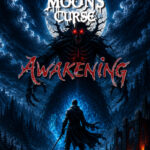
In Awakening, Descent, and Blood Moon, I refused the tour-guide prologue. Evan Hartwell does not receive a pamphlet titled “How the Veil Works.” Lira Thornfield’s scholarship arrives as pressure, not a TED Talk. Auren Draevan’s field sense shows up as habit under stress. Father Kalen Draemir’s certainty is already a weapon before anyone labels it theology. The Nythrall, moon-bound rather than traditionally vampiric, do not audition for sympathy in scene one. They inhabit a system that was running long before the first chapter.
That is the point. The reader should feel late to a story the world has been telling for centuries.
What a Hostile Opening Actually Protects
Indie authors hear a lot of market advice about “hooking” readers. Hooks are real. Cheap hooks are also real. A cheap hook is a corpse on page one with no world underneath it. A hostile opening is different. It protects four things at once.
1. Tone as a system
If book one begins gently and book three becomes apocalyptic, readers experience the shift as betrayal or as uneven craft. If book one already speaks in the grammar of consequence, the Blood Moon feels like due date, not genre upgrade. Tone becomes infrastructure.
2. Creature credibility
Moon-bound beings lose power the moment the prose treats them like weekend villains. A hostile opening lets ecology and patience enter before chase scenes do. Readers who love lore-heavy dark fantasy can smell when a monster is a plot device wearing a silhouette.
3. Multi-POV honesty
When several minds carry the arc, the first pages teach the reader how knowledge will be rationed. Who sees the Veil thinning first? Who misnames it? Who records it as ritual instead of failure? The opening is a tutorial in epistemic friction.
4. Series completion trust
Readers who only start finished trilogies are not only managing binge logistics. They are asking whether the author designed an ending worth the darkness. A hostile opening signals that the story will not flinch mid-covenant. It says: this world was built as a whole object.
How I Stress-Test an Opening Page
Before any chapter left the desk for The Moon’s Curse, I ran a private checklist. It is blunt on purpose.
- Does the first scene assume the world is older than the plot? If not, rewrite until history leaks through ordinary action.
- Is at least one important fact withheld without cheating? Withheld means earned later, not randomly reverse-engineered.
- Can a reader feel the cost of looking away? If they could skim the opening on a beach towel without tension, the landing is still soft.
- Would a reread reward annotation? Dark fantasy BookTok culture thrives on second passes. Openings should plant load-bearing details, not disposable shock.
- Does the prose match the metaphysics? A living Veil, Covenant clauses, and civilizational amnesia demand sentences that carry weight. Pretty fog is not enough.
That checklist is also how I protect brand voice at Londyn Publishing: cinematic, mythic, emotionally precise. Atmospheric without becoming perfume. Dark without becoming edgy for sport.
Common Mistakes When Writers “Go Dark” Too Early
Hostile openings fail when they confuse cruelty with craft. Watch for these traps.
- Gore without grammar. Violence that does not teach world rules is noise.
- Mystery without pressure. Withholding only works if the reader feels the cost of not knowing.
- Lore dumps in formal wear. A hostile opening can still be clear. Clarity is not softness.
- Protagonist as tourist. Evan Hartwell has to be inside the machine, not narrating a museum tour Beyond the Veil.
- Tone cosplay. Using night, blood, and cathedral adjectives while the plot still behaves like a cozy quest.
The fix is almost always structural, not vocabulary. Change what the scene does. Do not only change how it sounds.
Why This Matters for Indie Publishing Specifically
Traditional pipelines sometimes sand openings toward accessibility metrics that favor the median browser. Indie dark fantasy can choose a sharper contract with a smaller, more devoted readership: collectors, lore decoders, BookTok creators who annotate spines, gamers who want ruined grandeur and creature law.
That choice is a brand decision as much as a prose decision. Londyn Publishing exists to deliver immersive dark fantasy where ancient horror, forbidden magic, and cinematic storytelling collide. Soft landings dilute that promise. Hostile openings keep the shelf honest.
It also affects marketing without turning the manuscript into an ad. When social posts talk about Covenant stones, ritual reclassification, or the finished-filter culture on BookTok, they are not inventing a vibe the books lack. They are echoing a front door the reader already walked through on page one.
A Practical Rewrite Drill
If you are drafting your own dark fantasy and the opening feels polite, try this one-hour drill.
- Print the first 1,000 words.
- Underline every sentence that exists only to make the protagonist likable.
- Circle every sentence that teaches a rule of the world.
- Cut half the underlines. Double the circles through action, not lecture.
- Move one late-book consequence earlier as a rumor, scar, or misfiled record.
- Read the page aloud at night with one light on. If your shoulders never tense, you still have a soft landing.
I used versions of this drill across Awakening, Descent, and Blood Moon until each volume’s threshold felt like the same architecture under different weather.
The Reader on the Other Side of the Door
Hostile openings are a form of respect. They assume the reader can handle incomplete knowledge, moral weather, and beauty that does not apologize for teeth. They invite the right people in and let the wrong people leave early, before either side wastes trust.
If you want a complete trilogy built that way, the door is already open. The Moon’s Curse is available in paperback, hardcover, and eBook. Start with Awakening at londynpublishing.com. The Veil is thinning on purpose. The first pages should feel like it.