
Maps of the Rimward Margin still name six threshold settlements. Five of them keep a census. The sixth keeps lamps.
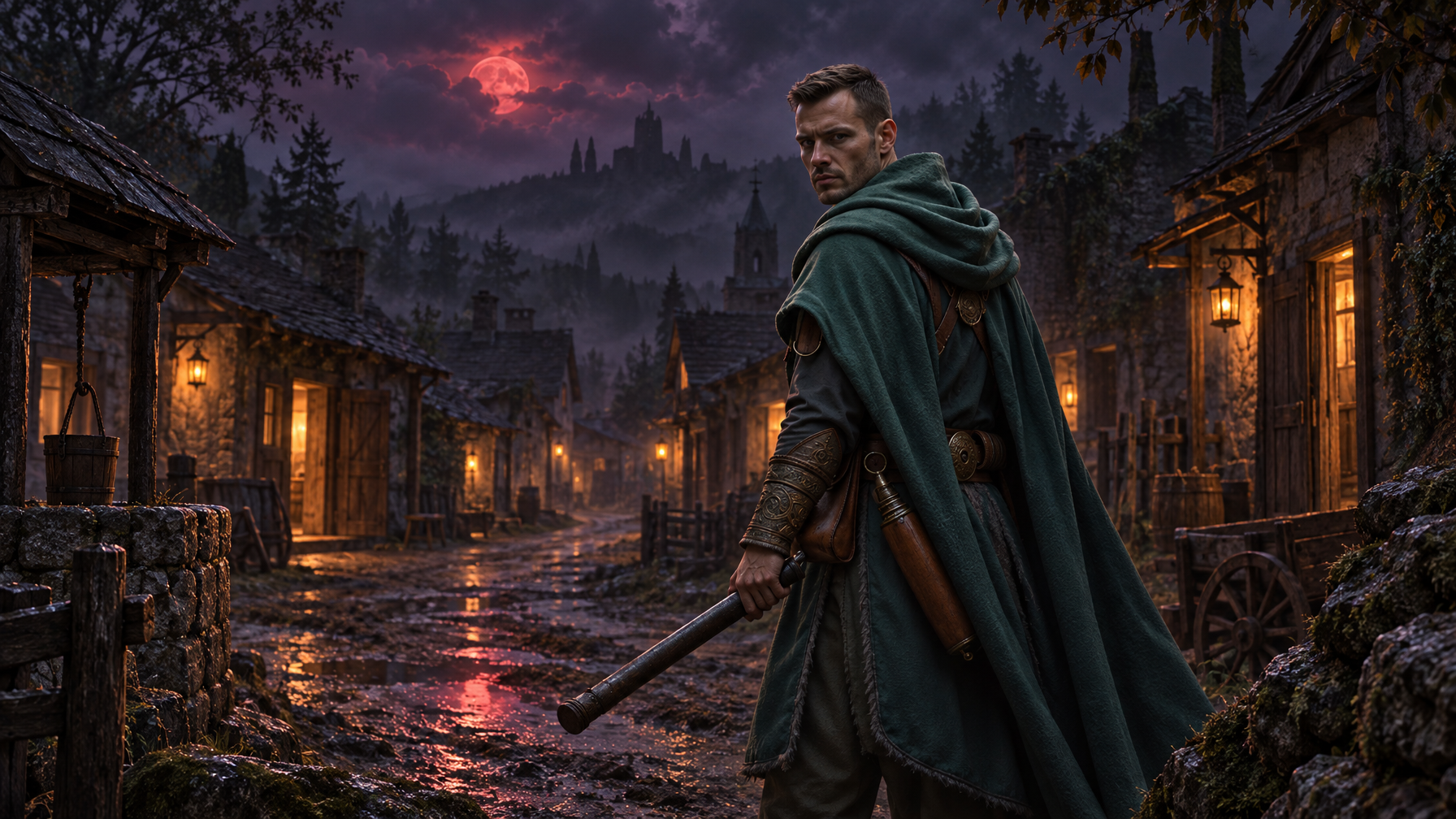
Auren Draevan reached it after dusk. The packed earth still held footprints. Doors sat unbarred. A kettle had been taken off the fire and left to cool as if someone meant to come back. No one had. The hush that usually leans off the path had turned inward, and the village had treated that turn as an order.
This is not a raid story. The Moon's Curse Trilogy does not empty a town with fire. It empties a town when the quiet stops behaving like weather.
What a threshold community is for
People who live on the Rimward Margin do not treat the Veil as scenery. They treat it as a neighbor with bad manners. Houses sit where maps fail. Iron is hung where a surveyor would hang a sign. Children learn which silences are ordinary and which ones are instructions.
Auren Draevan walks those edges in a forest-green cloak because someone has to read the lean. Cartographers call a ridge an elevation error. Auren files it as a node. Evan Hartwell learns the same lesson later, on the road, when a village greets him with etiquette instead of walls. Lira Thornfield finds the same village in an archive as a catalog gap: a page that should hold a name and holds a blank instead.
The sixth settlement was the place where that literacy failed in public.
How silence changes direction
Ordinary hush sits on the path like fog. You walk through it. You keep your name. You do not speak certain words at the door, and the house stays a house.
Directed hush is different. It does not sit. It aims.
Auren described it the way a ranger describes wind: not volume, vector. The quiet stopped pooling in the tree line and started filling rooms. Beds were still made. Lamps were still trimmed. The people had left without packing because packing would have made noise they no longer had permission to make.
Moon-bound collectors do not need to hunt a street like that. The Nythrall wait at the tree line when a contract is already signed. They collect without chasing. The sixth settlement did not look plundered. It looked filed.
Father Kalen Draemir would have called the emptying a sermon. Auren called it a report. Those two vocabularies do not agree, which is why the Church of Lux keeps hours-books and the Rimward keeps lamps.
Why the sixth still matters
Five settlements remain because they still know which way the hush is allowed to lean. The sixth remains on the map because erasing it would pretend the Veil only fails as architecture.
It fails as manners first. Unbarred doors. Unnamed names. A kettle cooling on a dead hearth. Evan Hartwell walks forgetfulness before he walks a full breach. Lira copies two maps and keeps the second for places the first pretends are not there. Auren stands at the last street and does not knock, because a knock would ask the house to answer in a language it no longer speaks.
Beyond the Veil, unused pages can hold what the novels refuse to stall on. The novels themselves keep the sixth settlement as a fact: people can vanish while their lights are still doing the work of welcome.
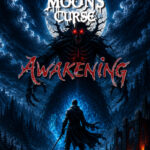
If you want the field version, start with The Moon's Curse: Awakening at londynpublishing.com. Descent and Blood Moon are already on the same shelf. The hush has a direction. The trilogy does not wait to tell you which way it turned.