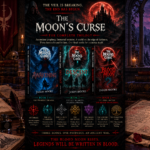
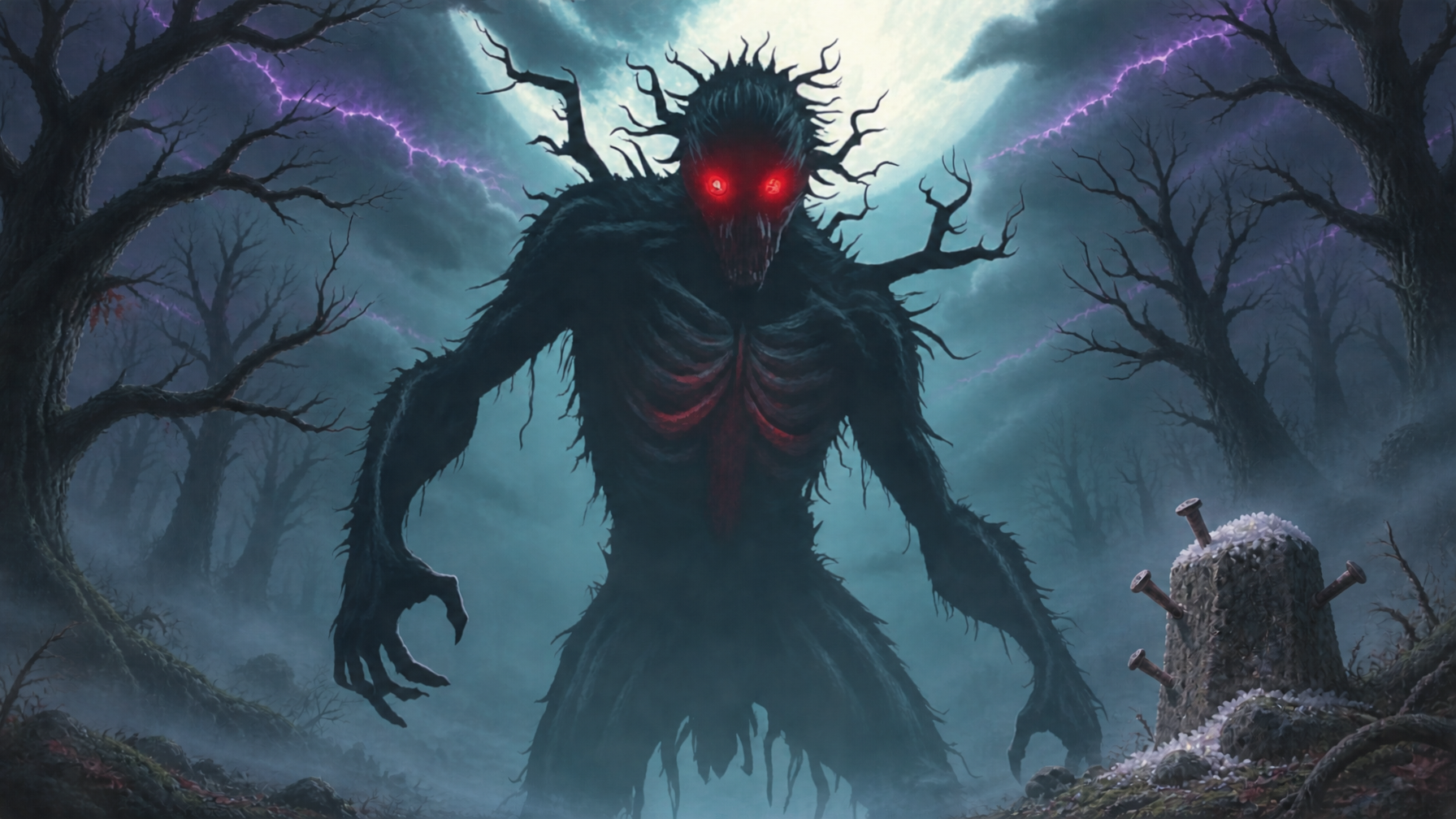

Traditional gothic storytelling has long relied on familiar creature conventions: brooding aristocrats lounging in candelabra-lit castles, driven by personal thirst or tragic melodrama. Yet in The Moon’s Curse Trilogy, author Jason Moore replaces romantic tropes with visceral, systemic horror through the introduction of moon-bound predators known as the Nythrall. These ancient shadow entities do not operate as nocturnal scavengers or rogue monsters. They function as living enforcement mechanisms, tied directly to celestial cycles and the decaying boundary separating humanity from the dark.
When twilight settles over the Rimward Margin and the crimson arc of the Blood Moon ascends, survival across the frontier shifts from tactical combat into contractual accounting. To understand why the Nythrall inspire such enduring dread across Awakening, Descent, and Blood Moon, one must examine how their biology, celestial servitude, and legalistic inevitability dismantle conventional dark fantasy monster design.
1. Beyond Traditional Vampires: The Physiology of Shadow and Ash
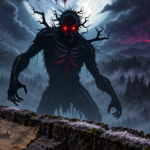
The Nythrall are not reanimated corpses or blood-drinking nobles in velvet capes. Emerging from beyond the Veil, they manifest as towering silhouettes woven from shifting shadow tendrils, nocturnal mist, and dense corded muscle. Their elongated limbs end in predatory talons capable of tearing through cured timber and seasoned iron fittings. Where a human heart would beat, their ribcages reveal a faintly pulsing crimson core, beating in rhythmic synchronization with the tides of the celestial sphere.
Unlike folklore vampires who crave vital fluid for personal sustenance, the Nythrall consume sovereignty and vitality itself. They leave behind hollowed, ash-cold remnants rather than puncture marks. Silver weapons offer no magical poison against them; physical defense requires unyielding materials like cold-hammered iron, consecrated mineral salt lines, and ungreased boundary hinges. As explored in our deep dive into threshold settlements in dark fantasy, outposts cannot rely on simple barricades. Survival demands precise adherence to ancient covenants that dictate when and where these shadows may lawfully tread.
2. Celestial Servitude and the Rise of the Blood Moon
The defining horror of the Nythrall lies in their celestial tether. They do not wander the wilderness at random. Their presence, power, and physical density fluctuate with lunar phases. Beneath a crescent moon, they remain translucent, drifting along the margins like malignant frost. But when the Blood Moon rises, the atmospheric pressure collapses, the Veil fractures, and the Nythrall solidify into lethal, unstoppable reapers.
This celestial tether fundamentally alters how frontier communities organize their lives:
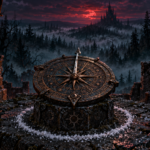
- Predictable Terror, Unavoidable Cost: Unlike arbitrary monster attacks, lunar cycles cannot be bargained with or delayed. Parish councils and garrison wardens track planetary alignments on bronze astrolabes, calculating down to the minute when perimeter defenses will face overwhelming pressure.
- The Thinning Veil: Each lunar eclipse or crimson alignment weakens the ancient membrane holding the realms apart. The danger is cumulative; every breach permanently degrades local defenses, requiring deeper salt trenches and heavier iron stanchions.
- Atmospheric Dread Over Jump Scares: Because their approach is announced by falling temperatures, sudden silence in the canopy, and shifting boundary dials, tension builds methodically long before talons touch stone.
3. Enforcers of Contractual Default
What elevates the Nythrall from simple apex predators into profound narrative antagonists is their institutional purpose. As detailed in our analysis of Lira Thornfield and covenant law in dark fantasy, magic across the realm behaves like binding property law. Centuries ago, foundational treaties established the borders of human civilization in exchange for perpetual civic obligations.
When an outlying watchtower runs out of lamp oil, when an imperial scriptorium defaults on territorial tributes, or when a parish council neglects its perimeter salt basins, the leasehold formally lapses. The Nythrall do not cross the border out of malice or hatred. They step across because the land has legally reverted to the void beyond the Veil. Frontier wardens like Evan Hartwell do not fight wild beasts; they stand guard against the repo men of an ancient, cosmic debt.
4. The Psychological Toll on Frontier Wardens
Fighting an opponent that represents natural law takes an immense toll on those who guard the borders. Wardens do not experience glorious heroics. Instead, they endure relentless exhaustion, frostbitten watches, and the quiet despair of measuring where the line contracted during the night.
Evan Hartwell’s journey across the trilogy is defined by this grim reality. Armed with practical frontier knowledge, emerald eyes trained on the dark between the pines, and a refusal to draw steel until the quiet crosses the road, Evan embodies the disciplined resistance necessary to hold back extinction. His conflict is shared by scholars like Lira Thornfield, who audit decaying vellum ledgers by candlelight to identify which town or monastery will be claimed next by the shadows.
Step Beyond the Veil
The Moon’s Curse Trilogy (Awakening, Descent, and Blood Moon) offers a complete, immersive dark fantasy saga where original creature mythologies, contractual magic systems, and relentless atmospheric dread collide. Experience the entire three-book journey in collector hardcover, paperback, and digital editions at londynpublishing.com or explore the full catalog in our books collection.