
Why Your Fantasy World Needs Unwritten Rules: Building Lore Without Infodumping
Every fantasy writer eventually hits the same wall. You spent months building a complex magic system, mapping out ancient dynasties, and charting civilizational boundaries. Then you sit down to write Chapter One, and the narrative grinds to a halt under the weight of your own research.
The temptation is always to explain. You want the reader to understand why the guard at the gate wears a specific bronze sigil, or why the border villages extinguish their lanterns two hours before midnight. But when world-building exists solely to be explained, it ceases to feel like a living world. It feels like a lecture.
When building The Moon’s Curse Trilogy, one core craft rule guided the architecture: the most powerful lore is the lore the characters treat as second nature.
1. The Trap of Exposition vs. Lived Habit
In world-building, there is a fundamental difference between exposition and lived habit.
Exposition pauses the story so the narrator can deliver historical context. Lived habit keeps the story moving while revealing the pressure of history through action.
Consider how characters interact with danger along the Rimward Margin in Awakening. When warrior Evan Hartwell approaches a boundary settlement, he does not pause to reflect on the historical ratification of the Veil Covenant. He simply checks the iron latch on his armor and glances at the horizon. The people living along the border do not discuss the metaphysics of veil magic over dinner—they unbar their doors only after three specific knocks and keep dried salt along the windowsill.
To the characters, these are not atmospheric details or cool magic rules. They are daily survival routines developed over centuries of living near a thinning border. When you write lore as habit rather than history, the reader absorbs the rules of your world organically.
2. Leaving Room in the Ledger
One of the hardest lessons in indie publishing is accepting that ninety percent of your world-building will never make it onto the printed page.
In the early drafts of Descent, scholar Lira Thornfield had extensive monologues detailing the internal hierarchy of the Church of Lux and the precise historical lineage of Father Kalen Draemir’s order. While the historical timeline was airtight, it flattened the narrative tension.
By stripping out explicit explanations and leaving only the friction—Lira’s frustration with redacted archival ledgers, Kalen’s cold adherence to unyielding doctrines—the world instantly felt larger. Readers do not need to read every page of your world’s codex. They simply need to feel the immense weight of the pages you chose not to show.
3. Creating Systems of Friction, Not Solved Puzzles
Magic systems and creature mythologies should create narrative problems, not easy solutions.
When developing the Nythrall—the moon-bound shadow entities central to The Moon’s Curse—the goal was to move far away from traditional, comfortably understood monster tropes. The Nythrall are not mindless beasts, nor are they tragic romantic figures. They are ancient, cold, and legally bound to the cosmic cycles of the Blood Moon.
Because their motives stem from ancient treaties and contractual debts rather than simple hunger, characters like ranger Auren Draevan cannot simply fight their way out of every encounter. They must navigate a system where the rules of engagement are unforgiving and human error carries immediate, permanent consequences.
When your world’s internal logic imposes genuine constraints on your characters, every scene gains natural stakes.
4. Practical Advice for Indie Authors
If you are currently building a fantasy universe or revising your manuscript, try applying these three filters to your world-building:
- The Swap Test: If a piece of lore could be explained by any character in any tavern, cut it. Give the information exclusively to a character whose specific profession or background makes that knowledge a matter of daily necessity.
- Show the Habit, Hide the Rule: Instead of explaining why a ritual exists, show your characters performing the ritual with unthinking precision. Let the reader wonder why before you ever give them the answer.
- Respect the Reader’s Intelligence: Modern dark fantasy readers love piecing together clues. Give them credit for being able to connect the dots without hand-holding.
Step Beyond the Veil
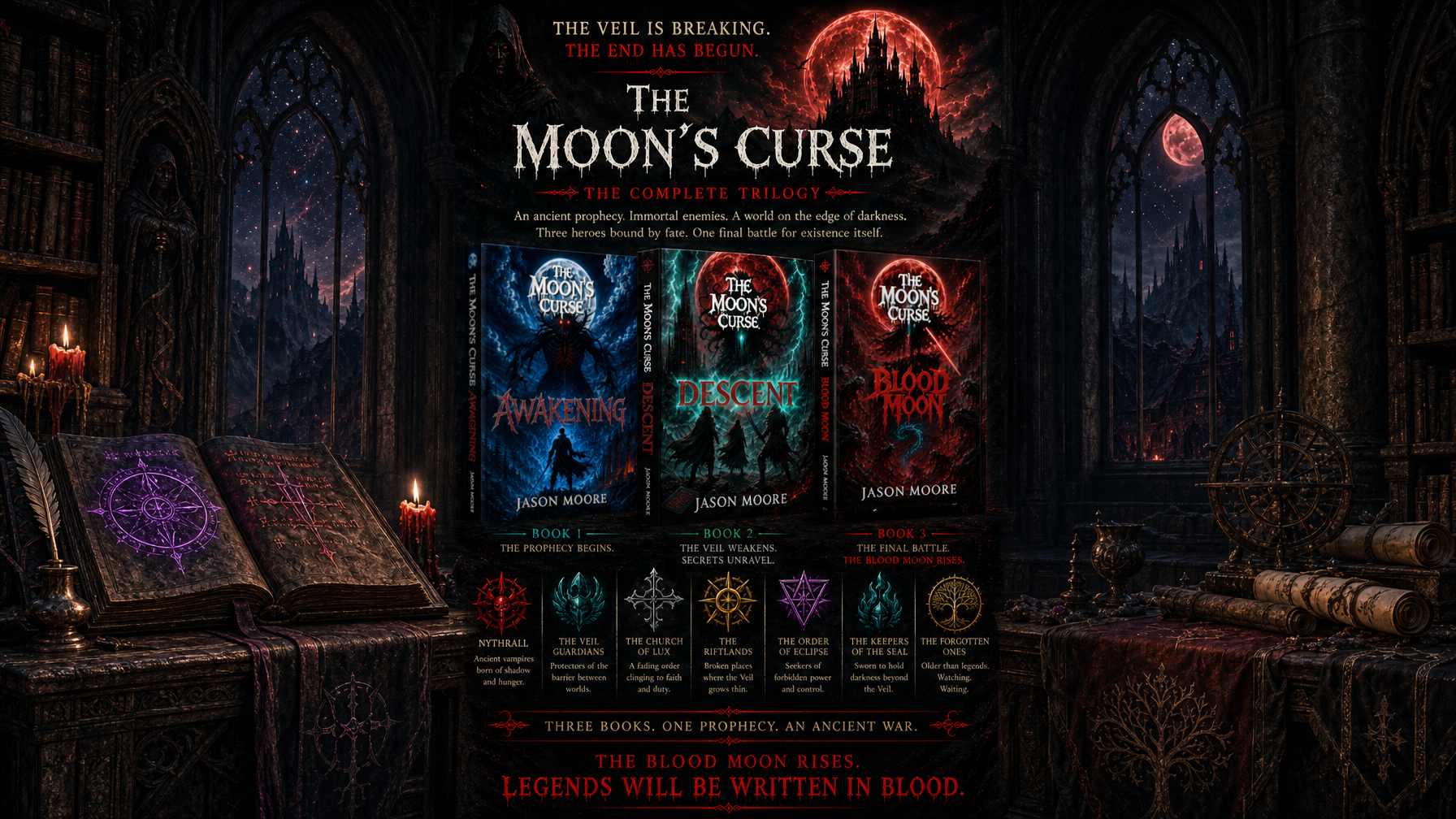
Building an atmospheric, lore-rich universe takes time, restraint, and a commitment to storytelling over infodumping. Across Awakening, Descent, and Blood Moon, the goal has always been to give readers a world that feels deep, mysterious, and alive long after the final page is turned.
If you enjoy immersive world-building, morally complex characters, and dark fantasy sagas, dive into the complete series today.
Explore The Moon’s Curse Trilogy in paperback, hardcover, and eBook at londynpublishing.com.

Londyn Publishing
Where fierce imagination meets loyalty, love, and a touch of the supernatural.