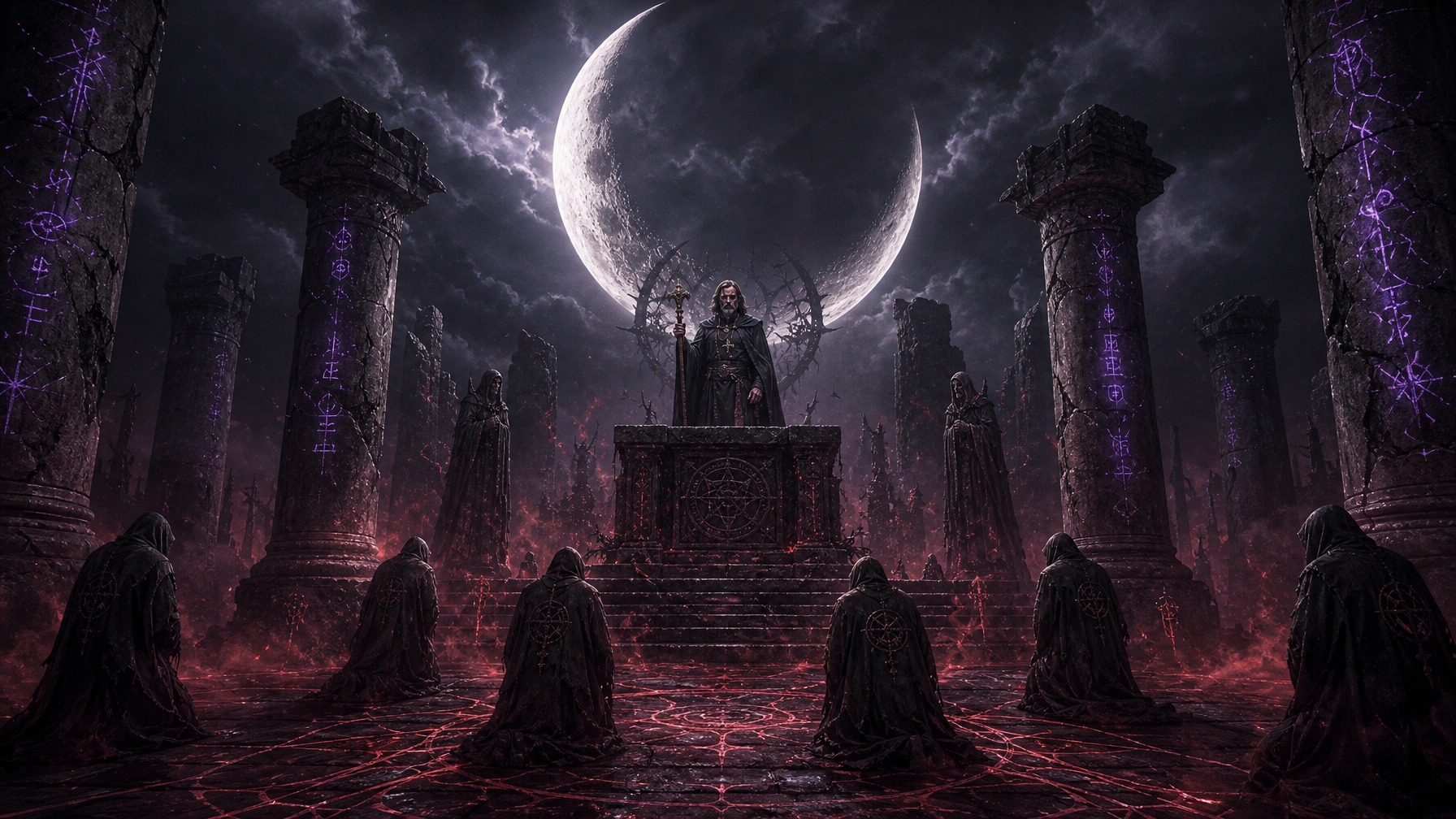

Some stories end when the hero wins. Dark fantasy knows better. In the subgenre's best works, winning is rarely clean — and prophecy, when it finally arrives, tends to carry a price that was always going to be paid. If you're drawn to the kind of fantasy where the world itself feels ancient and exhausted, where gods have failed and curses outlive the people who cast them, this reading guide is built for you.
Below, we explore what makes ancient-curse dark fantasy so compelling, highlight the tropes that define it, and recommend the titles — including The Moon's Curse Trilogy — that best deliver on its promise.
Why Ancient Curses Hit Differently in Dark Fantasy
There is something uniquely dreadful about a curse that predates the characters experiencing it. It suggests a world with a history longer than memory — one where the consequences of forgotten decisions are still actively arriving.
In high fantasy, curses are often puzzles to be solved. The hero gathers artifacts, fulfills conditions, breaks the seal. The story ends in restoration.
Dark fantasy treats curses differently. They aren't puzzles. They're weight. Structural damage done to the world at a foundational level. The characters who discover them often find that the curse was never meant to be broken — only survived, endured, or passed on.
This is what makes the subgenre so emotionally resonant. It asks a quieter, harder question than "can the hero win?" It asks: what does a person do when they find out the disaster was always inevitable?
The Moon's Curse Trilogy by Jason Moore
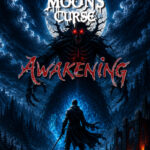
The Moon's Curse: Awakening introduces a world where the Veil — a supernatural membrane separating human civilization from a species of moon-bound shadow creatures called the Nythrall — has been weakening for centuries. No one knows exactly when it began to fail. The scholars who first noticed are long dead. The sigils carved into the ancient record stones have been partially translated, partially lost, and partially mistranslated in ways that only become dangerous later.
At the center of the story is Evan Hartwell, a soldier whose instincts and emerald-eyed clarity make him the kind of protagonist who understands things before he has the language to say them. When the Veil begins to fracture in earnest, Evan doesn't react with disbelief. He reacts with dread recognition — as if some part of him always knew this was coming.
Alongside him is Lira Thornfield, a scholar with fiery red hair and teal eyes who has spent years documenting the Veil Covenant: the ancient agreement, written in a language that predates spoken word, that bound the Nythrall to passivity as long as the covenant held. Lira doesn't just understand the curse. She understands why it was designed the way it was — and why certain clauses were always destined to expire.
The trilogy's central antagonist, Father Kalen Draemir, is equally compelling precisely because he isn't wrong about the covenant. He simply interprets its fulfillment as divine will rather than catastrophe.
Across Awakening, Descent, and Blood Moon, the trilogy builds toward an ending that was embedded in its opening pages — a prophecy fulfilled not through heroic intervention but through the slow and terrible patience of a curse that was always on its own schedule.
The full trilogy is available now at londynpublishing.com.
Joe Abercrombie's The First Law World
If the Moon's Curse Trilogy is about surviving a prophecy, Abercrombie's work is about discovering that the prophecy was a con. The First Law trilogy and its standalone follow-ups are masterclasses in the dark fantasy principle that institutional power — including the power of prophecy — serves the people who control it.
The Blade Itself, Before They Are Hanged, and Last Argument of Kings follow a cast of deeply compromised characters who discover, too late, that the conflict they've been fighting was engineered. The curse at the heart of Abercrombie's world isn't supernatural — it's political, cyclical, and extremely hard to break.
His standalone novels, particularly Best Served Cold and The Heroes, continue this tradition of showing what happens to people after the heroic narrative ends.
V.E. Schwab's Shades of Magic Trilogy
Schwab's trilogy — A Darker Shade of Magic, A Gathering of Shadow, and A Conjuring of Light — operates on a system of parallel Londons, each representing a different relationship between humanity and magic. The darkest London has been consumed. The safest one has forgotten magic almost entirely.
The curse driving the narrative is architectural: a power that was sealed away centuries ago and is now, inevitably, leaking back. What makes Schwab's approach distinctive is how character-driven the horror is. Her protagonists are defined by what they've lost to magic before the story starts — making the threat of its return feel personal rather than apocalyptic.
Brian Naslund's The Books of the Fall
Naslund's fantasy debut, Blood of an Exile, introduces a world where dragons are dying — and the ecological and political consequences of that dying are driving human civilization toward its own collapse. The cursed world here isn't supernatural in origin; it's the result of generations of exploitation catching up at once.
What makes this trilogy resonate with dark fantasy readers is the weight of inevitability. Characters who try to stop the collapse are working against momentum built over centuries. There is no single villain to defeat. There is a world that was damaged before the story began and is still paying for it now.
Evan Winter's The Burning Series
Set in a continent where a war that should have ended generations ago is still being fought by children who inherited it, The Rage of Dragons and its sequels track a young man named Tau who dedicates himself to vengeance inside a system designed to grind people like him down.
The curse in Winter's world is structural and racial — a caste system built on military mythology that has calcified into something close to prophecy. Breaking it requires not just personal sacrifice but the dismantling of beliefs that have been weaponized into religion.
It is, in the truest sense, a story about what ancient wrongs do to the people born into them.
What to Look for in Ancient-Curse Dark Fantasy
When browsing for your next read in this space, these are the markers of a genuinely strong entry:
A curse with internal logic. The best examples aren't arbitrary — they follow rules that existed before the characters did, and those rules are discoverable (though often at terrible cost).
Characters defined by prior knowledge. The most compelling figures in this subgenre are people who understand something about the curse that others don't — and must decide what to do with that knowledge.
An ending that feels earned, not escaped. Dark fantasy prophecy stories that resolve too neatly betray their own premise. The best conclusions honor the weight of what was always coming.
The Moon's Curse Trilogy delivers on all three counts. The Veil Covenant was always going to expire. The Blood Moon was always going to rise. What changes — what the characters fight for — is what it means.
Start the Trilogy
All three books — The Moon's Curse: Awakening, The Moon's Curse: Descent, and The Moon's Curse: Blood Moon — are available now in paperback, hardcover, and eBook.
The trilogy is complete. The ending exists. The only question is whether you're ready to step Beyond the Veil.