
In classical high fantasy, cathedrals and religious sanctuaries often function as grand architectural set pieces. Holy orders offer moral counsel, radiant blessings, or divine miracles that turn back encroaching evil through pure celestial power. In The Moon’s Curse Trilogy, the church operates under a colder, administrative discipline. Across the frontier parishes of the Rimward Margin, the high stone towers do not ring to summon worshippers to joyful celebration. Understanding Father Kalen Draemir and liturgical boundary maintenance reveals how sacred architecture, ritual cadence, and sanctuary bells serve as functional diagnostic instruments holding back the collapse of the Veil.
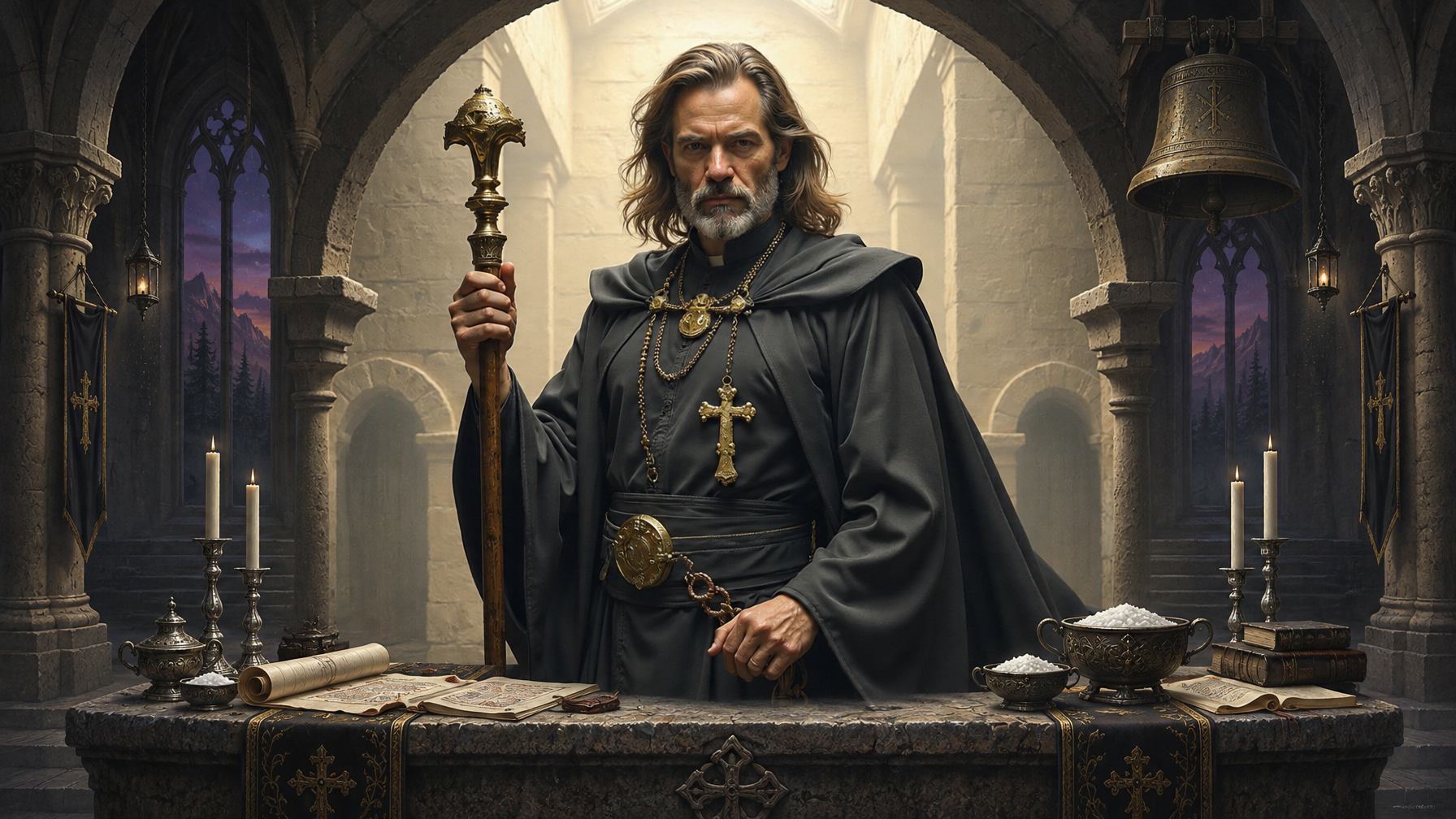
While boundary wardens like Evan Hartwell walk the perimeter trenches with rusted calipers and coarse salt, and scholar Lira Thornfield audits parchment ledgers in freezing scriptoriums, Father Kalen Draemir operates at the spiritual fulcrum of the crisis. Dressed in unadorned black ecclesiastical vestments, Kalen understands that holiness along the frontier is neither emotional nor forgiving. It is an unyielding municipal contract written in stone, bronze, and silence.
1. Sanctuary Bells as Metaphysical Tuning Forks
In an empire where ancient covenant law holds back the predatory, moon-bound Nythrall, magical defenses require physical anchors. The massive bronze bells hanging in cathedral spires along the border were never cast merely to mark the canonical hours. Hammered from specialized copper-iron alloys and quenched in mineral brine, each bell is physically calibrated to the resonant frequency of the local boundary membrane.
When parish covenants remain in legal balance, a struck bell rings with a clear, resonant tone that vibrates through the bedrock for several leagues. That vibration reinforces the boundary ditches, dampening the metaphysical static that leaks from beyond the Veil. But as neglect festers across imperial capitals and provincial councils default on required boundary maintenance, the acoustic properties of the cathedral change:
- Damped Resonance: When a nearby outpost defaults or boundary oil goes undelivered, the toll of the bell loses its sustain. The tone drops abruptly, thudding flat against the stone flags of the nave as if muffled by wet earth.
- Harmonic Dissonance: An experienced cleric like Father Kalen can hear the precise angle of a boundary breach based on the overtone wobble in the bell metal. A sharp rattle indicates cracked mortar along the northern wall; a dull whistle signals a failing salt ditch in the river valley.
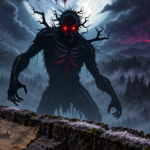
- The Silence of Default: The greatest peril along the frontier is not a violent clanging alarm. It is the sudden, deadening quiet when a ringer pulls the braided hemp rope and the bronze bell produces no audible sound at all. When the metal goes mute, the covenant clause has completely collapsed, and the ground belongs once more to the creatures of the dark.
2. Father Kalen Draemir and the Burden of the Ledger
Father Kalen Draemir represents a compelling departure from the standard fantasy priest trope. He is neither a fanatical zealot burning heretics nor an innocent holy man untouched by the brutality of the world. Kalen is an institutional pragmatist forced to navigate the rot of an empire that has outgrown its own safeguards.
Behind the cathedral altar, Kalen maintains his own private accounting. Alongside Latin service books and liturgical psalters sit copies of municipal grain allotments, tallow reserves, and boundary treaties signed centuries prior. He knows that prayer without salt is meaningless along the Margin. If the bailiffs fail to deliver salt barrels to the northern watchposts, no amount of incense will prevent the shadows from crossing the threshold when the Blood Moon ascends.
This grounding in institutional consequence mirrors the storytelling philosophy analyzed in our exploration of grimdark vs dark fantasy: consequence, dread, and hope. In atmospheric dark fantasy, characters like Kalen must confront moral exhaustion without giving in to nihilism. Holding the line within the cold stones of the chancel is an act of grim, stubborn resistance against an indifferent capital.
3. Liturgical Geometry and the Defense of the Nave
Every architectural element of a border cathedral in The Moon’s Curse was designed for physical and spiritual defense. The high nave, narrow lancet windows, and cruciform floor plans are not merely decorative expressions of piety; they form a geometric circuit designed to channel and trap metaphysical pressure.
As explored in our analysis of threshold settlements in dark fantasy, physical barricades frequently void ancient covenant protections. The cathedral must remain structurally accessible while maintaining its sacred warding:
- Chancel Thresholds: The boundary between the public nave and the elevated chancel is demarcated by a low iron balustrade inlaid with unrefined silver wire. While townspeople can seek shelter on the flagstones during twilight, the sanctuary proper remains sealed to maintain ritual purity.
- Salt-Filled Crypt Vaults: Beneath the cathedral floor lie cavernous ossuaries packed with dry sea salt and lead-lined sarcophagi. This subterranean ballast stabilizes the foundation, preventing earth-dwelling entities from undermining the consecrated stone above.
- Unlit Tallow Tapers: During regular evening services, tapers burn steadily. However, when the veil thins during a Blood Moon, the flames turn violet and burn cold to the touch, consuming no wax while throwing long, distorted shadows across the ribbed vaulting.
4. The Inevitable Reckoning of the Blood Moon
Across the narrative arc of The Moon’s Curse Trilogy (spanning Awakening, Descent, and Blood Moon), Father Kalen Draemir faces the tragic realization that rituals designed to preserve an old covenant cannot hold back a world undergoing systemic fracture. The ancient prayers are wearing thin, and the bells are ringing flatter with every passing season.
By treating faith, architecture, and liturgy as concrete components of an interactive world, The Moon’s Curse grounds its supernatural conflict in tangible human experience. The horror is not that monsters exist in the dark forest beyond the Margin. The horror is that civilization built magnificent instruments to measure their approach, and then slowly chose to stop listening.
Step Beyond the Veil
Experience an immersive dark fantasy universe where sacred covenants, crumbling frontiers, and relentless creature lore collide. Discover The Moon’s Curse Trilogy (Awakening, Descent, and Blood Moon) by Jason Moore, available now in hardcover, paperback, and digital editions at the Londyn Publishing Books Archive and londynpublishing.com.