

Lira Thornfield does not trust a single sheet of paper to tell the truth about a road.
In The Moon’s Curse Trilogy, she keeps two copies of every map. The first is the one a clerk can file without arguing. Settlements named. Fords marked. Ridges drawn as if a surveyor’s hand still meant what it meant when the ink was wet. The second copy is for the places the first pretends are not there: a blank where a census should sit, a hush that never made it into the index, a village the catalog still lists as occupied because no one wanted to write the word gone.
This is not a quirk of a scholar with fiery red hair and teal eyes who likes extra paper. It is how literacy works Beyond the Veil. The archive and the field do not share a language. Someone has to hold both.
What a catalog is allowed to remember
A catalog is a permission slip. It remembers what an institution is willing to be responsible for. If a threshold community empties while the lamps stay lit, the later index often keeps the old name. Erasing it would admit the Veil failed as manners before it failed as architecture. Filing a blank is quieter. A blank looks like a missing page, not a policy.
Lira files the gap anyway. She does not decorate it. She does not write a sermon in the margin. She copies the first map so the lie stays visible, then she copies the second so the lie does not become the only record.
Evan Hartwell meets the same fact on the road, without a drawer. He walks into weather that used to be a sentence. Auren Draevan walks the quiet map in a forest-green cloak and treats a ridge as a node when cartographers call it an elevation error. Father Kalen Draemir would rather recategorize the hour than admit the hours-book and the hymn no longer describe the same job. Lira is the one who can put those three reports on one table and still see the missing settlement.
The second map is not a secret diary
It is a working tool.
When a ford refuses a crossing, the first map still shows stones. The second map shows the term the stones stopped countersigning. When moon-bound Nythrall wait at a tree line, they are not hunting a drawing. They collect where the human side of the contract has already gone late. A map that only names the living will send a walker into a street that still looks like welcome.
Lira’s second copy exists so Evan Hartwell does not have to learn that lesson as blood. It exists so Auren Draevan’s field notes have somewhere to land that is not a cathedral index. It exists because the Church of Lux can refile maintenance as liturgy, and paper will agree if you only keep one set.
Readers who come to dark fantasy for atmosphere sometimes miss this. Atmosphere is the lamp. The second map is the reason the lamp is still trimmed in a house that no longer answers a knock.
How to read her scenes
If Lira is at a table, look at which sheet her hand is on. If she is copying, she is not stalling. She is refusing to let the official line become the only line. If she leaves a space uninked, that space is evidence. Do not wait for a speech that explains the blank. The blank is the explanation.
Awakening teaches the Veil as a living contract instead of a wall. Descent is where archive and field stop pretending they describe the same country. Blood Moon is the calendar coming due. Lira’s two maps sit under all three books. Without them, the Nythrall look like costume. With them, they look like signatories who kept their copy when humanity misfiled theirs.
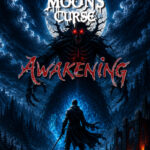
The complete trilogy is already on the shelf. Start with The Moon’s Curse: Awakening at londynpublishing.com. The second map is not extra lore. It is how you keep from walking a road the first map invented.