
Description
In The Moon’s Curse, silence is a reading. When a Veil node stops answering, Auren Draevan, Lira Thornfield, and Evan Hartwell treat the hush as diagnostic, not scenery.
When the Veil Stops Answering: Silence as Diagnostic in The Moon’s Curse
Most dark fantasy uses hush as wallpaper. Fog, empty streets, a moon that looks expensive. In The Moon’s Curse, silence is a measurement.
When a Veil node goes quiet, the world does not get prettier. It gets less cooperative. The weave that usually answers a walker with pressure, lean, or a faint refusal simply withholds. Threshold families notice first. They built their houses where maps fail, and they know the difference between a still night and a night that has stopped talking back.
This is a lore note about that difference, and about the people who have to live inside it.
Hush Is Not Atmosphere
Atmosphere is what a reader feels. Diagnostic is what a character does next.
Along the Rimward Margin, settlement families treat quiet as weather with a direction. A good hush sits over a node the way frost sits over a field: expected, local, survivable. A bad hush travels. Doors stay unbarred not from hospitality, but because the etiquette of the place assumes the Veil still participates in manners. When it withdraws, the house rules remain and the architecture does not.
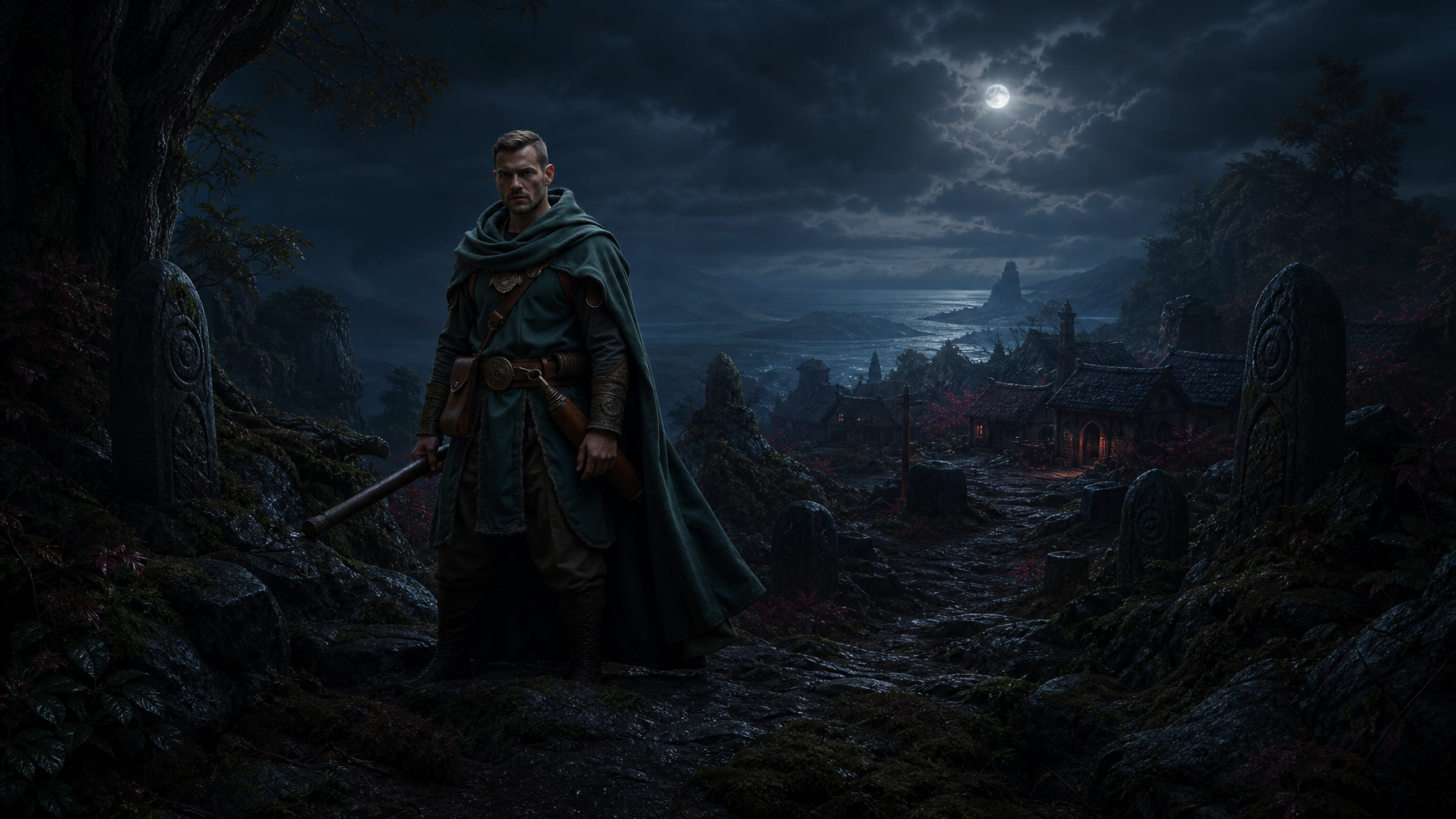
Auren Draevan reads that withdrawal in his body before anyone writes it down. Forest-green cloak, ridge craft, no catalog. He does not ask the node to explain itself. He waits to see whether the silence has a lean. If it does, the community still has a relationship with the weave. If it does not, the node has gone offline in a way no sermon will restore.
That is the first diagnostic: does the hush still point?
What Lira Cannot File
Lira Thornfield meets the same event as an archive failure.
Teal-eyed, red-haired, furious at gaps, she can reconstruct clauses, signatories, and the patience of moon-bound pressure. She cannot file a conversation that has stopped. The Veil is a living contract. Contracts leave residue: marks, copies, witnesses. A node that answers leaves a trail even when the answer is “no.” A node that refuses to answer leaves a blank that looks like someone tore a page after the binding was already set.
Her diagnostic is crueler than Auren’s. She asks whether the gap is old or new. An old gap belongs to civilizational amnesia, the three-thousand-year interval in which people kept the gestures and lost the reasons. A new gap means the weave changed while someone was still watching. That second kind of silence is not heritage. It is an event.
She withholds partial reconstructions until field evidence can shame or confirm them. The record is not complete if the ridge still knows something the shelf does not.
Evan Hartwell Walks the Interval
Evan Hartwell does not get the luxury of either literacy in full.
Emerald-eyed, warrior-framed, he learns under cost. When the Veil stops answering, he is already inside the interval between last known pressure and first visible breach. He acts in the gap: not because he understands the node, but because people still live against it. Forgetfulness walks ahead of him. Families keep house rules that no longer match the air. He inherits their manners and their danger in the same step.
His diagnostic is the ugliest of the three. He asks what still costs. If crossing a threshold still takes something (breath, orientation, a moment of wrong gravity) the weave is injured, not absent. If crossing costs nothing, the wall has become a rumor, and the Nythrall do not need to hurry. Moon-bound patience prefers a door that no longer knows it is a door.
Beyond the Veil, horror is rarely the scream. It is the moment Evan realizes the world has stopped arguing with him.
Four Literacies, One Quiet Node
The trilogy keeps these methods from collapsing into one clever mind.
- Auren Draevan tests lean and direction.
- Lira Thornfield tests age and completeness of the gap.
- Father Kalen Draemir already has a category for the hush and will not reopen the file.
- Evan Hartwell tests cost, then moves anyway.
When those four readings disagree, the node is doing more than failing. It is revealing which human system still thinks it is in conversation. Church ledgers may log the night as ceremony. Keepers may log it as maintenance that did not complete. Settlement families may simply refuse to name what they used to greet.
None of that is mood. Mood would let the camera linger and call it dread. Diagnostic forces a next action: stay, translate, withhold, or walk.
Why the Nythrall Prefer This Weather
The Nythrall are not traditional vampires and they are not theatrical. They are moon-bound. A node that still answers, even with refusal, is a working clause. A node that has gone quiet is a clause no one is enforcing.
Patience likes that. So does any intelligence that collects oaths instead of blood first. Residual house rules, unbarred doors, unnamed names: those are not quaint folklore. They are leftover protocol from a contract that used to participate. When the Veil fails as manners before it fails as architecture, the creatures on the other side do not need a spectacle. They need time.
Awakening, Descent, and Blood Moon were written so that silence accumulates like evidence. If you want the full case file rather than the field note, the complete trilogy is already finished.
Read the Node Yourself
If you have stood in a room that suddenly felt too easy, you already know the difference this lore is built on. Pretty quiet is rest. Diagnostic quiet is a system that has stopped returning your call.
Start with Awakening if you want Evan Hartwell at the first withheld answer. Stay through Blood Moon if you want to know what happens when the due date arrives and the hush no longer bothers to lean.