
Description
Looking for a complete dark fantasy series you can finish without a multi-year cliffhang? This guide covers why finished trilogies matter, what strong dark fantasy delivers, and where The Moon's Curse sits on that shelf.
Complete Dark Fantasy Series: Why Finished Trilogies Win (and Where to Start)
#TLDR
A complete dark fantasy series is more than three matching spines. It is a promise that the lore has a landing, the antagonist has a final move, and you will not wait half a decade for book three. Readers on Reddit, BookTok, and Goodreads keep asking for finished trilogies because incomplete sagas punish binge culture. Below: what to demand from a finished dark fantasy trilogy, how to choose one, and how The Moon's Curse (Awakening, Descent, Blood Moon) is built for that exact reader.
Why "Is It Finished?" Comes First
Search any dark fantasy thread and the filter appears early: is the series complete? That is not impatience. It is risk management.
Dark fantasy asks for more emotional and intellectual investment than a standalone beach read. You track factions, magic law, and morally gray POV characters. When book two ends on a breach and book three has no release date, the investment sits unpaid. Communities that discuss finished fantasy series and best dark fantasy books treat completion as a first-order filter, not a nice-to-have.
Indie publishers feel this pressure harder. We cannot lean on a Big Five marketing machine to keep a half-told world warm for five years. At Londyn Publishing, the decision was simple: write and release the full trilogy so readers who want a complete dark fantasy series can start on page one of Awakening knowing Blood Moon already exists.
What a Strong Complete Dark Fantasy Series Actually Delivers
Not every finished trilogy earns a reread. Completion is the floor. Atmosphere, system, and payoff are the walls.
1. A world that was already broken
Soft-landed openings teach readers to relax. Strong dark fantasy often begins after the catastrophe, or during the long middle of institutional failure. Guides that map where to start in dark fantasy tend to favor ruined kingdoms, buried history, and cosmic pressure over quests that reset the map every book.
In The Moon's Curse, the Veil is not a fresh invention. It is a living contract under stress. Communities at the edge already read silence the way sailors read weather. That "already broken" frame lets dread accumulate instead of resetting each volume.
2. Magic and monsters with rules (and costs)
Vampire-adjacent shelves are crowded. Readers who want original dark fantasy creatures still ask for monsters that are not just blood-drinkers in better coats. Creature law should constrain heroes as much as it threatens them.
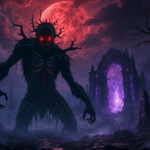
The Nythrall are moon-bound shadow entities, not traditional vampires. Their patience, hunger, and hierarchy answer a lunar tether, not a Gothic nightclub. That distinction shapes every chase, every delayed attack, and the Blood Moon itself as a due date rather than a mood lighting cue. If you came for creature mythology with internal logic, that is the spine of the series.
3. Multiple ways of knowing the truth
Multi-POV dark fantasy fails when every head knows the same secret on different schedules. It works when each viewpoint holds a different literacy: archive, field craft, theology, stubborn frontline competence.
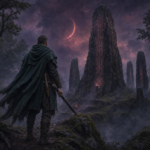
Across Awakening, Descent, and Blood Moon, Evan Hartwell (emerald-eyed warrior protagonist), Lira Thornfield (scholar, fiery red hair, teal eyes), Auren Draevan (ranger in forest green), and Father Kalen Draemir (dark priest of absolute certainty) do not share one truth file. They collide. A finished trilogy lets those collisions resolve into a single ending without orphaning a half-built POV.
4. An ending that was designed, not improvised
When a trilogy is complete before the marketing cycle peaks, the third book can pay debts book one quietly incurred. Prophecy, Covenant clauses, sealed ledgers, missing stones: either they land or they were window dressing. Readers who binge a finished fantasy trilogy can feel the difference between planned architecture and "we'll figure out book three later."
How to Choose Your Next Complete Dark Fantasy Series
Use this short checklist when you scan blurbs and Goodreads shelves (including community lists like Best Dark Fantasy):
- Status first. Complete trilogy or closed series. No "forthcoming" on the final volume.
- Tone match. Grimdark cruelty, gothic dread, cosmic horror, or atmospheric dark epic? Pick the flavor you actually finish.
- Creature and magic originality. If the pitch is "vampires again," be honest about whether you want that or something else.
- POV design. Single hero journeys and multi-POV political webs demand different attention.
- Format and access. Paperback, hardcover, eBook available now matters if you binge across formats.
- Author and indie signal. Smaller presses often finish arcs faster because survival depends on reader trust, not catalog sprawl.
For readers who bounced off endless unfinished epics, a three-book closed arc is the humane middle path: enough room for lore, not a decade of waiting.
Where The Moon's Curse Fits on the Shelf
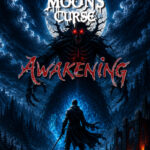
The Moon's Curse is a complete dark fantasy trilogy from Londyn Publishing:
- Book 1, Awakening: the Veil thins; the world learns the contract was never a wall.
- Book 2, Descent: field knowledge and archive knowledge stop agreeing; the cost of partial truth rises.
- Book 3, Blood Moon: lunar tether, Covenant debt, and final moves for human and Nythrall sides alike.
Brand shorthand for the experience: cinematic atmosphere, Beyond the Veil mythology, moon-bound threat logic, and morally complex people who cannot afford simple heroism. If your comps include ruined-world games, gothic supernatural conflict, and lore-heavy adult fantasy (without requiring you to wait on an unfinished fifth book), this trilogy was built for that lane.
Start at the books page or meet the author on the about page. For lore craft adjacent to this guide, see Moon-Bound: The Cosmic Tether That Defines the Nythrall and Books Like Elden Ring: Dark Fantasy Series for Readers Who Want Ruined Worlds and Deep Lore.
Common Mistakes When Shopping Dark Fantasy Trilogies
- Confusing "dark" with "edgy shock." Atmosphere and consequence outlast gore checklists.
- Ignoring completion status. A brilliant book one with no ending is a different product than a closed trilogy.
- Forcing vampire expectations onto original creatures. Read the rules the text actually sets.
- Starting mid-series "for the vibe." Multi-POV knowledge debt is real; book one is the contract.
- Treating indie as unfinished by default. Many indie dark fantasy authors finish faster precisely because readers demand it.
FAQ
What makes a dark fantasy series "complete"?
Every planned volume is published and the central arc has a definitive ending. Sequels or companion stories may exist later, but the core trilogy (or closed series) stands alone.
Are complete dark fantasy trilogies better than ongoing sagas?
They serve different needs. Ongoing sagas suit readers who enjoy living in a world for years. Complete trilogies suit readers who want payoff, reread structure, and bingeability without cliffhang anxiety.
Is The Moon's Curse a complete series?
Yes. Awakening, Descent, and Blood Moon are all available. You can start and finish the arc without waiting on a final book.
Who should read The Moon's Curse?
Adult readers who want atmospheric dark fantasy, original Nythrall mythology, multi-POV tension, and a finished indie trilogy rather than an open-ended epic.
Conclusion
A complete dark fantasy series respects your time and your capacity for dread. Finished trilogies win because they convert lore investment into ending, not into another preorder page. If you want a closed three-book path into Veil mythology, moon-bound threat design, and characters who argue over what the world is allowed to mean, The Moon's Curse is ready on day one.
Enter Beyond the Veil when you are ready: londynpublishing.com.