
Londyn Publishing
The Weekly Dispatch
Edition 6 — July 23, 2026
A Note from Jay
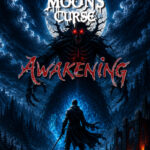
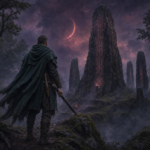
There is a scene early in Awakening where Evan Hartwell passes through a settlement that sits directly on the Veil’s edge. He notices that the buildings face inward, away from the treeline. That the windows on the Veil-facing wall have been bricked over. That the people there do not look toward it when they speak, even when they are describing it in detail.
I wrote that scene almost by instinct, and then spent a long time afterward thinking about what it meant. These communities did not form because people were unafraid. They formed because people decided that proximity to the thing they feared was preferable to distance from the only information available about it. Living at the edge told you things. The direction of the wind. The quality of the silence. Whether the maintenance orders had passed through recently. Whether the feel of the geometry had shifted.
That kind of knowledge cannot be archived. Lira can reconstruct documents. Auren can read the land. But the people who live in the threshold settlements know things neither of them can access. I think about them often. This edition is, in part, for them.
— Jason
From the Blog
Ancient Covenants and Cosmic Dread: The Best Dark Fantasy Books Built on Binding Magic
A reading guide for dark fantasy built on civilizational agreements so old that no living character fully understands them. And the catastrophic consequences of forgetting.
Read More →The Private Lore Bible: What Stays Off the Page in Indie Dark Fantasy
The documents, rules, and character epistemologies that never appear in the published trilogy. And why keeping them private is what makes the world feel real.
Read More →The Creature Lore Obsession: Why BookTok Can’t Stop Talking About Monster Mythology
Why the readers who want to know the rules of the monster. Not just what it does, but what it is bound by. Are building the most loyal reading communities online.
Read More →Two Kinds of Knowing: The Lira Thornfield and Auren Draevan Dynamic
One built her understanding in archives. The other built his in the field. Together, they illuminate the central epistemological tension of the entire trilogy.
Read More →When the World Is Already Ending: The Best Dark Fantasy Series for Readers Who Want the Stakes to Feel Real
A guide to dark fantasy that arrives in a world already mid-collapse. Where survival means understanding what broke, not preventing a catastrophe that has already begun.
Read More →Spotlight — Location
The Threshold Settlements: Communities at the Veil’s Edge
They have no formal name in any administrative record. The cartographers who have attempted to map them disagree on their precise locations, because the geography at the Veil’s boundary does not hold still. What the maintenance orders once called the Rimward Margin refers not to a fixed line but to the variable zone where the Veil’s physical pressure becomes perceptible. Where the silence changes quality, where the air carries a faint mineral density, where the light at dusk takes longer than it should to drain from the sky. The threshold settlements exist inside this zone. They always have.
The people who built these communities were not reckless. They were practical. Distance from the Veil meant ignorance of it, and ignorance of it meant death at irregular intervals with no warning and no pattern to study. Proximity, on the other hand, offered information. The settlements developed their own vernacular of the Veil’s behavior: the direction of pressure, the texture of silence on a given morning, the interval between what the old settlers called the lean. A barely perceptible gravitational asymmetry that preceded every documented Veil irregularity within living memory. The inhabitants of these communities did not record this knowledge in books. They passed it through gesture and habit and the particular way a grandmother turned her head toward the treeline before answering a question.
Auren Draevan grew up adjacent to this knowledge without quite belonging to it. He learned to read the land’s signals the way the settlement families did, but he was always an observer rather than a native speaker. What he carries into the events of the trilogy is a translation of that knowledge. Accurate, but one step removed. The settlement families know things Auren knows he does not fully know. When he says a node is at one location and a cartographer’s survey places it three kilometers east, the families do not argue. They simply do not use the map.
Lore Corner
“The sixth settlement on the Rimward Margin was abandoned during the third maintenance cycle. Not because of a breach, but because the families who had lived there for nine generations reported that the silence had changed direction. No document produced by the orders contains a glossary entry for what changing direction means in this context. The families did not explain it. They packed their belongings and walked north. The orders catalogued the relocation as unexplained. The settlement families catalogued it as obvious.”
. Partial field notation, Maintenance Order Survey, Third Cycle. Authorship unrecorded.
The Veil is thinning. The Covenant is ending. All three books are available now. Begin at the beginning, or begin where the silence changes.
Enter the World →londynpublishing.com

Londyn Publishing
Where fierce imagination meets loyalty, love, and a touch of the supernatural.