
TLDR
The Nythrall are not vampires. They are something far older, far stranger, and far more terrifying — moon-bound creatures born from a broken covenant between light and shadow, and the mythological engine driving The Moon’s Curse Trilogy.
What Separates the Nythrall from Everything You’ve Read Before
Dark fantasy has a mythology problem.
For decades, readers drawn to creature-led narratives have been handed the same archetypes in new packaging: vampires with updated aesthetics, werewolves with emotional depth, shadow demons with tragic backstories. The creatures change names. The mythology stays the same.
The Nythrall are different — and not in the way marketing copy usually promises.
They do not drink blood to survive. They do not hunt at night because sunlight burns them. They do not answer to a dark lord or trace their lineage to a single cursed ancestor. The Nythrall exist because the moon permitted them to. And in the world of The Moon’s Curse Trilogy, that permission is the most dangerous thing in existence.
Born of the Veil: The Origins of the Nythrall
To understand what the Nythrall are, you first need to understand the Veil.
In the world Jason Moore built for the trilogy, the Veil is not a metaphor. It is a literal boundary — a membrane between the realm of the living and something that has no clean name in any mortal tongue. Most people never encounter it. Some scholars dedicate their lives to its study and emerge changed, hollowed, no longer quite sure what they believe about death or time or the nature of light.
The Nythrall came through.
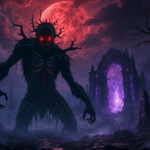
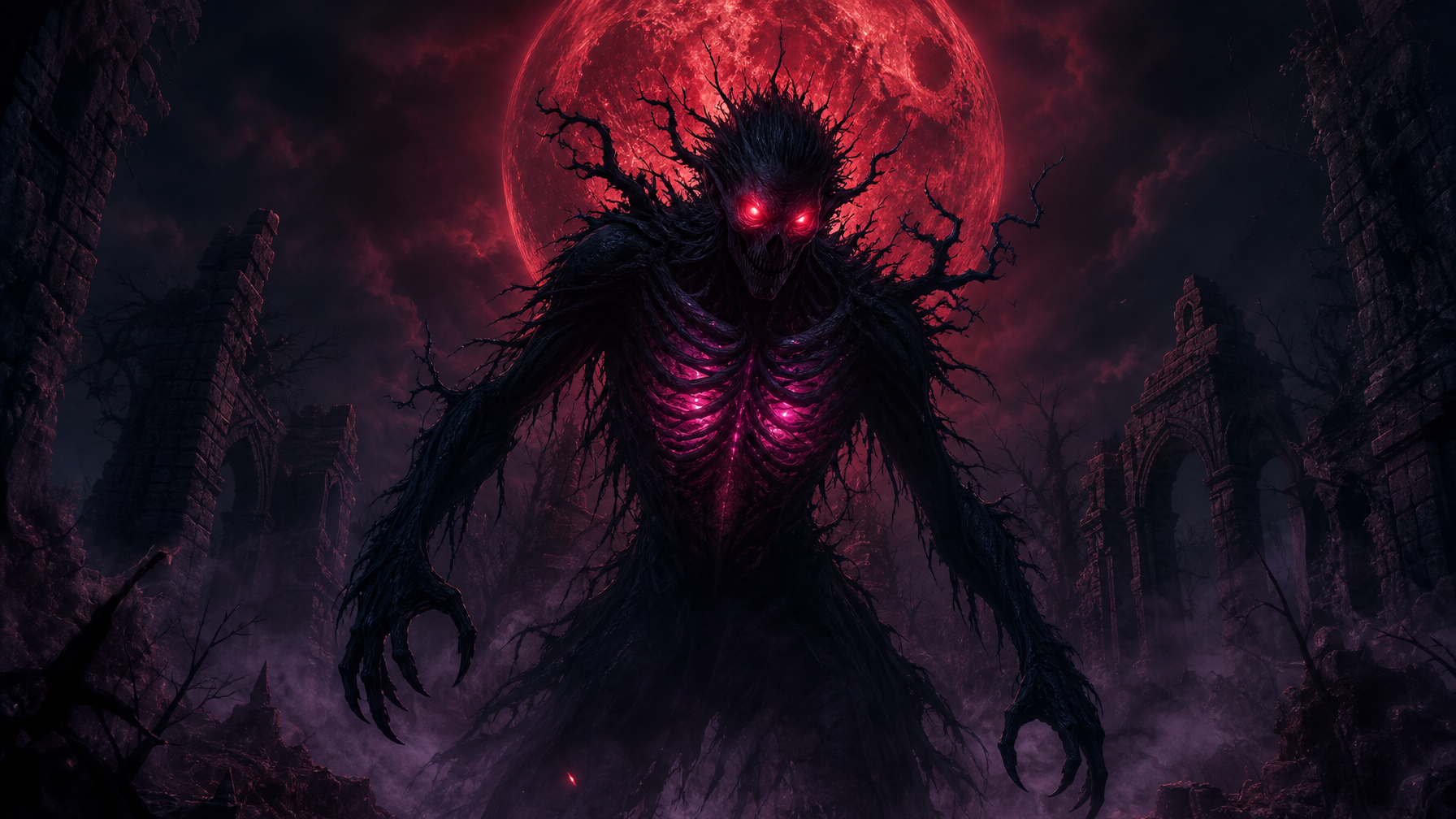
Not all of them crossed willingly. Not all of them remember crossing. But every Nythrall carries the Veil inside them — a pulsing void in the chest, visible as a faint crimson light through flesh that no longer reads as entirely human. That pulse is not a heartbeat. It is something the Veil left behind when it let them go. A claim. A reminder that passage through the Veil is never free, and the cost is always paid over time.
This is the detail that separates them from vampire mythology in virtually every tradition: the Nythrall are not cursed. They were permitted. The moon saw them, recognized something in them, and opened the way. Whether that is a blessing, a punishment, or simply the cold indifference of a cosmic force that does not think in human terms — the trilogy never fully answers that question, and the ambiguity is the point.
Moon-Bound: What It Actually Means
The phrase “moon-bound” appears in reader discussions, in the story’s lore fragments, and in the Londyn Publishing brand language for a reason. It is not decorative.
A moon-bound creature does not simply grow stronger or weaker based on lunar cycles in the way fantasy shorthand usually handles it. To be moon-bound in this world means your very sense of self — your memories, your hunger, your capacity for something resembling emotion — fluctuates with the moon’s phase.
During a new moon, a Nythrall is at its most lucid. Most human. Most dangerous in the quiet, calculating way.
During a blood moon, the calculus inverts entirely.
The Blood Moon phase, the event that gives the trilogy’s third installment its name, strips the boundary between the Veil and the waking world almost entirely. Nythrall during a Blood Moon do not become monsters in the Hollywood sense. They become accurate. Every suppressed instinct, every buried memory from before their crossing, every grief and rage and yearning — it surfaces without filter. The horror is not claws and screaming. The horror is clarity.
This is the mythology that dark fantasy readers who are tired of the same creature beats have been waiting for: something moon-based that actually uses the moon as a narrative engine rather than a mood cue.
The Nythrall in The Moon’s Curse Trilogy: A Mythology That Builds
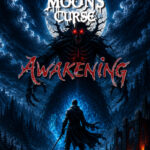
The three books — The Moon’s Curse: Awakening, The Moon’s Curse: Descent, and The Moon’s Curse: Blood Moon — do not front-load the mythology. This is a deliberate craft choice.
In Awakening, the Nythrall are mostly glimpsed. Their presence is established through effect: the way characters react to them, the way environments change around them, the strange gaps in institutional knowledge that suggest powerful forces have spent generations making sure the common population does not ask too many questions about where the Nythrall came from or how many there actually are.
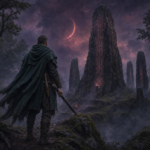
Evan, the protagonist, encounters the mythology as a reader would — through fragments, rumors, the testimony of people who have survived proximity to the Veil and come back with contradictory accounts. His emerald eyes mark him as someone the Nythrall have noticed. The story builds slowly toward the question of what that attention means.
By Descent, the mythology deepens. Lira Thornfield’s scholarly work becomes one of the trilogy’s most important devices — she is the reader’s interpreter, the one who assembles the broken pieces of Nythrall history into something approaching coherence, even as she remains aware that her sources are incomplete and possibly deliberately corrupted.
Blood Moon pays it all off. The full mechanics of the moon-bound covenant, the nature of the pulsing light in every Nythrall chest, the question of what it costs a world when the Veil thins — all of it becomes plot.
Why This Mythology Resonates with Dark Fantasy Readers
The best dark fantasy creature mythology does three things simultaneously: it builds a coherent internal logic, it uses that logic to generate genuine dread, and it connects the creature’s nature to the human themes the story is exploring.
The Nythrall do all three.
Their internal logic — Veil passage, moon-binding, the pulsing claim — is rigorous enough to reward readers who want to think. Their dread is atmospheric rather than cheap: the horror of a creature whose emotions and memories are hostage to a lunar schedule is a horror rooted in loss of autonomy, which is a fear that lands. And the human themes — loyalty, what survival costs, whether something that has passed through the Veil and returned can still be trusted with love or friendship — are the themes that drive every relationship in the trilogy.
Readers who have exhausted traditional vampire mythology, who have read every iteration of the noble dark prince and the tragic bite, find in the Nythrall a creature that earns its place in the canon by building something genuinely new on top of what came before.
The moon-bound are not your next favorite monsters. They are the mythology that reframes why you loved dark creatures in the first place.
Start the Trilogy
The Moon’s Curse trilogy is available now in paperback, hardcover, and eBook. Begin with The Moon’s Curse: Awakening and enter a world where the Veil is real, the moon remembers everything, and the creatures it permits are far stranger than anything you’ve encountered in the dark before.
Beyond the Veil — exclusive lore, character art, and world-building extras — will soon be available to subscribers at londynpublishing.com.