
Searching for dark fantasy books with complex worldbuilding on bookish social media often leads readers down familiar corridors. Curated lists and viral shelves highlight gothic castles, candlelit daggers, and moody color palettes. Yet readers who finish these stories often note a familiar emptiness: the world looks atmospheric on the surface, but the setting lacks mechanical friction, administrative weight, and lasting consequence.
Atmospheric aesthetics alone cannot carry a long saga. A truly gripping fantasy world demands rules that push back against its characters. When empires treat borders as enforceable contracts, when magic behaves like property law backed by physical anchors, and when power demands continuous accounting, the stakes become immediate. If your reading list requires stories where the environment feels ancient, indifferent, and mechanically unforgiving, these narrative markers define the best immersive dark fantasy.
1. Magic Grounded in Contractual Consequence
In conventional high fantasy, magical conflict frequently relies on raw willpower, divine favor, or spontaneous elemental displays. When danger peaks, a protagonist discovers an untapped reservoir of power and reshapes the battle.
Dark fantasy with genuine staying power operates under tighter constraints. Magic functions less like a weapon and more like a binding leasehold. Every territory protected, every boundary held, and every ward maintained incurs an ongoing cost. If a municipal council withholds boundary oil or an imperial scriptorium lets a regional charter default, the supernatural defenses do not flicker; they legally expire. We analyzed this administrative tension in our study of Lira Thornfield and covenant law in dark fantasy, where surviving an ancient frontier requires forensic legal precision rather than reckless bravery.
2. Institutional Realism Over Decorative Gloom
Gothic window arches, perpetually stormy skies, and black velvet cloaks provide strong visual hooks. However, dark fantasy worldbuilding succeeds when the institutions governing the world feel grounded and fallible.
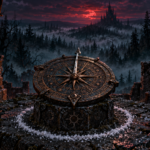
Consider the logistics of living near an ancient boundary. Outlying settlements do not simply fear monsters in the abstract. They manage supply wagon schedules, track neglected garrison wages, and measure the physical drift of boundary compasses. When communities along the margin leave their doors unbolted to avoid voiding civil treaties, as examined in threshold settlements in dark fantasy, the world feels lived-in. The danger is not a random thunderstorm; it is an institutional system failing under its own bureaucratic weight.
3. Predatory Entities with Distinct Mythologies
Another sign of deep worldbuilding is how an author handles supernatural antagonists. Traditional romantic vampires and generic woodland beasts often serve as emotional foils or simple combat fodder. Compelling dark fantasy introduces entities tied directly to the history, broken treaties, and cosmic laws of the realm.
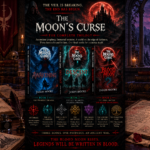
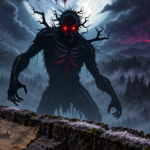
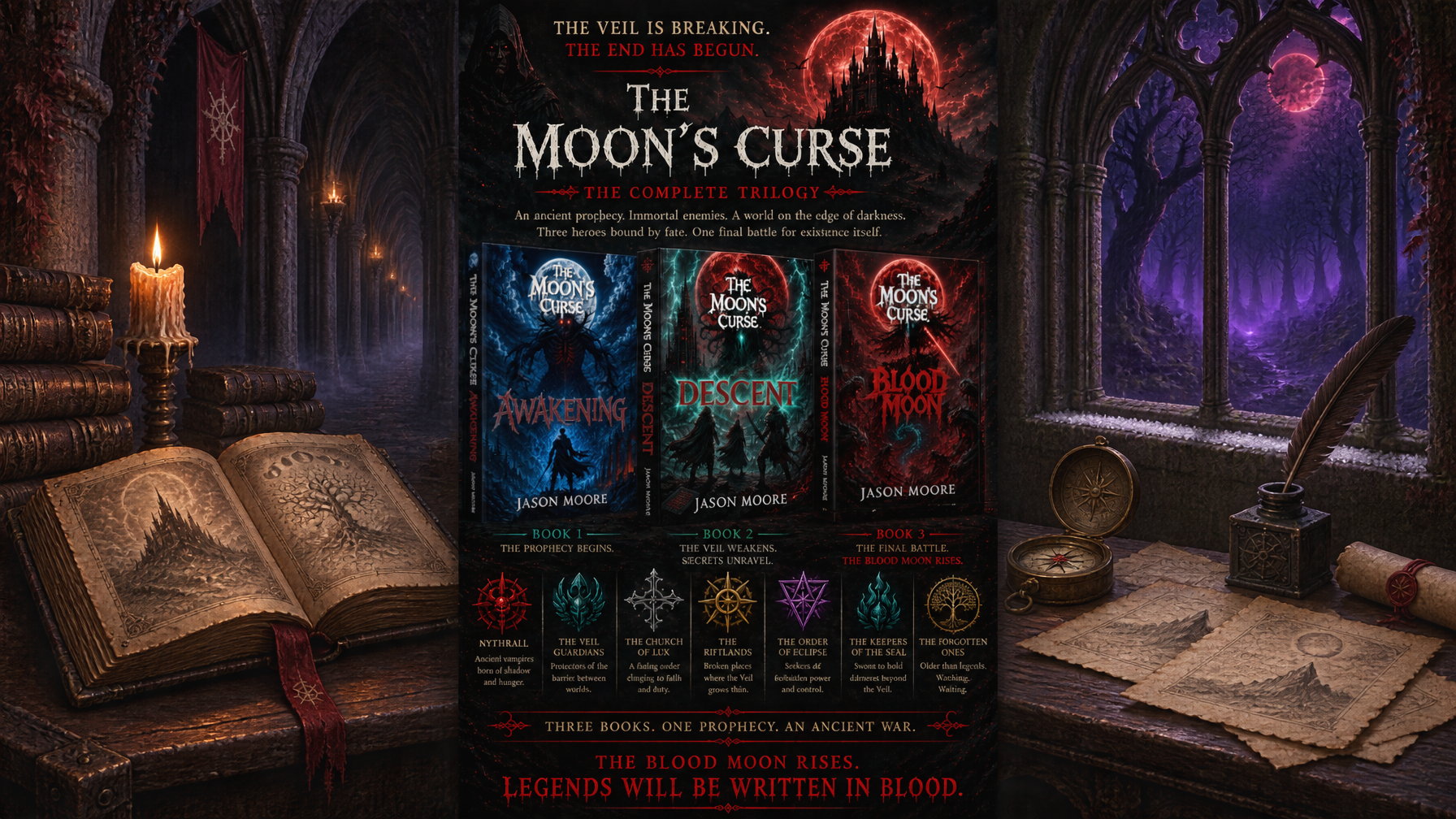
In The Moon’s Curse Trilogy, author Jason Moore developed the Nythrall: ancient, moon-bound shadow entities that are fundamentally distinct from traditional vampires. They do not hunt for sport or passion. Governed by celestial alignments and broken covenants, they appear beneath the rise of the Blood Moon to collect upon defaulted territory. When frontier wardens like Evan Hartwell walk the perimeter with cold iron and salt lines, they are confronting an ancient enforcement mechanism rather than wild predators.
4. Complete Series Momentum and Unbroken Continuity
One of the primary frustrations shared across BookTok and fantasy reading communities is the multi-year publishing gap. When readers invest deeply in complex political hierarchies and intricate lore systems, a three-year hiatus between volumes can drain a story of its momentum.
Investing in a finished series allows readers to trace narrative seeds, foreshadowed legal clauses, and character arcs without worrying about forgotten plot threads. In The Moon’s Curse Trilogy, the entire three-book arc, Awakening, Descent, and Blood Moon, was completed and audited upfront to preserve strict cartographic, logistical, and character continuity across every page.
What to Look for in Your Next Fantasy Read
When selecting your next dark fantasy novel, consider three criteria:
- Physical Constraints: Does magic require maintenance, physical anchors, and tangible sacrifice, or does it resolve conflicts without cost?
- Administrative Weight: Do characters grapple with dwindling provisions, neglected posts, and flawed institutions alongside external monsters?
- Structural Payoff: Does the series deliver a resolved, deliberate narrative arc where every covenant and promise is accounted for?
Step Beyond the Veil
If you are searching for a complete dark fantasy saga defined by atmospheric dread, contractual worldbuilding, and relentless pacing, explore The Moon’s Curse Trilogy. Experience the complete journey across Awakening, Descent, and Blood Moon in collector hardcover, paperback, and digital editions at londynpublishing.com or explore the full catalog in our books collection.